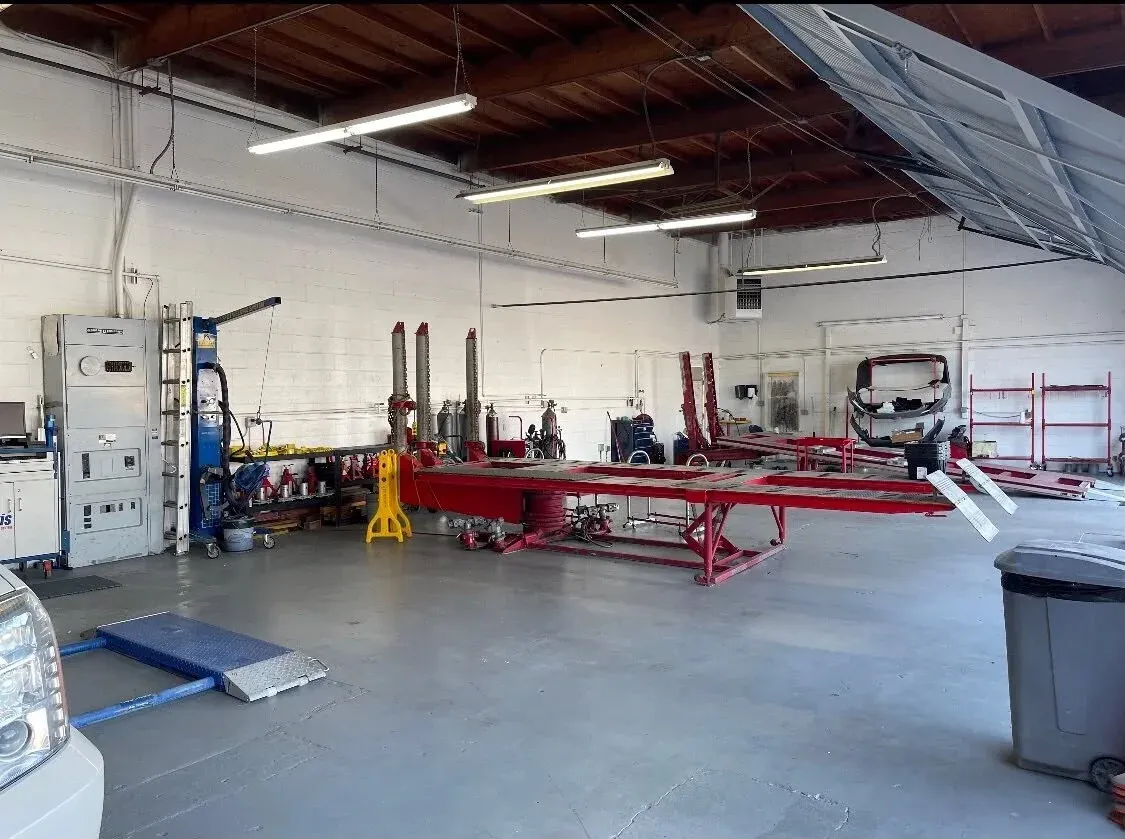
The hits that go past sheet metal
Most Leaside damage is cosmetic. The exceptions come from a few predictable places: the left-turn conflicts where Laird meets Eglinton and where McRae angles across Millwood, the fast merge where the Bayview Extension traffic folds together along the valley, and the highway kilometres — the DVP run downtown, the 401 for everything else — where speeds turn a rear-end into a structural event. A pothole season like February on Moore Avenue adds a quieter version: a wheel strike hard enough to bend a control arm can also nudge the structure it bolts to.
The warning signs are worth knowing. Doors that need a shove to close flush, a hood gap wider on one side, a steering wheel that sits off-centre after the alignment, tires wearing unevenly weeks after a “minor” hit — each is the car reporting that something underneath moved. A unibody carries the suspension, the crash-energy paths, and the airbag timing in its geometry. Millimetres matter, and no one can see millimetres by eye.
Measured, documented, pulled, measured again
Structural work here follows one sequence. The vehicle goes on the bench and its control points are measured against the manufacturer’s specification — that produces a printed map of exactly what moved and by how much. The pull happens in controlled increments, metal brought back rather than yanked, and then the same points are measured again. Both sets of numbers go in your file and to your insurance company, so the repair is proven rather than asserted. Panels, refinishing, and calibration of any safety sensors follow only after the geometry is right, because paint on a crooked structure is decoration.
Sometimes the measurements argue against repair. When rails have crumpled past what can be restored to specification, or the repair cost climbs toward the vehicle’s actual cash value, we tell you before the work starts, not after. Ontario has no fixed write-off percentage — the insurance company weighs cash value against repair cost plus salvage — and you deserve a shop that walks you through that math honestly rather than one that needs the job.
- Baseline measurement against factory data before any repair decision
- Controlled pulls with before-and-after documentation in your file
- Sensor and camera calibration after structure is corrected
- A straight answer when repair is no longer the right call
Getting a car that should not be driven out of Leaside
A car with suspected structural damage should ride a flatbed, not the 401. Ontario’s towing rules are on your side here: operators are provincially certified, invoices are itemized, and the destination is your decision — say “Collision Auto Center, Keele and Sheppard” and that is where it goes. Call (647) 594-3401 from the scene or from your driveway and we coordinate the tow from our end, whether the car is sitting on Southvale or in the impound row at a Collision Reporting Centre.
Distance stops mattering once the car is here. The claim opens from our office, the adjuster deals with us, photo updates come to your phone, and the rental — when your coverage includes one — is timed so you are never stranded between cars. One person, the owner, carries the file from tow-in to road test.