The hits around Liberty Village that reach the structure
Structural damage near Liberty Village comes from a short list of places. The Gardiner’s downtown merges are the main supplier: a car accelerating into a lane that has stopped dead puts its front rails to work exactly as engineered, folding to absorb what the bumper cannot. Strachan’s run down to Lake Shore contributes the angled corner hits, where all the energy lands on one rail instead of two. Winter adds its own mechanism — the shaded pavement in the Strachan underpass ices before the open road does, and a car that slides there tends to finish against a curb, driving the impact up through a wheel into the suspension mounting points.
Almost every vehicle in the neighbourhood is unibody construction, which means the body shell itself is the frame — there is no separate ladder underneath to shrug off the hit. A shell a few millimetres out of specification can look fine and even drive tolerably, and that is precisely the trap. The tells arrive later: an alignment that will not hold, a steering wheel sitting slightly off-centre, panel gaps that taper, one tire shoulder wearing early. And the stakes are not cosmetic — crumple zones and airbag timing are engineered around factory geometry, so a shell left out of true responds differently in the next collision.
Measurement first, force second, documents always
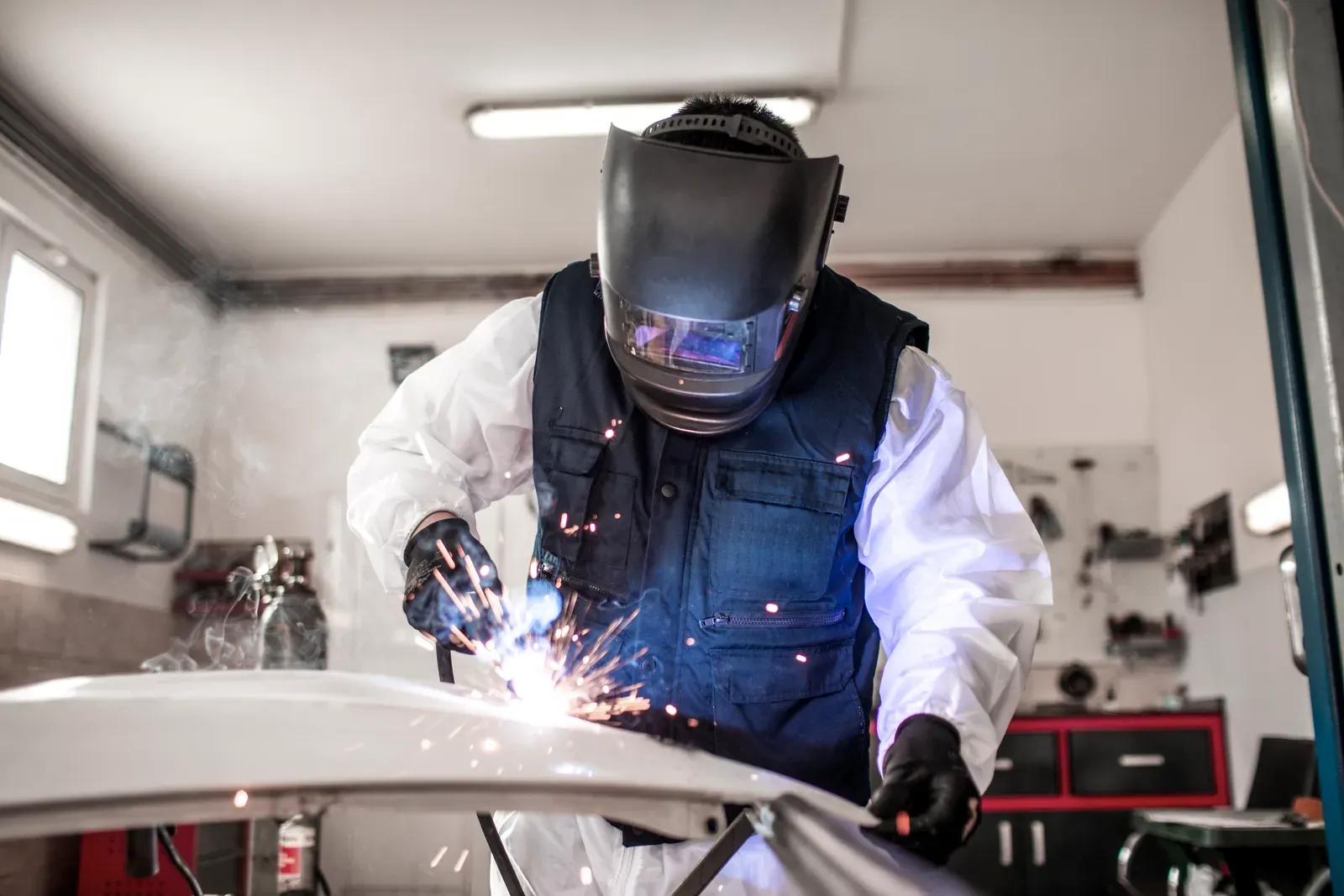
No pulling happens here on instinct. The car goes onto the bench, reference points across the shell are measured against the manufacturer’s published dimensions, and the printout states exactly which points sit out and by how much. Corrections are then applied in small, deliberate increments — load on, load off, measure again — because metal hauled past its target in one heave has been worked twice, and every working cycle costs the steel strength. The job is finished when the numbers say so, and you receive the before-and-after documentation for your insurance company and for the car’s history.
Structural work is also where parts quality stops being negotiable. When a rail section or reinforcement is replaced, we press your insurance company for OEM — crash structure is the one place where a like-kind-and-quality substitute is a poor bargain, and Ontario lets you insist on original parts and pay any difference if it comes to that. Suspension components disturbed by the same impact are inspected and the car is aligned and road-tested after the pull, so the phone call you get says finished and means it.
- Reference points measured against factory dimensions before any pull
- Corrections in increments, re-measured at every step
- Before-and-after printouts included with the completed file
- OEM argued for on any structural replacement part
Tow-outs, write-off math, and straight answers early
A car with possible structural damage should not attempt the 401. If a wheel sits crooked, the steering pulls, a door resists closing, or anything is leaking, leave it where it came to rest — including on P2 of your building — and call (647) 594-3401. We coordinate tow operators equipped for low-clearance Liberty Village garages, and Ontario’s towing rules put the destination in your hands: the truck brings the car here, not to whichever yard is convenient for the driver. Photos from the scene let the estimate begin before the truck does.
The write-off conversation belongs at the start, not the end. Ontario sets no fixed percentage for a total loss; the insurance company weighs the car’s actual cash value against repair cost plus salvage, case by case, and structural repairs are expensive enough to put some cars near that line — particularly the newer financed vehicles this neighbourhood runs on. You get our honest read in week one: when repair makes sense we do it to specification and document it, and when it does not, the owner tells you directly, so you can plan instead of wait.