What “frame damage” means on a modern car
Almost nothing in an East York driveway has a separate frame any more. Modern cars are unibody: the rails, aprons, rockers, and pillars are the structure, engineered to fold in planned zones and carry crash energy around the people inside. That design saves lives and hides damage. A rail tip pushed back two centimetres can leave the bumper looking merely scuffed; a trunk floor buckled by a Parkway tap can sit behind a lid that still opens and closes. The car drives, so the owner assumes it survived — and that assumption is the most expensive one in this trade.
East York supplies structural work from three directions. The DVP delivers the classic full-speed-to-full-stop rear-ends that stack trunk floors and shift rear body panels. O’Connor Drive’s downhill sweep collects front corners on icy nights — impacts that travel through the wheel into the strut tower and rail. And the borough’s pothole season, at its worst along Cosburn and Donlands in March, can drive enough force through a wheel to move suspension pickup points, which is structure whether or not anything looks bent from above.
Measured before, pulled, measured after
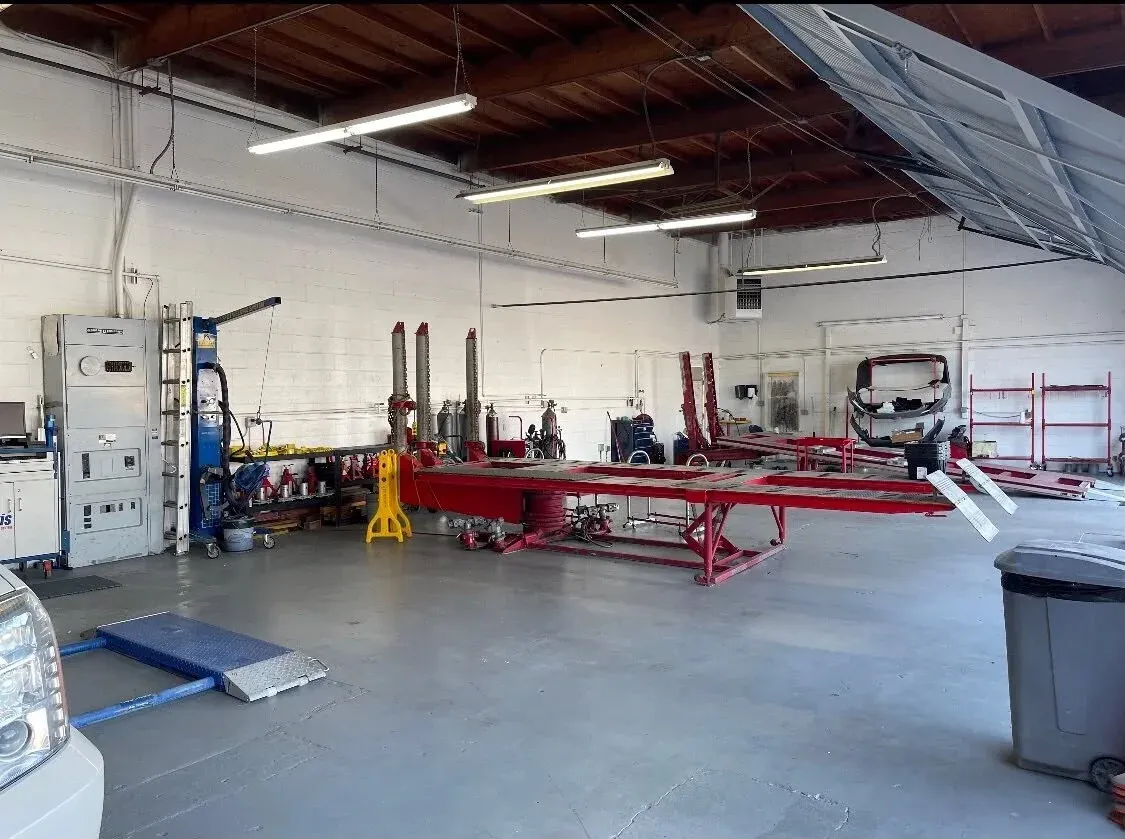
Structural repair here starts with numbers, not opinions. The vehicle goes on measuring equipment and every relevant control point is compared against the manufacturer’s specification, in millimetres. That map decides the plan: what gets pulled back into position, what gets sectioned or replaced because the metal has done its one crumple and cannot be trusted with another. The pull happens in controlled stages on the frame machine, and the measurements are taken again afterward and recorded — evidence, not reassurance.
The distinction matters beyond the shop floor. A wheel alignment can make a bent car track straight, the way a shim makes a wobbly table stand still — the symptom is treated and the problem remains, waiting for the next collision to find the weakened path. A documented structural repair, by contrast, is something you can hand to a future buyer, a leasing company, or an adjuster and defend. We follow the repair procedures written by your car’s manufacturer, and where safety hangs on a part, we push your insurance company for OEM.
- Every control point measured against factory data before work begins
- Staged pulls on the frame machine, never a single brute correction
- Sectioning and replacement where the manufacturer’s procedure requires it
- Post-repair measurements printed and kept with your file
The flatbed question, and the write-off question
If the wheelbase looks shorter on one side, a door binds, the steering wheel sits off-centre, or the car pulls where it never used to — stop driving it. A structurally compromised vehicle handles unpredictably exactly when you need it not to, and 14 kilometres across the 401 is not the place to test it. Call (647) 594-3401, leave the car where it stands, and we will coordinate a flatbed; Ontario’s towing rules make the destination your call, so it comes straight here.
And the honest part: some structural damage is not worth repairing. Ontario sets no fixed percentage for a write-off — your insurance company weighs the cost of a proper repair against the vehicle’s actual cash value and its salvage value, and decides. What we control is the quality of the information in that decision. The teardown and measurements we document give the file a real repair cost instead of a guess, and if the numbers say the car is done, we tell you that to your face before anyone spends your rental days on a lost cause.