Ten minutes of weather, a season of repairs
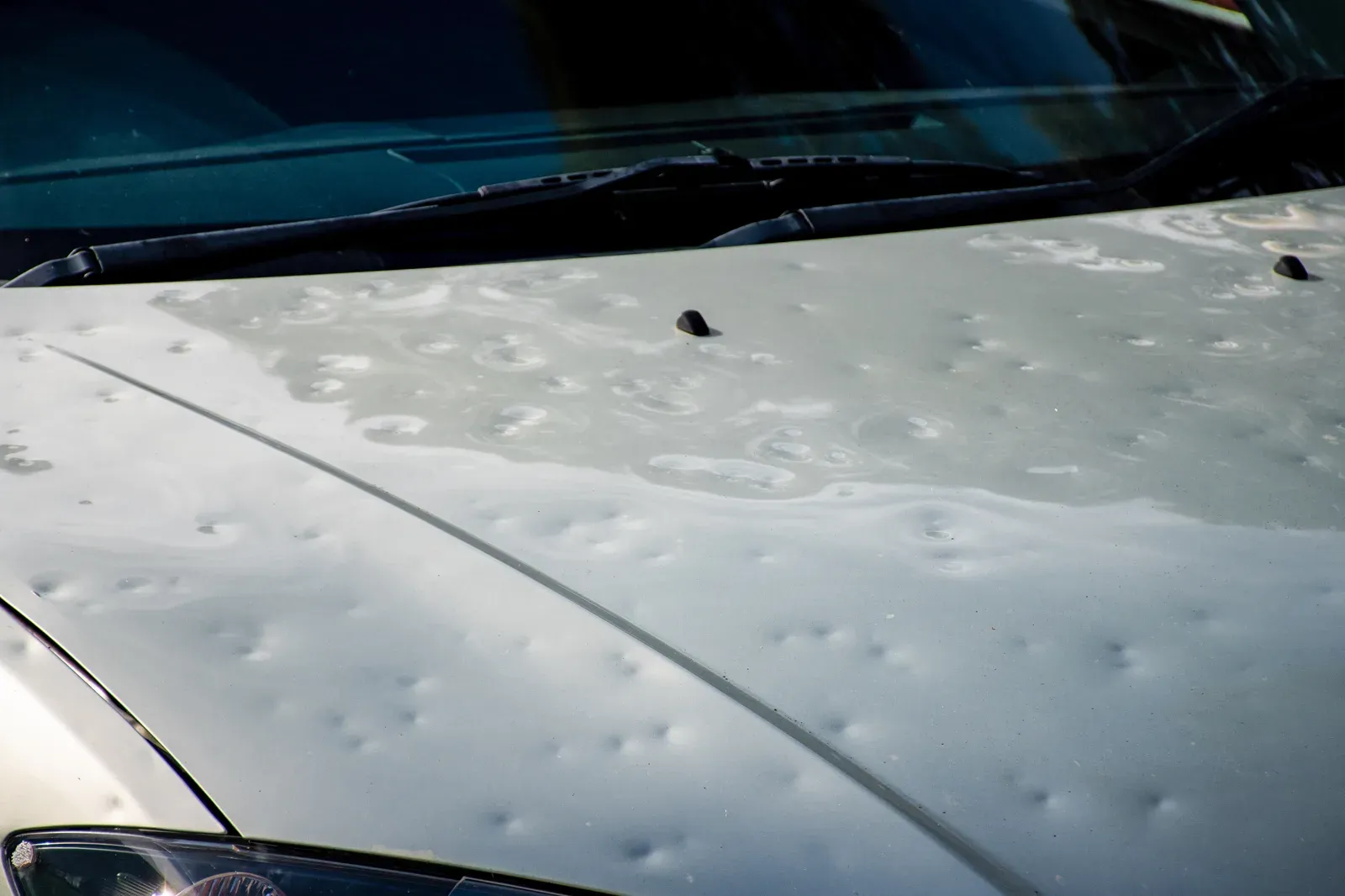
Hail in Durham is not a Prairie-style certainty — it is an occasional by-product of the summer thunderstorm cells that roll east across the GTA, drop their load on a band a few kilometres wide, and move on. When one of those bands crosses Whitby, the damage is concentrated and democratic: every car parked outside along the streets it touched collects the same pattern of shallow, round dents across the hood, roof, and decklid, the panels that face the sky. The subdivisions north of Rossland Road and in West Whitby fare worst, for a simple reason — the trees are too young to shelter anything, and the second car lives on the driveway.
Individually, hail dents are small. Collectively they are one of the more expensive cosmetic events a car can experience, because the count matters more than the depth — forty shallow dents across three panels is a bigger repair than one deep dent in a door. That is why hail assessment is its own discipline: the car goes under directional lighting, each panel is examined at an angle, and the dent count, dent size, and paint condition are recorded panel by panel. The estimate that comes out of that inspection is the real scope of the storm, not the fraction visible in a driveway glance.
How the claim works when the weather did it
Hail lands in a different part of your policy than a collision does. It is a comprehensive claim: no other driver, no Fault Determination Rules, no DCPD — your own insurance company covers the damage under your comprehensive coverage, minus your deductible. Photograph the car as soon as it is safe to, including the date if your phone stamps it, and notify your insurance company promptly. What a hail claim does to future premiums depends on the policy and the company, so ask that question directly when you report; we will not pretend to answer it for them, but we can tell you the repair side never involves an at-fault finding.
After a storm crosses Durham, every shop within reach fills at once, and that surge is where a photo-first process earns its keep for a Whitby driver. Send pictures of the worst panels to (647) 594-3401 the same week; the owner writes a preliminary number, opens the claim, and books the assessment slot while local queues are still forming. The car makes one trip down the 401 when its slot is ready — assessed under lights, scope confirmed with the adjuster, repaired, and returned — instead of shuttling between a drive-through estimate line and a waiting list.
Repairing hail panel by panel
The repair method follows the damage, panel by panel. Shallow dents in accessible steel can often be worked back to shape with little refinishing; dents that stretched the metal, cracked the paint, or landed in aluminum panels need conventional repair — straightened, primed, and refinished to your paint code with the colour blended into the surrounding area. A roof that took the full force of a cell is sometimes beyond sensible dent-by-dent work, and replacing the roof skin becomes the honest recommendation; we price both paths and show you the difference rather than deciding quietly.
Everything refinished carries the lifetime paint warranty, and the repair is checked under the same directional lighting used for the assessment, because hail repair is judged in exactly the light that exposes it — low sun across a hood at the Port Whitby marina will find any dent a shop left behind. If the storm also cracked glass or trim, those go on the same claim and the same visit. Hours are Monday to Saturday, 8 AM to 7 PM, Sundays by appointment; after a storm, the earlier the photos arrive, the earlier your slot lands.
- Panel-by-panel dent count under directional lighting
- Preliminary estimate and claim opened from your photos
- Repair method chosen per panel — worked, refinished, or replaced
- Finished car re-inspected under assessment lighting before pickup