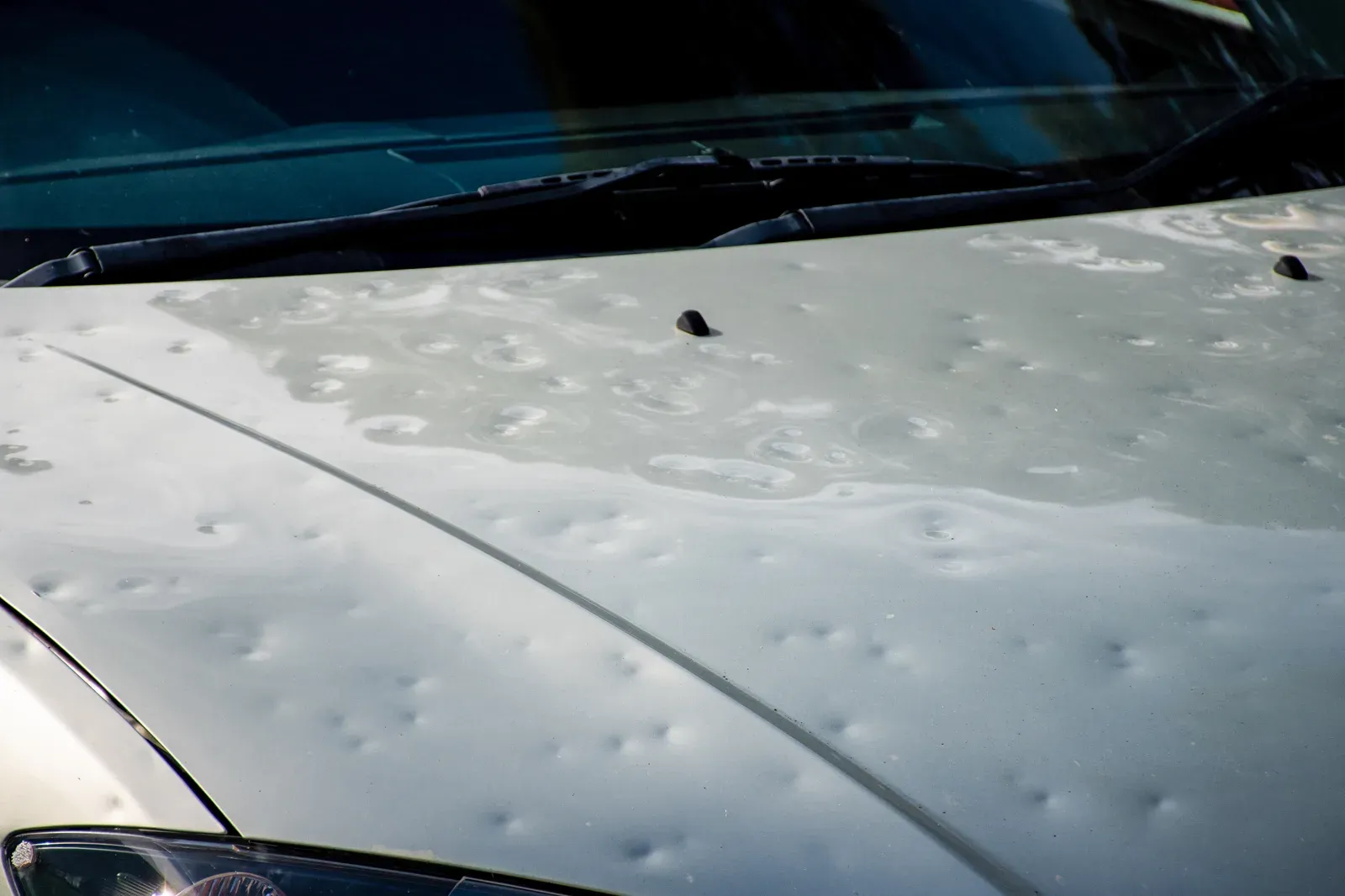
The fruit belt knows hail better than anyone
There is a reason Winona’s orchards run wind machines and netting: the strip of land between Lake Ontario and the escarpment catches convective weather that the rest of the region often misses. Summer storm cells ride in over the water, hit the wall of the mountain, and drop their energy on the shore below — which is exactly where Stoney Creek parks its cars. When a cell drops hail along Highway 8 or across the lakeshore subdivisions, the damage is democratic: every horizontal panel on every exposed car, from Fruitland Road driveways to the Confederation GO lot, collects the same dimples at the same minute.
Exposure is the multiplier, and Stoney Creek has plenty. The mountain’s newer streets were built with garages that household storage claimed years ago, so late-model cars sleep outside in Summit Park the same as they do in the old village, where many wartime-era houses never had garages at all. After a real hail event the difference between a $900 repair and a $4,000 one is often nothing more than whose car happened to be under a roof for twenty minutes.
Counting every dent once, under the right light
Hail damage hides from casual inspection and from phone cameras — shallow, soft-edged dents that only show when light rakes across the panel at a low angle. So the first real step of a hail repair is an inventory: the car goes under lighting designed to expose exactly that, and every panel is mapped and counted — hood, roof, deck lid, the upper faces of the fenders, and the trim, mouldings, and glass that took hits alongside the metal. That count becomes the claim documentation, and its thoroughness is what protects you, because a supplement for the sixty dents the drive-through estimate missed is a slower, harder conversation than a complete count on day one.
The repair itself is matched to what the count shows. Shallow dents in accessible metal are worked back to contour; panels where the hail stretched the metal or cracked the paint are repaired conventionally or replaced; and any refinished surface gets colour corrected to your car’s actual shade and blended, then covered by the lifetime refinish warranty. A hood with two hundred strikes is often better replaced than massaged, and we will show you the math on the estimate rather than deciding it silently.
- Panel-by-panel damage map under raking light before the claim number is set
- Trim, mouldings, and glass inspected along with the sheet metal
- Repair or replace decided per panel, with the reasoning on the estimate
- Refinished panels blended and covered by the lifetime paint warranty
A comprehensive claim, and no rush except the honest kind
Hail falls under the comprehensive section of your policy — no fault, no Fault Determination Rules, just your normal deductible — and a cracked or chipped windshield from the same storm goes through the same coverage. Ontario has no special zero-deductible glass rule, so the windshield claim carries your regular comprehensive deductible too. The owner opens the claim with your insurance company, submits the panel map, and handles the adjuster questions himself. What you decide is whether the damage total justifies your deductible; what we provide is the accurate number to decide with.
One caution from experience: after a wide storm, travelling hail crews appear with parking-lot offers and same-day promises. Ontario law gives you the right to choose your repair shop — that right applies just as much when the shop soliciting you is a tent as when it is an insurance company’s preferred list. Hail damage does not worsen sitting in a driveway as long as the paint is intact, so you have time to choose a shop that will still exist when a warranty question comes up. We book Stoney Creek hail cars in order, tell you the real timeline, and time any rental to your drop-off.