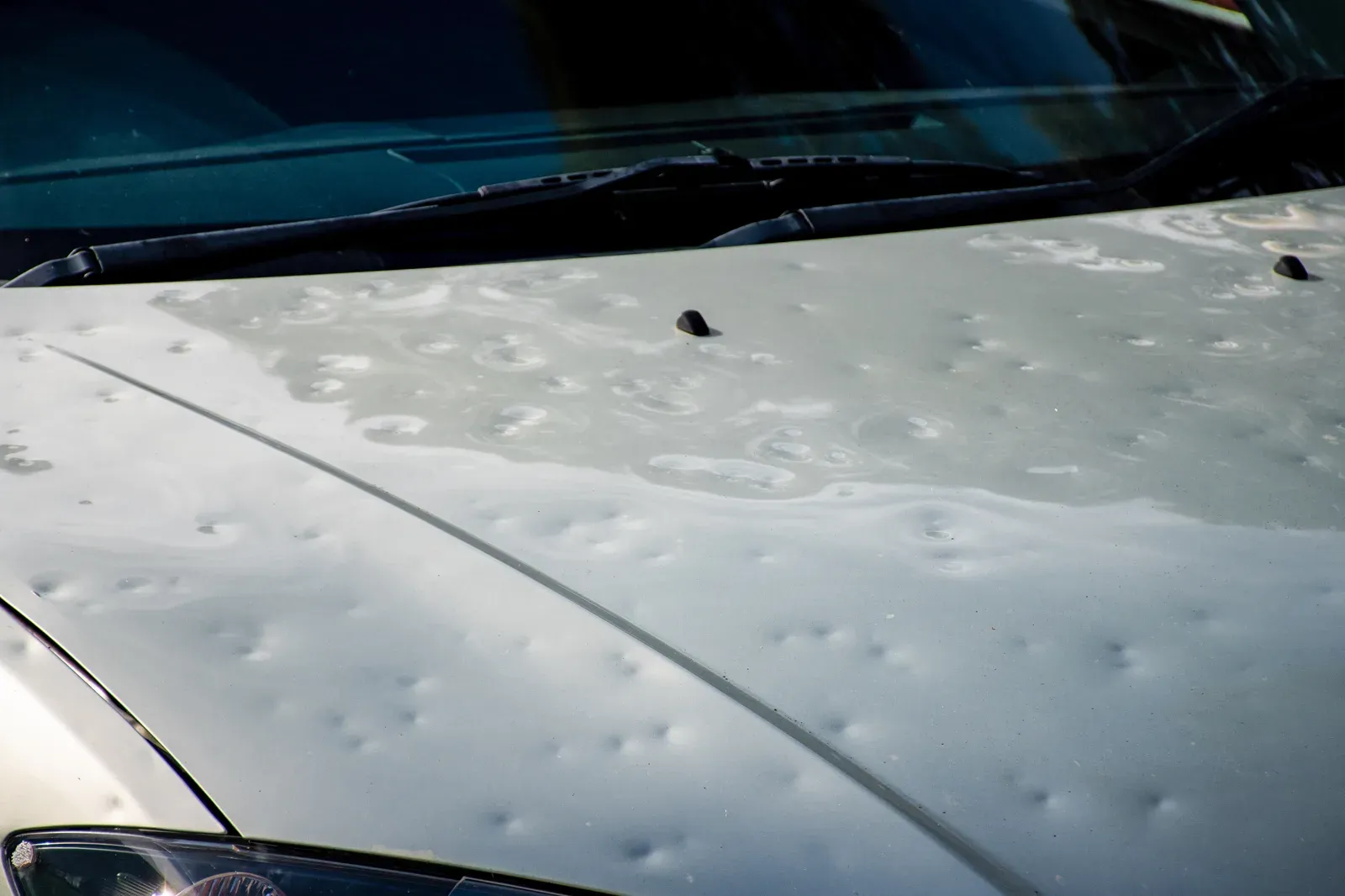
Flamborough storms find Waterdown’s driveways
Summer convection cells that build over the farmland west of Waterdown — Freelton, Millgrove, the open country along Highway 6 — occasionally carry hail when they cross the village, and Waterdown is unusually exposed when they do. The east-end subdivisions are young: garages are full of household storage, second and third cars live on driveways and curbs, and the trees that will eventually shelter them are a decade from mattering. When a cell drops even a few minutes of hail, whole crescents of vehicles take it on the hood, roof, and deck lid at once — the horizontal panels that face the sky and show every strike in low sun.
The damage is deceptive in both directions. Some cars look peppered in the driveway and turn out to carry only a handful of true dents once examined under proper light; others look untouched until the reflection of a straight fluorescent tube bends across a hundred shallow dimples. That is why we do not count dents in your driveway or from your photos — the photos start the claim, and the honest count happens on a lift, panel by panel, with the results documented for your insurance company.
A comprehensive claim, handled like one
Hail falls under the comprehensive section of your policy, not collision — which carries two practical consequences for Waterdown drivers. First, your comprehensive deductible applies, and whether a claim makes sense depends on the true dent count, which is another reason the panel-by-panel inspection matters before you commit. Second, comprehensive claims for weather are not-at-fault by definition, so they do not usually affect your premium the way an at-fault collision can. If a storm was large enough to hit the whole neighbourhood, insurance companies may run catastrophe processes with their own timelines; we slot into those, document to their standard, and keep your file moving while your neighbours queue.
The repair itself depends on what the inspection finds. Shallow dents in reachable metal can be worked out while preserving the panel; deeper strikes that have creased the steel or cracked the paint need filling and refinishing; and a roof skin carrying too many hits to work honestly is sometimes better replaced. We match the method to the panel and put the reasoning in writing. Anything refinished is colour-matched to your code, blended to its neighbours, and covered by the lifetime paint warranty — a hood repaired after hail should be indistinguishable from one that never met the storm.
- Panel-by-panel dent mapping under proper light, documented
- Claim filed under comprehensive with your insurance company
- Repair method chosen per panel — work, fill, or replace
- Lifetime warranty on all refinished paint
After the storm: sequence, not panic
Hail rewards patience and punishes rushing. In the days after a storm crosses Flamborough, travelling repair crews appear in plaza lots offering same-day fixes — and Ontario law is on your side here too: the choice of repair shop is yours, and no one waving a clipboard at Clappison’s Corners changes that. The smarter sequence is simple. Photograph the car in your driveway while the damage is fresh, ideally in early or late sun that throws shadows into the dents. Send the photos and your policy details to (647) 594-3401. The owner opens the comprehensive claim, and the full inspection happens here rather than in a parking lot.
Because hail rarely makes a car undrivable, the trip down can be scheduled around your week — Highway 6 to the 403, the 407 ETR to Keele, about 42 to 58 minutes — and a rental through your coverage is booked to your arrival if the repair window needs one. There is no urgency trap: hail dents do not spread, and unless paint has cracked, a few weeks of waiting for a proper repair costs you nothing. What does cost you is accepting a quick cosmetic job that a future buyer’s inspection will find. Hours are Monday to Saturday, 8 AM to 7 PM, Sundays by appointment.