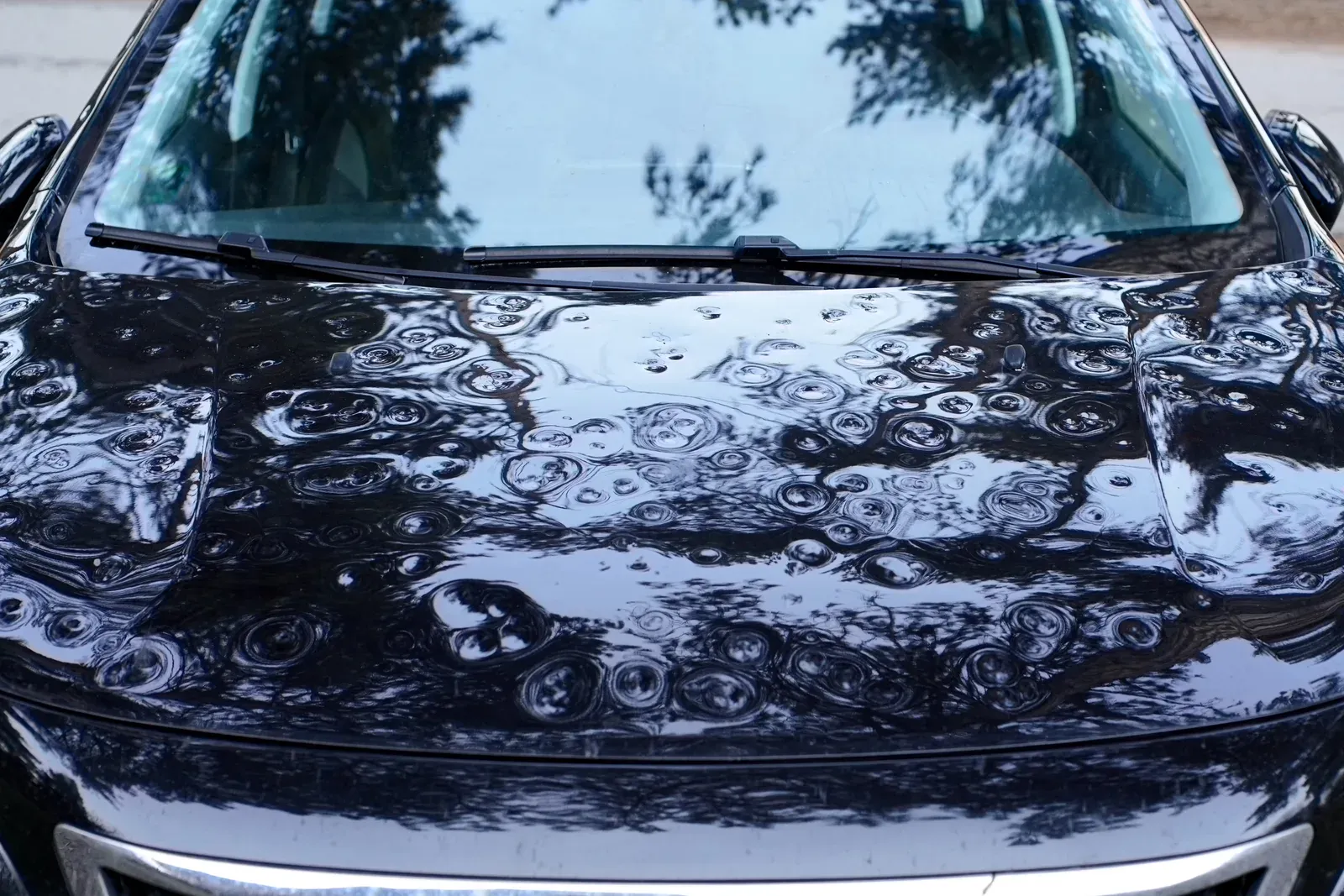
Nothing in Concord parks under a roof
When a summer cell tracking along the 400 corridor drops hail, Concord has nowhere to hide. Vans and pickups hold open yards overnight on Bowes and Creditstone; employee rows behind the warehouses sit exposed all shift; the lots around the Concord GO area and the Improve Canada rows on Keele put hundreds of hoods under the same sky; Glen Shields garages long ago filled with everything except cars. Five loud minutes over any of it can dimple a whole street’s worth of metal at once, and the vehicles that do have shelter often lose it in summer, when the garage becomes storage and the driveway becomes the plan.
GTA hail is an occasional visitor rather than an annual certainty, and the stones usually run small — which fools people. The damage reads as faint dimples you notice the next morning when light rakes across the hood. Each one is stretched metal that will never relax on its own, and together they subtract real money from a resale, a lease return, or a fleet disposal.
One storm, many vehicles — how a fleet claim gets run
Hail is a comprehensive claim: your usual deductible, no driver blamed, no fault percentages to argue. What makes or breaks the payout is documentation, so every vehicle here gets the same treatment — walked panel by panel under angled inspection light, each strike counted and mapped, because the gap between a glance-based estimate and a mapped one can be the price of a whole panel. For a Concord business with six dimpled vans, that mapping happens per unit, per VIN, so the insurance company sees six clean files instead of one blurry claim.
Then we sequence. A storm fills every booking calendar in the region within days, and a fleet cannot park itself for a month, so vehicles rotate through the shop on a schedule built around routes — one or two in at a time, the rest working. Photos sent the day of the storm hold the queue position; the owner handles the adjuster conversations while your vans keep their appointments.
- Comprehensive coverage — usual deductible, nobody at fault
- Strike-by-strike map made under angled light, per vehicle
- Fleet repairs rotated so the business keeps running
- Same-day photo intake after a storm to hold your spot
What the repair looks like, panel by panel
No two hailed panels get the same prescription. Shallow strikes in reachable metal can often be worked back until the factory finish survives untouched. Denser fields, creased edges, or strikes on the stiff metal near panel borders call for filler-free metalwork and a refinish; a roof skin peppered edge to edge sometimes argues for replacement outright. Aluminum hoods — common on the pickups this neighbourhood runs — spring back differently from steel and get judged on their own behaviour.
Most hailed vehicles leave as a mix: some panels corrected, a few refinished, occasionally one replaced. Wherever the booth is involved, colour starts at your code, gets tuned to the aged finish around it, and is feathered across edges so nothing reads as repainted — all of it under the lifetime paint warranty. The shop is one straight run down Keele, so getting the car or the fleet assessed is an errand, not an expedition. Fleet units get their documentation copied for the office as well, so the disposal file is ready years before anyone needs it.