Three kinds of businesses answer this search
Search “rust repair near me” anywhere in the GTA and three very different trades show up under the same heading. Collision and refinish shops — Collision Auto Center is one — deal with corrosion on body panels because cutting steel and painting it is what the building is set up to do. Restoration shops take on cars where the rust has eaten into the structure, projects measured in months. And a third group grinds the brown spot flat, skims filler across it, and mists colour over the top before you have finished your coffee.
Sorting your car into the right lane matters more than any star count on a map listing. Each of those business models serves a different stage of corrosion. Put a car in the wrong lane and you either pay restoration money for a booth job, or you pay booth money for a cover-up that lifts again before the next thaw.
One phone call usually sorts it. Ask the shop what happens to the corroded metal and listen to the vocabulary that comes back: a collision shop talks about cutting, welding, and blending; a restorer talks about structure and project timelines; a patch outfit talks mostly about how cheap it will be. None of the three is automatically dishonest — the harm happens when a car that needs one trade gets sold the services of another.
What a collision shop takes on
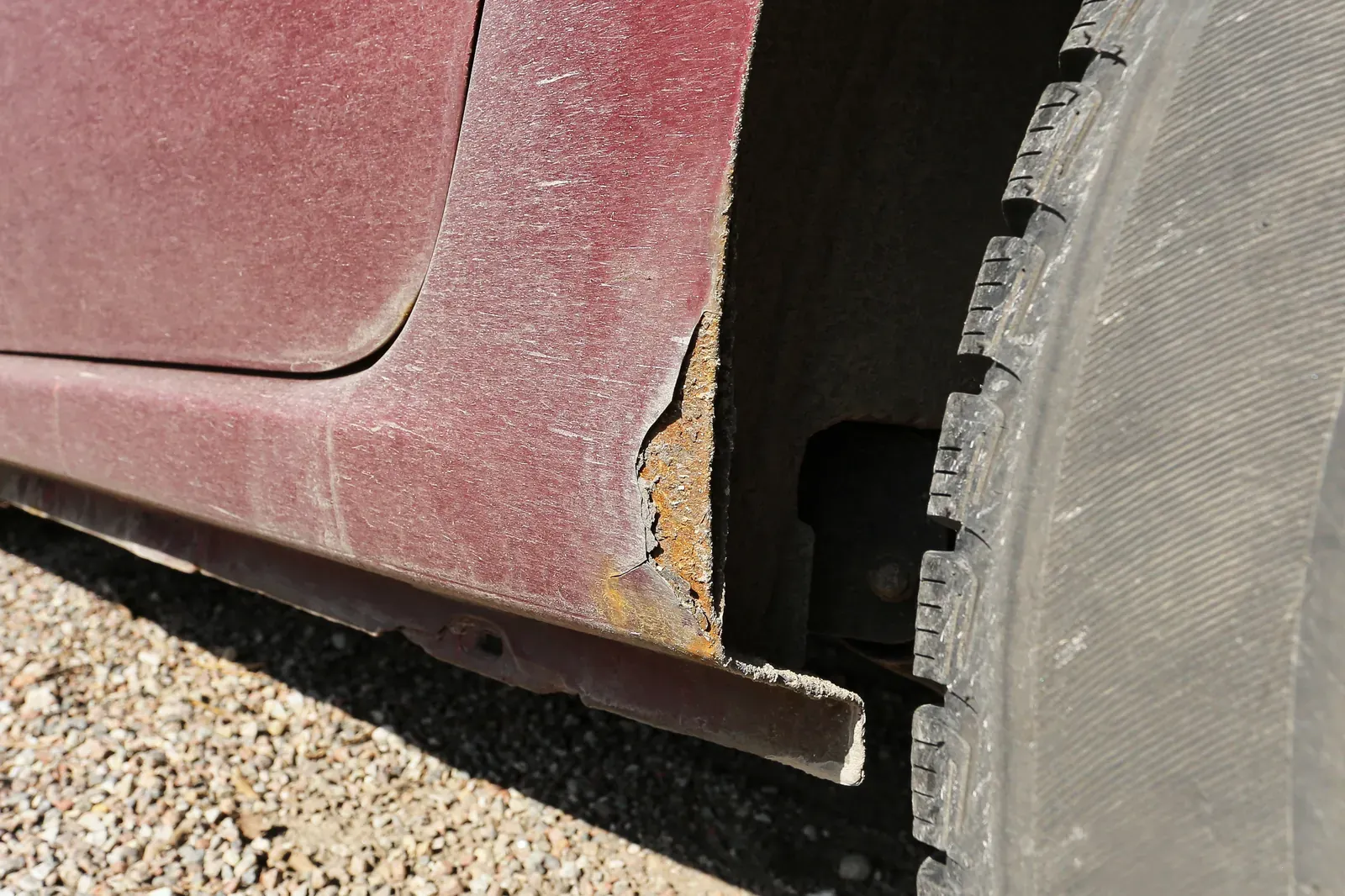
Our territory is rust that has not gone through the steel. Blisters marching along a rocker, an arch lip going brown, door bottoms starting to lift, chips from 401 gravel that never got sealed — all of it belongs in a paint and body shop, because the back half of every rust repair is refinishing, and refinishing is what the booth and the colour-matching system exist for.
A real repair removes the corroded metal rather than burying it, then seals, primes, and paints with a computerised colour match so the panel goes back to invisible. Everything we refinish leaves under our written lifetime warranty on paint, which is the working definition of the line between a repair and a patch: one of them the shop will stand behind for as long as you own the car.
Booking works the same way as any other bodywork here. The estimate is free from photos, the booth date is set once you approve the number, and the doors are open Monday to Saturday from 8 AM to 7 PM — with Sundays by appointment — so rust work can slot around a workday instead of eating one. Small spots often ride along with another job in the same paint cycle, which is one more argument for catching them small.
- Bubbling or blistered paint on rockers, arches, doors, and tailgates
- Stone chips and scratches that have started to brown at the edges
- Corrosion creeping out from badges, trim holes, and panel seams
- Rust coming back where a previous shop skimmed over it
- Refinishing and blending once the metal is made sound again
What we refer out — and why that helps you
Once corrosion has gone right through — daylight showing in a rocker, a floor pan with give in it, structure shedding flakes — the job stops being repair and becomes fabrication. That is restoration: cutting out sections, forming new metal by hand, rebuilding seams the factory welded on a line. It is a legitimate trade with its own specialists and its own pace, and it is not the trade practised off Keele just south of Sheppard.
A shop that says yes to every rusty car doing the rounds of North York is not doing those owners a favour. When a vehicle needs a restorer, the owner will say so and point you at one, because a collision shop attempting fabrication at collision-shop speed is precisely how the GTA’s worst rust jobs come into the world.
If you cannot tell which side of the line your car is on, you are in good company — perforation hides well under bubbled paint and decades of undercoat. Send the photos anyway. Part of what an estimate is for is sorting the car honestly: what we can repair and warranty, what should go to a restorer, and what is not worth money down either road.
Why the cheap patch always loses
Filler laid straight over corrosion is the job we are asked to redo more than any other. It looks flawless in the photos taken the day it is finished, and then the rust that was never removed keeps chewing underneath until the blister returns — bigger now, because the patch held moisture tight against the steel while it worked.
When a quote looks impossibly low for the panel in front of you, ask a single question: does this price cut out the bad metal, or cover it? The answer separates repair from cosmetics in one sentence, and a shop doing honest work will give it to you without a flinch.
The bitter part is that the patch is not even the cheap option once time is counted. Pay once for the cover-up and once more for the proper repair after it fails, and you have spent more than doing it right the first time — with an extra winter of spread thrown in between the two invoices. Rust rewards exactly one strategy: once, properly, at the smallest size you will ever see it.
Paying for it, since insurance will not
There is no claim to open for rust. Ontario auto policies file gradual corrosion under wear — the same drawer as brake pads and wiper blades — so this is out-of-pocket work by design, with no adjuster and no deductible in the story. That makes an accurate written number matter more, not less: send a close photo of each spot plus a wider shot of the panel, and a free written estimate comes back fast.
When the budget is tight, we help you rank the damage: which spot is actively spreading, which can safely wait a season, and which panel is honestly not worth a dollar. The owner prices the work himself and guides your file start to finish — and telling people where not to spend is a large part of how this shop keeps its neighbours coming back.