QEW speed is where structure enters the conversation
A parking-lot tap bends plastic; a hit at QEW speed bends the car itself. Modern vehicles are unibody — the “frame” is the welded steel skeleton the whole car hangs from — and it is engineered to crumple in specific zones so the cabin does not. That design saves people and sacrifices geometry: after a real hit near the 403 split or the Bronte Road ramps, rails, aprons, and pickup points can sit millimetres from where the factory put them while the car still drives straight enough to fool its owner. Doors that need a shove, tires wearing one edge, a steering wheel that sits slightly off-centre — those are structure talking.
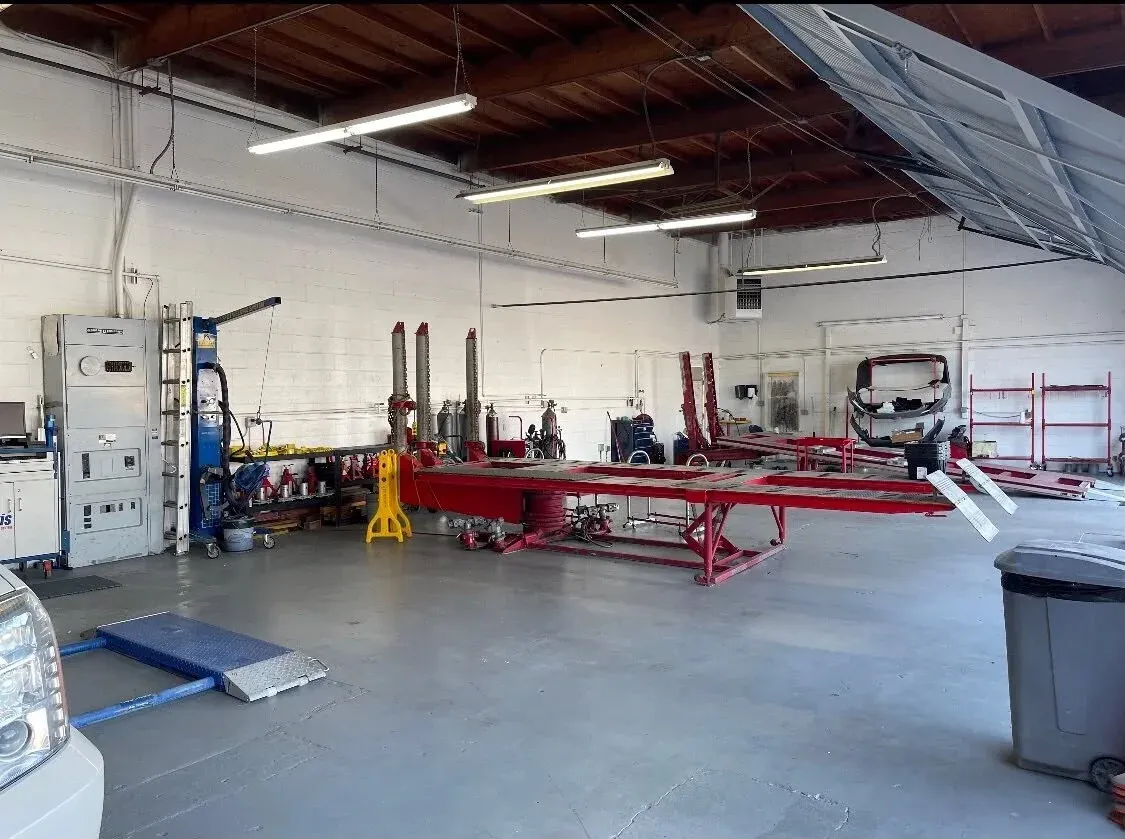
The only honest answer is measurement. The car goes on the bench, dozens of reference points are read against the manufacturer’s specification, and the printout says exactly what moved and by how much. No guessing, no eyeballing a gap. If the structure moved, it gets pulled back in controlled, measured stages; if it did not, you get that in writing too, which is worth having when a car from a QEW collision goes back on the road or up for sale.
Pulled in stages, proven on paper
Straightening is not one heroic yank. The damaged structure is anchored, pulled a controlled amount, re-measured, and pulled again until the reference points sit back inside factory tolerance — and both the before and after readings are printed and kept with your file. Where the manufacturer says a section must be replaced rather than straightened, we follow the procedure written for your specific vehicle: high-strength steels have rules about heat and sectioning, and ignoring them produces a car that measures straight and fails differently in the next collision.
Structure also carries electronics now. Radar behind the grille, cameras in the windshield and mirrors, ride-height sensors — all of them assume the body is where the factory left it, so structural work is not finished until the systems that hang off it are checked per the manufacturer’s procedure. We request OEM parts anywhere structure or safety systems are involved and put the justification on the estimate, because like-kind-and-quality is a fair debate on a mirror cap and a bad one on a rail section.
- Reference points measured against factory data before any pull
- Controlled pulls with re-measurement at every stage
- Manufacturer procedures followed for sectioning and replacement
- Before-and-after documentation kept with your file, in writing
Structural files are the ones that justify travelling
We will not pretend Oakville drivers cross the GTA for scratches — they do not, and they should not. Structural work is different: it is the repair where who does the work and how it is documented matters for years, and it usually arrives on a flatbed anyway, which makes the shop’s postal code nearly irrelevant. Ontario’s towing rules put the destination in your hands — tell the operator “Collision Auto Center, North York,” ask for the itemized invoice, and call (647) 594-3401; we handle everything after that, including getting the car out of a storage compound before the daily fees stack up.
The claim runs in parallel. A structural estimate is exactly where the insurance company weighs repair cost against actual cash value plus salvage — Ontario has no fixed total-loss percentage — so the owner documents the measurements and the parts list thoroughly enough that the decision is made on evidence, and argues the supplement when teardown finds movement a desk estimate never saw. You get the finished measurements in writing whether the car is repaired or written off.