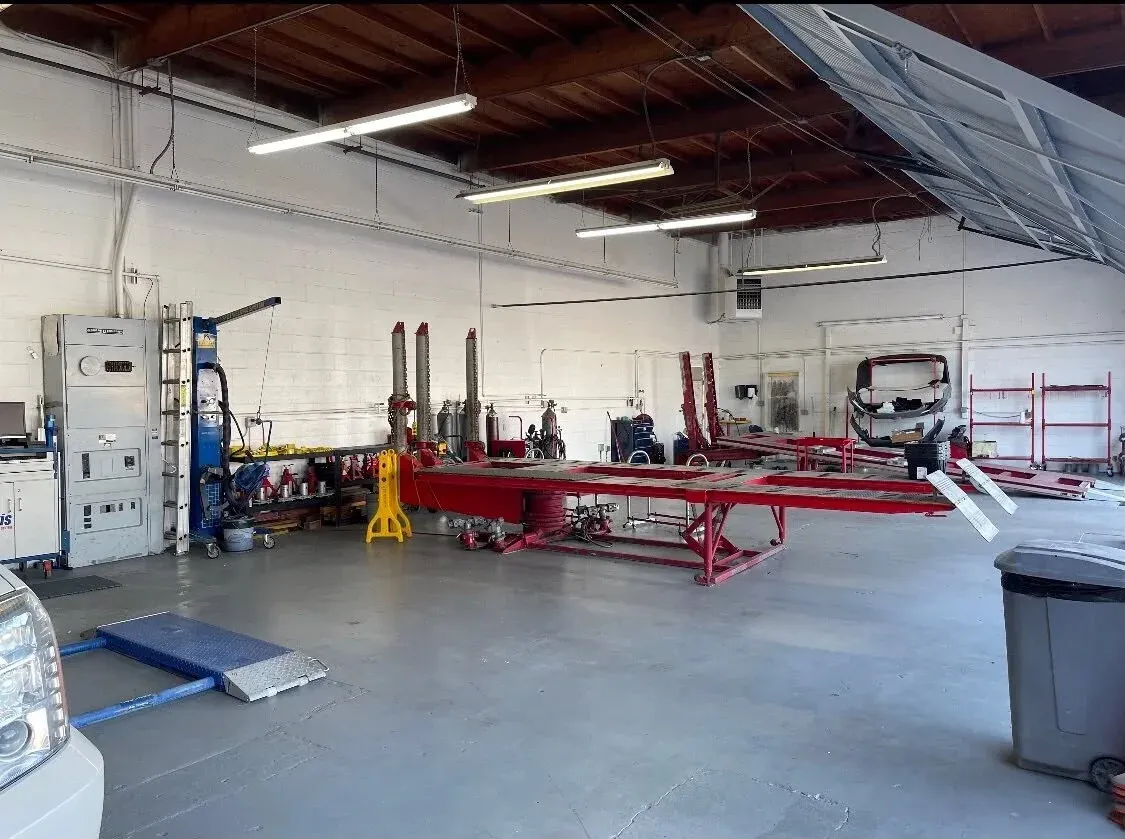
The hits that reach the structure
Structural damage needs energy, and Ajax’s road network supplies it in three places. The 401 is the obvious one — even the tail end of the westbound crawl involves closing speeds that drive a bumper system past its limits and into the rails behind it. Taunton Road is the second: it moves at 80 km/h between signals, and an intersection strike at that speed loads the front rail, the apron, and the strut tower on the struck corner. The third is the deer zone north of town, where a strike on Audley or the Greenwood stretch concentrates force into the radiator support and everything bolted to it.
The tell is rarely visible from the outside. A car with moved structure shows it in the details — a hood gap that tapers, a door that needs a lift to latch, steering that pulls after the alignment shop gave up, tires that scrub on one shoulder. Modern unibodies are built to crumple in engineered zones, which means they absorb a hit invisibly and hold the evidence inside the panel gaps. Measurement, not eyesight, is the only honest way to answer whether a structure moved.
Measured, pulled, and measured again
The vehicle goes on the measuring system before repair decisions are made, and its geometry is compared point-by-point against the manufacturer’s specification. If something moved, the correction happens on the frame machine in controlled pulls — never one heave, because metal that went out in a sequence comes back in a sequence. After correction, the same points are measured again, and both sets of readings stay in your file. That documentation matters twice: it proves the repair to you, and it answers any future question a buyer or an insurance company might raise.
Structure also decides parts strategy. Where a rail section or support is torn or kinked past correction, replacement is the only sound answer, and on structural components we press your insurance company for OEM — Ontario does not mandate it, so the advocacy has to come from the shop. Suspension and steering geometry get checked after the structural work, because a straightened rail with a bent control arm behind it is half a repair. The car leaves aligned, road-tested, and documented.
- Point-by-point measurement against factory specification before any pull
- Controlled, staged corrections on the frame machine
- Before-and-after readings kept in your repair file
- OEM pressed for on structural replacements; alignment and road test after
Total-loss honesty and the tow from Durham
Structural jobs are where the repair-or-write-off question lives, and we would rather answer it early than after your car has crossed the GTA twice. Ontario sets no fixed percentage: the insurance company weighs the vehicle’s actual cash value against repair cost plus salvage value, and the decision falls out of that arithmetic. From photos we can usually flag a likely total loss before any tow is booked — and if the numbers are close, we say so plainly and let you decide with the information in front of you.
When the job is real, the car comes to us on a flatbed and the distance stops mattering. Ontario’s towing rules put the destination in the vehicle owner’s hands with an itemized invoice required, so name our shop and the car arrives here rather than accruing fees in a Durham storage yard. The claim — DCPD if another driver caused it, collision coverage if not — runs from the owner’s desk, the rental books through your coverage, and updates come from the person managing the file.