The neighbourhood’s dents have return addresses
Most Danforth dents can be traced to one of four scenes. The Green P lots tucked behind the avenue, where the stalls were painted for smaller decades and every neighbouring door opens toward yours. The parking bays on the avenue itself, entered by reverse between flexi-posts with a cyclist bearing down — a manoeuvre that ends on a post more often than anyone admits. The laneways, where garage jambs and hydro poles collect rear quarters at steady walking pace. And the curb itself, where a parked car simply absorbs whatever the street decides overnight.
February adds the seasonal special. Windrows harden along the permit stretches, and the gap the plow leaves at a laneway mouth freezes into a ridge with real structure. Nosing over it folds valances and bumper lips; backing over it creases rear skirts. Snow seems soft until it has spent two nights at minus fifteen — then it works like concrete with better camouflage, and the repairs it generates are indistinguishable from curb strikes.
The fingernail test, and why it starts a clock
Drag a fingernail across the dent. If it glides, the paint film is intact and the damage is purely cosmetic — fix it when convenient, or never. If it catches, the finish is breached, and on a car that parks outside through a Danforth winter that breach is a rust site with a schedule: salt mist finds it by December, corrosion creeps under the surrounding paint by spring, and a repair that would have taken hours becomes one that takes days and costs multiples. Broken paint is the difference between a decision and a deadline.
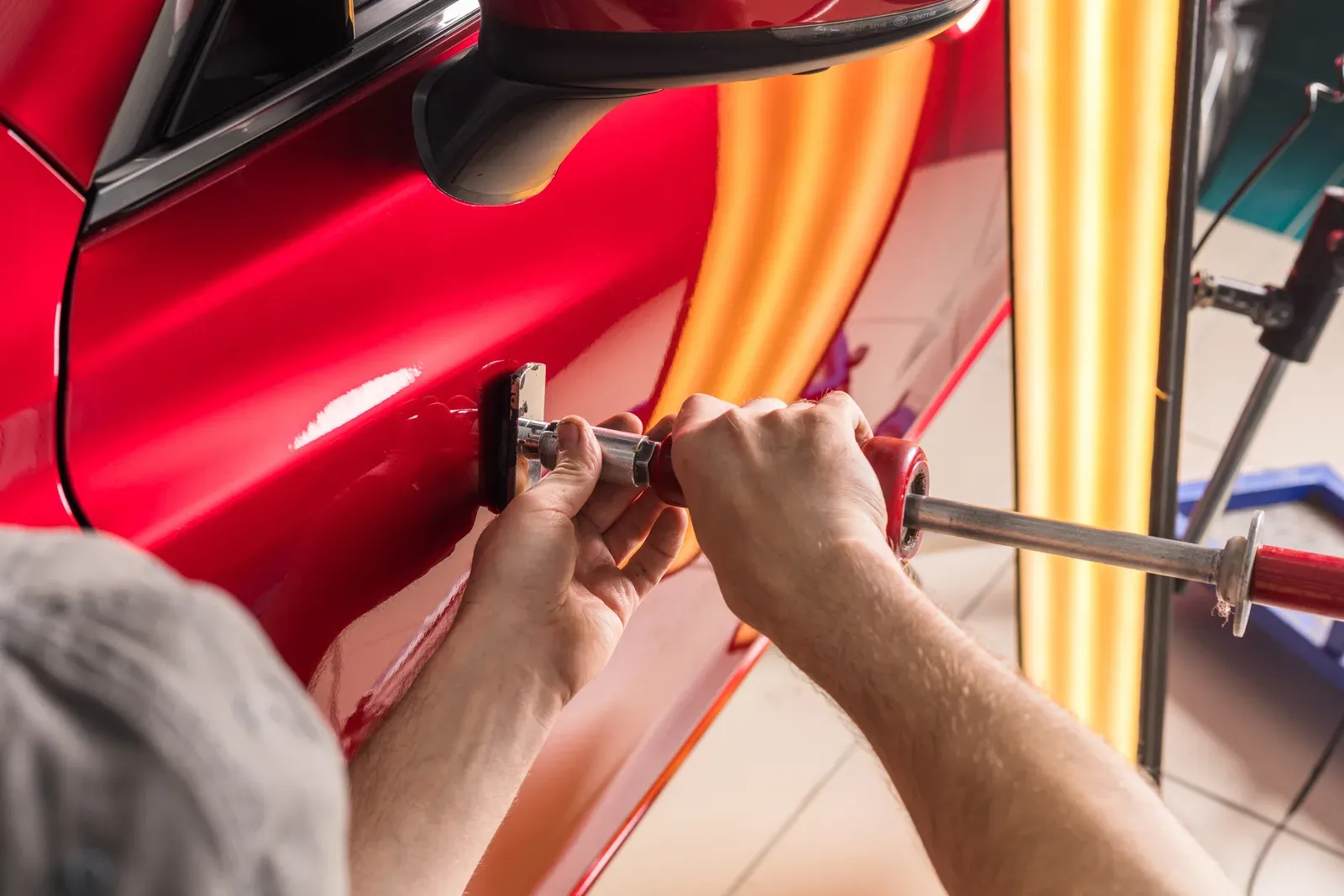
The repair itself is metal-finishing first. Where the back of the panel is reachable, the dent is worked out from behind and brought down from the front until the surface reads true; filler, where needed at all, goes on in the thinnest skim the panel allows. Then the refinish: colour tinted to the car as it stands, proven on a card, blended into the neighbours. A crease that stretched the steel beyond honest recovery gets called that — we price the replacement skin next to the repair and recommend the one we would choose on our own car.
Numbers before decisions
A single dent tends to price close to a common deductible, which makes the order of operations matter: get the written number first, then decide whether a claim makes sense. Text photos and it arrives without the car moving off its permit spot. Where the math says skip the claim, we say so plainly. Where the damage is bigger than one panel — or the paint is broken and the calendar says November — the claim conversation changes, and we run it with your insurance company if you choose to open one.
One Danforth-specific wrinkle: dents from unidentified vehicles — the overnight hit with no note — fall outside DCPD, which needs the other car identified. Those repairs usually route through your own collision coverage and its deductible, a different equation worth checking before filing anything. Logistics stay light either way: materials staged before drop-off, most single-panel jobs back within a few days, doors open Monday to Saturday 8 AM to 7 PM and Sundays by appointment.