Send three photos before you do anything else
Bumper jobs reward starting from the couch. One photo straight on, one from the corner, one close enough to show texture — that set usually tells us which side of the repair-or-replace line you are standing on, and the written number lands before you have rearranged a single day. Since a lone bumper repair tends to price in the same territory as a common deductible, we lay the figure beside your coverage and say plainly whether opening a claim buys you anything. When the bumper is one line of a bigger collision file, it simply folds into the claim already running.
Because the answer arrives before the car does, the visit itself is short. Cover, absorber, clips, and mixed paint wait on the shelf for your appointment; most cover jobs hand back the keys within a few days. The drive from Greektown runs about 20 to 30 minutes against traffic — DVP up, 401 west, off at Keele — and the doors are open Monday to Saturday, 8 AM to 7 PM, with Sunday drop-offs by appointment. The person answering (647) 594-3401 is the person who priced your job.
How this neighbourhood spends its bumpers
The Danforth is hard on the front and rear of a car in ways the rest of the city is not. Reversing into a parking bay between flexi-posts trades paint with the posts at least occasionally; overnight parallel parking on the permit streets means strangers touch-park against your bumpers all winter; and the concrete lips and drainage channels at laneway mouths shave the undersides of front covers a few millimetres at a time. Then the west end of the avenue tips everyone onto the DVP, where creeping traffic manufactures the classic light tap — two drivers shrug, exchange nothing, and one bumper keeps the secret.
The secret is the problem. A modern bumper is a plastic fascia over the components doing real work: an energy absorber, mounting brackets, and on most newer cars a row of parking sensors or a radar module aimed through the skin. Plastic is elastic — it springs back over a crushed absorber and looks nearly fine. The tell is fit: a corner sitting slightly proud, a gap that widened, a cover that flexes differently on one side. Any of those means the damage went deeper than the paint, which is exactly why our estimates wait for teardown.
Repair, replace, and the electronics in between
Where the plastic is scuffed, gouged, or split short with its mounting tabs alive, repair wins: the cover is welded or bonded, refinished, and returned for a fraction of replacement money. Where tabs have sheared, a corner has torn, or a crease runs through a contour line, replacement is the honest answer — a creased contour never sits flush again, and we would rather lose the argument now than have you notice it every morning. Both paths get priced in writing, and the recommendation is the one we would take ourselves.
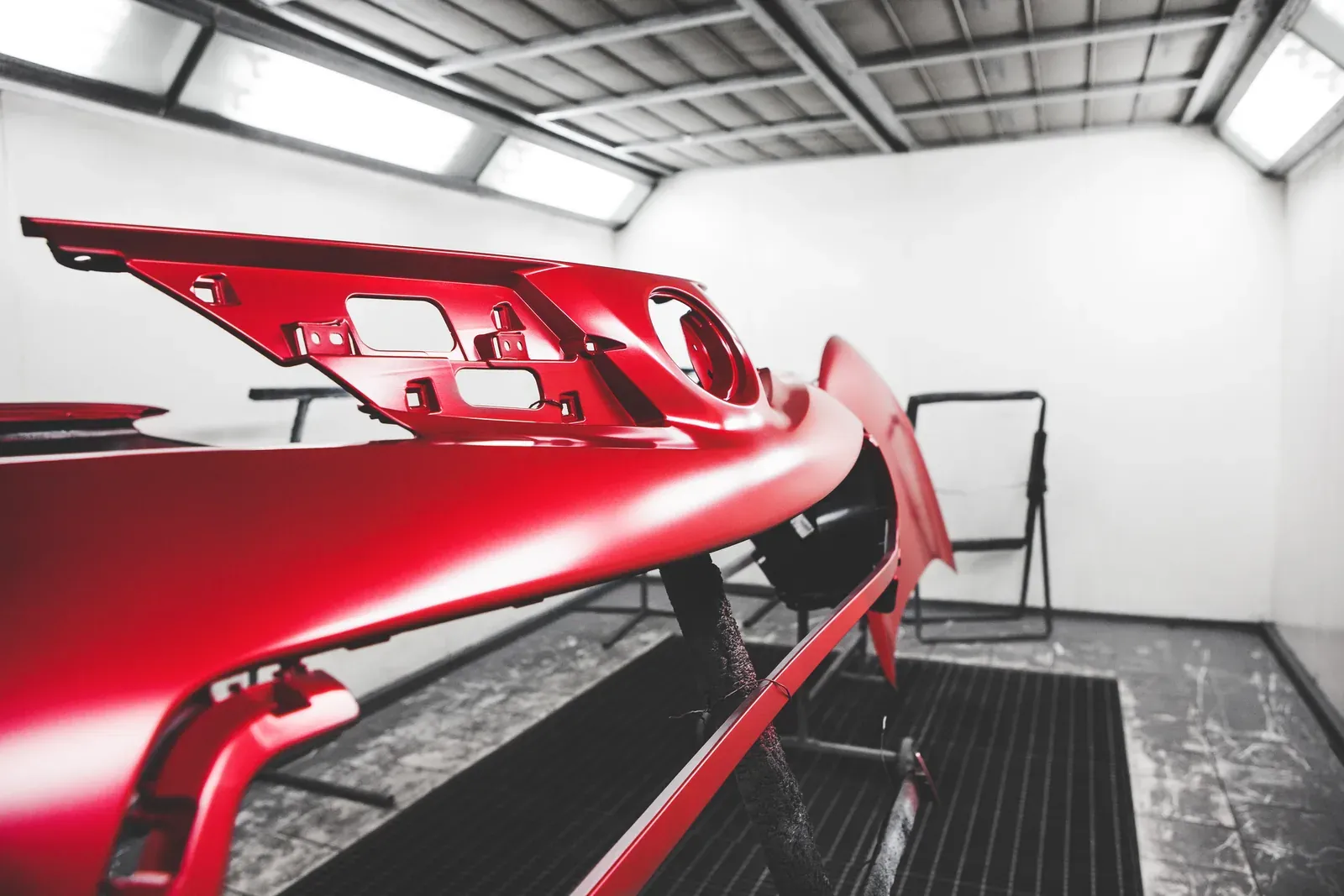
Sensors and cameras raise the standard. Each one comes out before paint, goes back per the manufacturer’s seating procedure, and gets verified working before the car leaves — because a sensor a few millimetres off its aim beeps normally while measuring wrongly, and nobody discovers that until a laneway wall does. The refinish itself is sprayed with flex additive so the paint moves with the plastic through a February cold snap, blended into the adjacent panels, and covered by our lifetime paint warranty in writing.