Woodbridge collisions come in three speeds
The slow ones happen in the Highway 7 corridor. Every big-box driveway between Islington and the 400 invites a late brake or a hopeful left across three lanes, and the Colossus and Costco entrances at Weston Rd produce the same low-speed geometry daily — covers cracked, absorbers crushed, tailgates creased, nobody hurt, everybody annoyed. The medium ones belong to Rutherford and Langstaff, where ramp queues for the 400 stretch back into live lanes and a glance at the merge instead of the mirror closes a three-metre gap instantly.
The fast ones are newer to the neighbourhood. Since the 427 extension opened to Major Mackenzie, the west side has a true highway of its own, and highway-speed contact is a different animal: energy travels past the plastic into rails, aprons, and suspension mounting points, and the car that “still drives fine” may be carrying millimetres of structural movement nobody can see. The village core adds its own file — short sight lines where Woodbridge Ave meets Islington beside the Humber, angled streets, and corners taken on memory rather than visibility.
Why the estimate here waits for the teardown
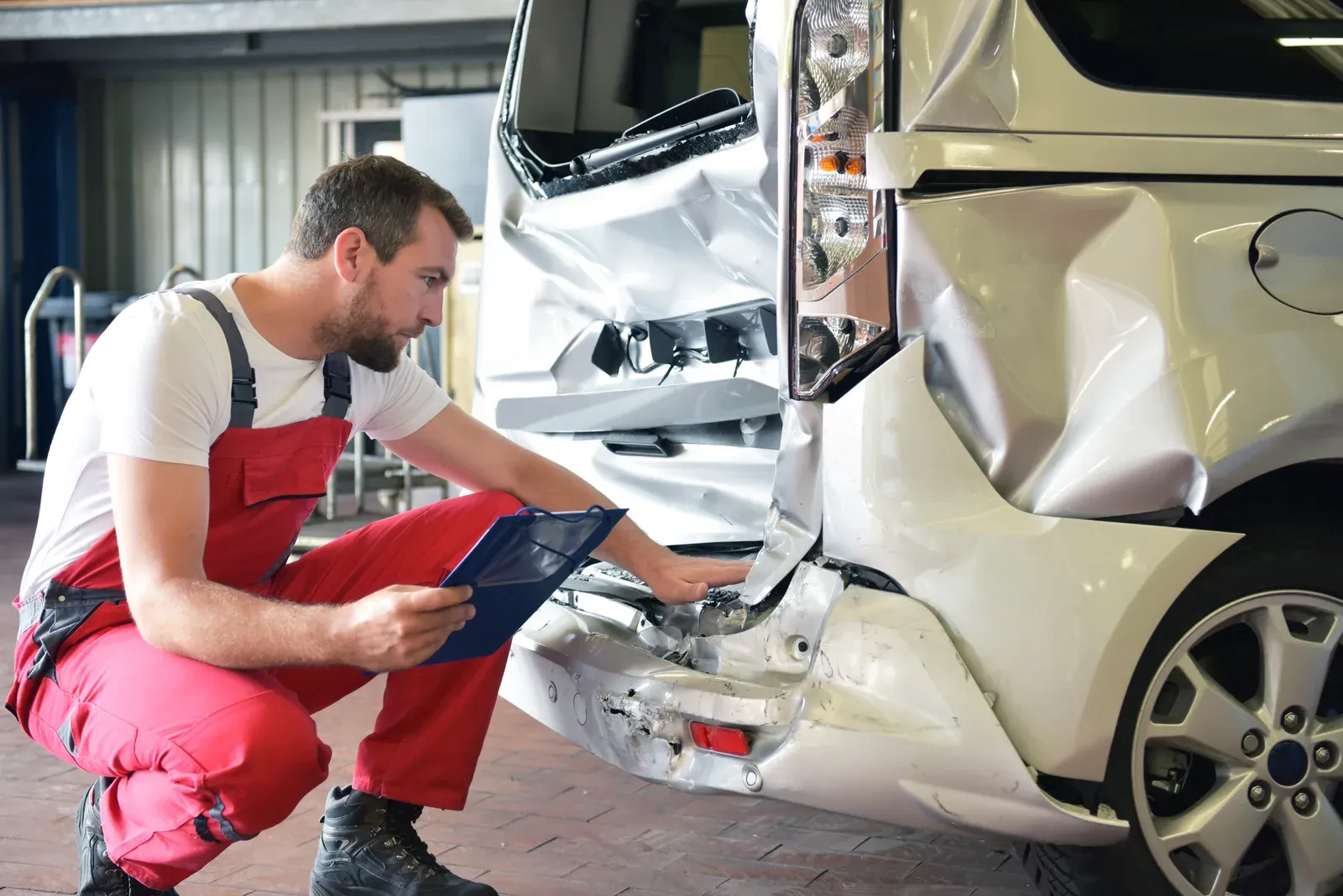
A photo shows a bumper; it cannot show the foam absorber flattened behind it, the cracked lamp bracket, the radar mount knocked two degrees off aim, or the rail that yielded just enough to matter. So the first real step is disassembly: covers, liners, and trim off, everything behind them photographed and, where the hit was hard, measured against factory specification. Only then does the number become final. That order keeps the repair from stalling mid-job while a supplement gets argued, because the supplement was filed on day one with the evidence attached.
From there the work follows the damage honestly — metal repaired where it can be trusted, replaced where it cannot, OEM parts requested wherever the repair touches anything safety-related. The refinish is mixed to your colour code, corrected against the panel as it exists today, and blended into the neighbouring panels so the repair has no visible edge in low sun on the 400 home. Before pickup, the car gets a full inspection and a road test.
- Damaged area disassembled and documented before the price is final
- Structural checks measured, not eyeballed, after any highway-speed hit
- OEM parts requested wherever safety hardware sits in the repair path
- Lifetime warranty on paint and refinish
The claim, DCPD, and who actually does the phoning
Ontario handles vehicle damage through DCPD: when you are not at fault, in whole or in part, your own insurance company pays for your repair, with fault percentages set by the province’s Fault Determination Rules. Notify your insurance company promptly — the standard policy expects notice within about seven days — and report through a Collision Reporting Centre when anyone is injured or combined damage looks likely to pass $5,000, a threshold two modern bumpers can clear on their own. If a preferred shop gets mentioned on the call, remember it is a suggestion; the shop choice is yours by law.
Hand us the claim number and the phoning becomes our job. The owner deals with the adjuster, files the supplement when teardown justifies it, and lines up the rental through your coverage so it begins when the car lands here. Progress reports come straight from the person planning the work. The shop answers at (647) 594-3401, Monday to Saturday, 8 AM to 7 PM, Sundays by appointment.