Where this neighbourhood’s collisions come from
Islington–City Centre generates crashes at two speeds. The slow ones happen where the neighbourhood was redrawn: Six Points traded its flyover ramps for signalized intersections, and drivers who learned the old geometry still misjudge the new left-turn phases where Bloor, Dundas, and Kipling now meet at grade. Kiss-and-ride traffic circling Islington station and the commuter lots at Kipling adds reversing contact and clipped corners at walking pace. None of it looks serious from the outside, which is exactly the problem — a bumper cover springs back over a crushed absorber and hides the real bill.
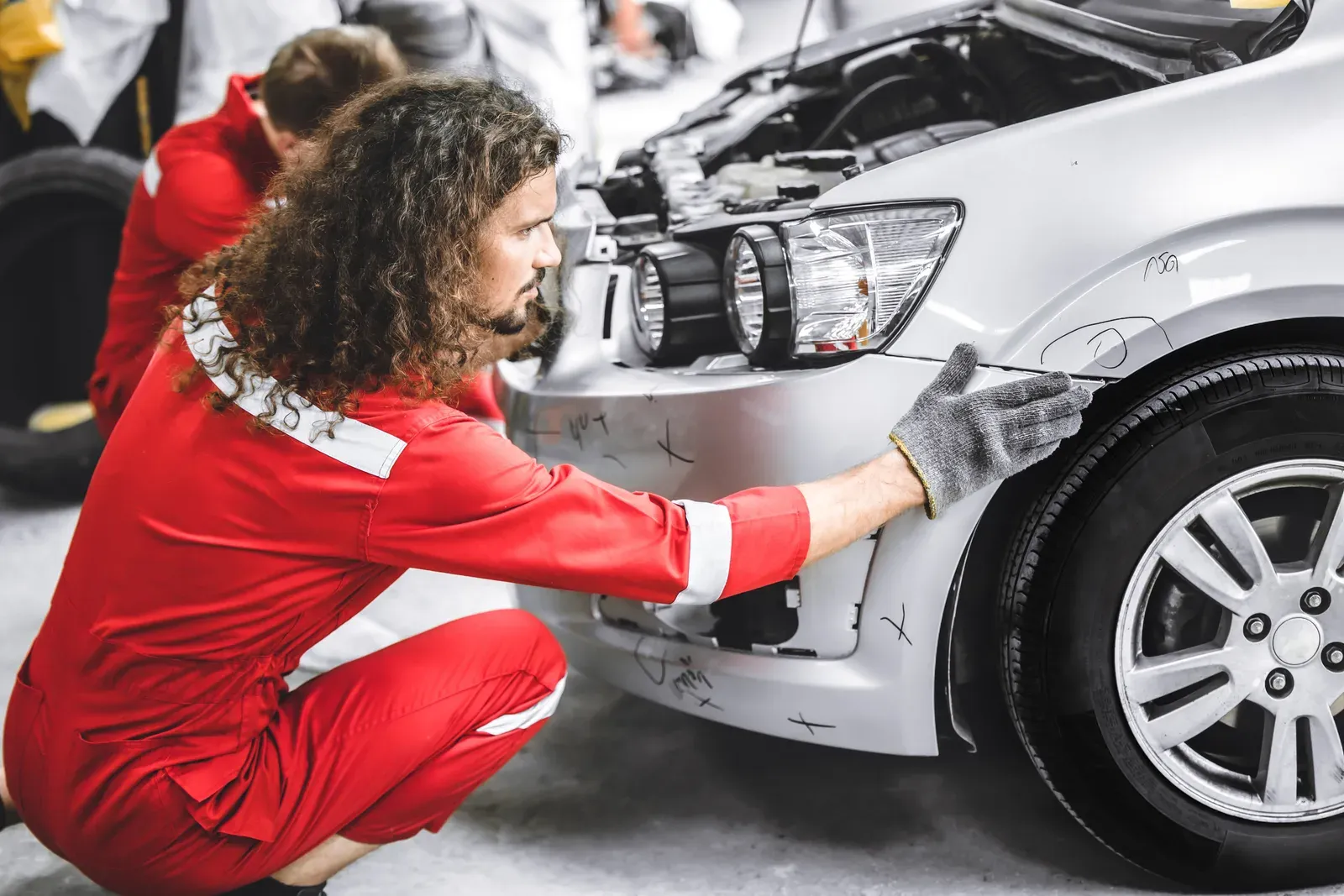
The fast ones come off the 427. The Burnhamthorpe and Dundas interchanges compress three lanes of impatient traffic into short merges, and the stop-and-go between there and the airport is a rear-end factory on any wet evening. A hit at those speeds reaches past plastic into the rear body panel, the trunk floor, and the sensor brackets modern cars hang inside their bumpers. That is why nothing here gets a final number from across the parking lot: the damaged corner is disassembled, photographed, and priced against what actually moved.
What happens between drop-off and keys back
The sequence does not change with the size of the hit. Teardown first, so the parts list is complete before anything is ordered and the repair never stalls mid-way waiting on a bracket nobody saw. Structural movement gets measured against factory dimensions rather than eyeballed, and pulled back in documented steps. Replacement parts are specified OEM wherever the repair touches safety, and if your insurance company writes for something lesser, that argument is ours to have — with photos and the factory repair procedure attached, not opinions.
Refinish work happens in the booth with colour mixed to your code, test-sprayed, checked against the panel your car actually wears today, and blended into the neighbouring panels so no edge shows in sunlight. Before you get a call, the car gets a final inspection and a road test. The paint carries a lifetime warranty in writing, and the parts we install carry a parts-and-installation warranty of their own. The drive back down Islington Avenue should be the most boring part of the whole process.
- Photo estimate first — a written number before you drive a kilometre
- Teardown and photographed damage map before the estimate is final
- OEM parts pushed for wherever safety is involved
- Final inspection and road test before pickup
The claim is paperwork we already know by heart
Ontario runs vehicle damage through DCPD: when you are not at fault, in whole or in part, your own insurance company covers your car, with fault split under the province’s Fault Determination Rules. If anyone was hurt or the combined damage looks likely to exceed $5,000, the collision gets reported through a Collision Reporting Centre. From there, we take the file. The owner opens the claim, meets the adjuster, and files supplements backed by teardown photos when the first estimate misses what the photos could not see.
One thing worth saying plainly to anyone told otherwise at a claims counter: no insurance company can require you to use its preferred shop. A recommendation is all it is. Islington drivers bring cars here past a dozen closer options because the estimator, the person calling with updates, and the person accountable at pickup are the same person. If the car cannot make the trip north, call (647) 594-3401 and we coordinate the flatbed; the destination named on the tow ticket is yours to choose.