The geography of a Parkdale accident
Start at the bottom of the hill. Where Jameson meets Lake Shore and the Gardiner, a short merge feeds cars into traffic that is either at expressway speed or fully stopped, and the switch between those states happens without much warning. That gap is where the neighbourhood’s harder hits come from — the rear-end at the end of the ramp, the front corner caught changing lanes into a gap that closed. The damage runs deeper than it looks, because a bumper system that takes an expressway-speed tap usually gives up its absorber and brackets while the cover snaps back into shape.
Up on the grid the collisions are slower and stranger. Left turns across the streetcar tracks on Queen and King produce front-corner strikes; the King–Queen–Queensway–Roncesvalles junction funnels four directions of traffic, bikes, and streetcars through one rebuilt corner; and on Exhibition event nights, Dufferin and the side streets off Springhurst fill with visiting drivers reversing into spots by guesswork. A good share of what we repair from Parkdale was parked when it happened — and parked-car damage is still collision damage, estimated and documented exactly the same way.
Why the photo number is not the final number
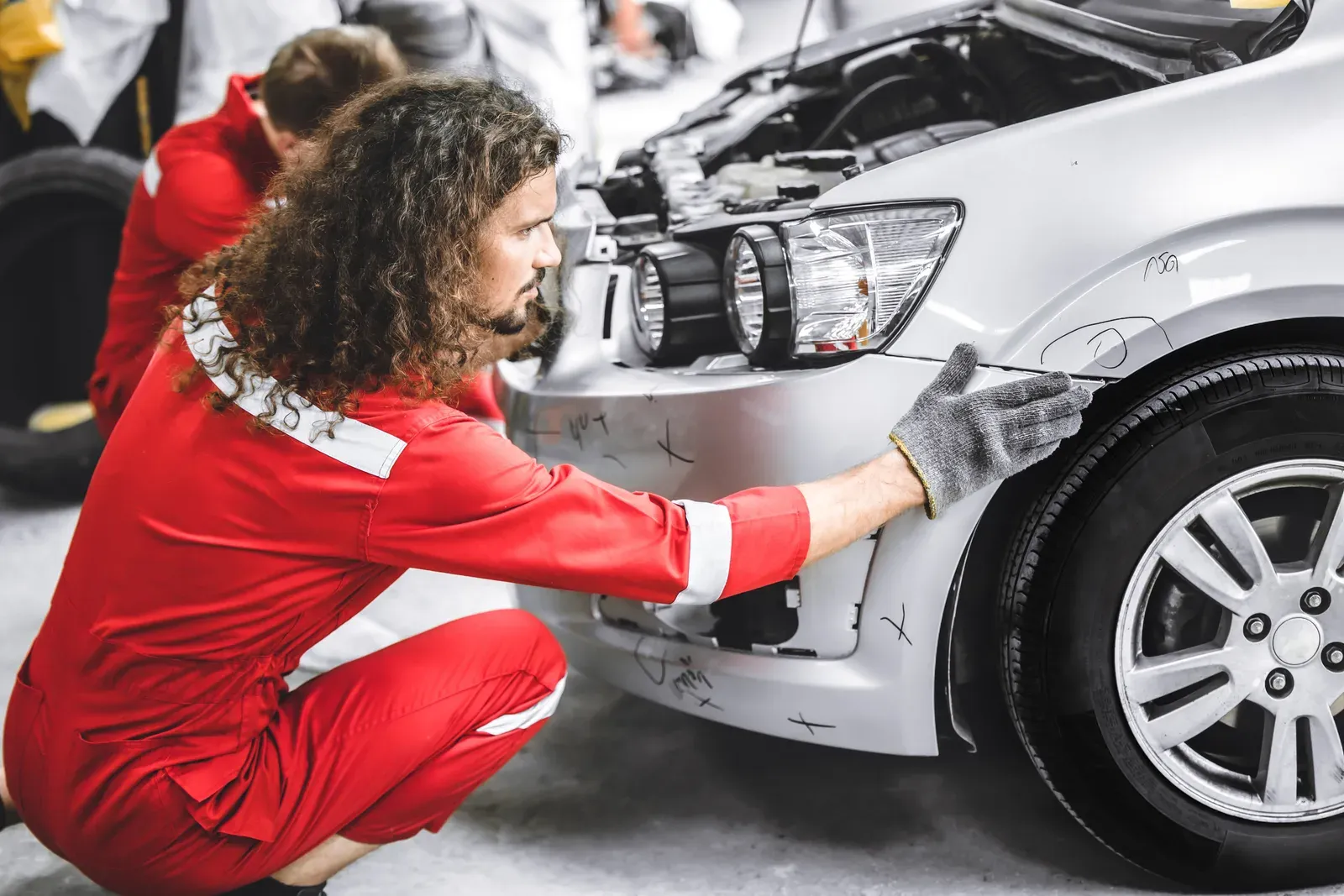
Your photos are enough for a fast written starting figure — send one wide shot, one mid-distance, one close-up, and a number comes back quickly. But the honest estimate gets written after teardown, when the cover, liner, and trim are off and everything broken is visible and photographed. Modern front and rear assemblies hide their worst damage: foam absorbers crushed flat, cracked sensor mounts, a headlight bracket split behind an intact lens. Writing the claim against that documented list is what keeps the repair from stalling mid-way while a supplement gets argued.
Anything that could have reached structure goes on the measuring bench, where the car’s reference points are checked against the factory’s published dimensions before and after correction. Refinishing is matched to your paint code, tuned to the panel as it has actually aged, and blended into the neighbouring panels so the repair has no visible edge. The paint work carries a lifetime warranty, and replaced parts carry a parts-and-installation warranty — both in writing when you pick the car up.
- Written photo estimate the same day, final number after teardown
- Hidden damage photographed and sent to the adjuster as documentation
- Structural points measured against factory specification, before and after
- Lifetime warranty on paint and refinish; warranty on replaced parts
DCPD, the claim, and the drive north
Ontario settles most vehicle damage through DCPD: when you are not at fault — in whole or in part — your own insurance company pays for your car, with the percentages set by the province’s Fault Determination Rules. Report through a Collision Reporting Centre when anyone is hurt or the combined damage looks likely to pass $5,000, and notify your insurance company promptly; policies expect notice within seven days. From there our office takes over — claim opened, adjuster dealt with directly, supplements backed with teardown photos, and OEM parts argued for wherever safety is in play.
Getting here is one road once you clear the neighbourhood: Parkside Drive up the side of High Park, which becomes Keele at Bloor, then straight north over the 401 to our door just south of Sheppard. If the car stayed where it was hit — a curb lane, a garage level, the shoulder of Lake Shore — call (647) 594-3401 and the tow gets coordinated from our end; Ontario’s towing rules let you name the destination. Hours are Monday to Saturday, 8 AM to 7 PM, Sundays by appointment.