The hits that reach the structure
Structural damage in Oshawa comes from speed and from geometry. The 401 supplies the speed: even a “moderate” rear-end at highway pace can shove a rear body panel and floor forward, and a front hit into slowed traffic loads the rails through the crush zones exactly as designed — which means the rails did their job and now need proper measurement, not a visual once-over. The rural north supplies the geometry. Deer step onto Simcoe Street toward Port Perry, Winchester Road, and the Columbus and Raglan lines at dusk in October and November, and a 60 km/h deer strike routinely bends radiator supports, aprons, and upper rails behind a hood that merely looks crumpled.
Winter adds the sneaky category: curbs and medians. A car that slides on black ice near a ramp and catches a curb square on one wheel can drive away looking untouched while the impact travelled up the suspension into the mounting points. The tell is a steering wheel that sits off-centre, tires wearing unevenly a month later, or an alignment shop saying the numbers will not come back into spec. That last sentence is the important one — when alignment cannot be corrected, the structure has moved, and the fix is measurement and pulling, not more alignment attempts.
Measured against factory data, pulled in recorded steps
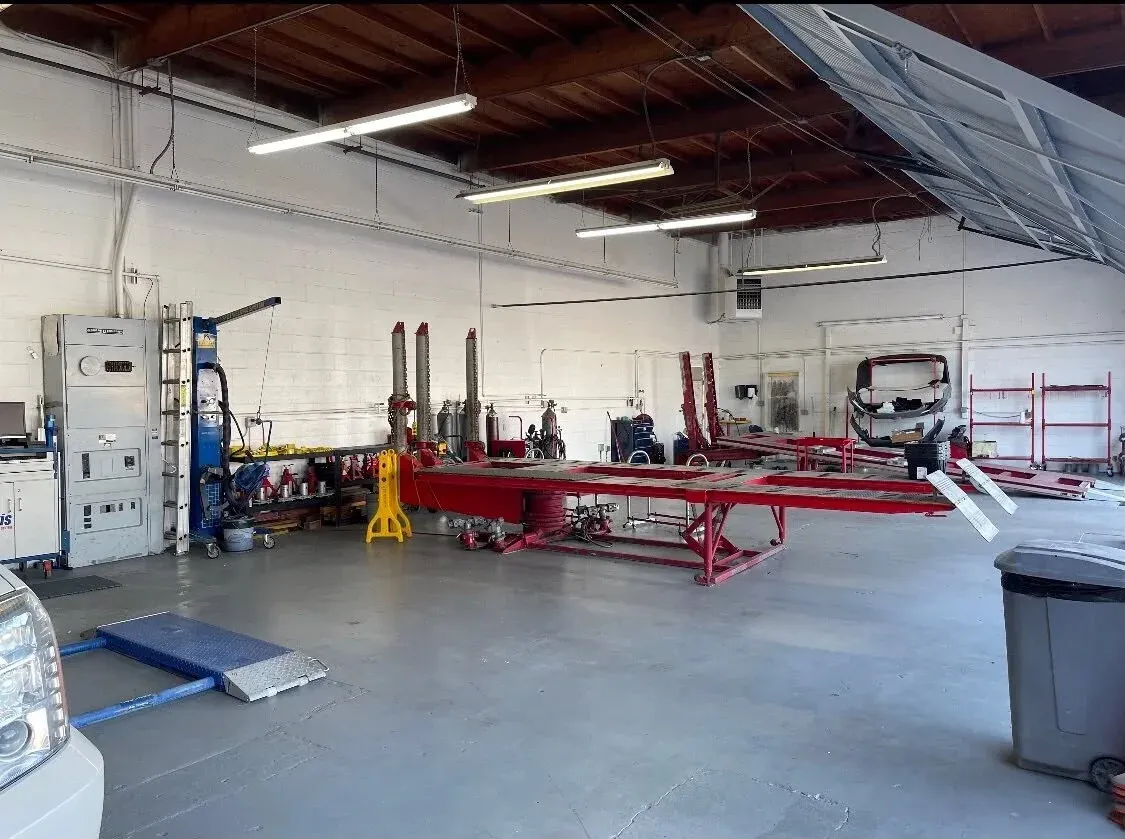
Modern vehicles are unibodies: the “frame” is the body, engineered to millimetre tolerances so crumple zones collapse correctly and airbags time correctly in the next collision. So the work starts with measurement — the vehicle is set up on the bench and its control points are compared against the manufacturer’s specifications, producing a printed map of exactly what moved and by how much. That document does double duty: it directs the repair, and it goes to your insurance company as evidence when the estimate needs to reflect structural work rather than panel work.
The pull itself happens in controlled increments, re-measured as it goes, because steel that moved 8 mm must come back 8 mm — not roughly, not visually. Sections that the manufacturer designates as replace-only get replaced, not pulled, and we request OEM structural parts and argue for them where safety is involved. After the structure is confirmed, everything downstream follows: suspension geometry, panel fit, and a final alignment. The finished file shows before-and-after measurements, which is what lets a future buyer, a UVIP-stage inspection, or your own peace of mind stand on documentation instead of on someone’s word.
- Printed before-and-after measurements against factory specifications
- Replace-only structural sections replaced, never pulled
- OEM structural parts requested where safety is involved
- Alignment and road test after the structure is confirmed
Structure changes the claim — here is how we run it
Once a repair involves structure, the estimate conversation with your insurance company changes character. The repair cost rises, and the insurance company begins weighing repair cost plus salvage value against the vehicle’s actual cash value — Ontario has no fixed statutory percentage for a total loss; it is that comparison, case by case. Our measurements and photographs are what keep that comparison honest, and the owner presents them to the adjuster directly rather than letting a photo-based first estimate stand for a structural file.
Logistics matter more on these jobs because the car frequently cannot drive. Ontario’s towing rules put the destination in your hands: from a 401 shoulder, a CRC lot, or a Durham storage yard, name Collision Auto Center in North York and we coordinate the flatbed and fold it into the claim. Rental coverage is booked from the day you hand over the keys, updates come from the owner, and nothing is released until the structure has been verified and road-tested. The distance between Oshawa and Keele and Sheppard is real; on a structural file, it is also the least important variable.