The hits that bend structure here
Frame damage needs energy, and Stoney Creek’s geography supplies two kinds. The first is horizontal: the QEW between the Skyway and Fifty Road runs at full highway speed until the moment it does not, and the Red Hill merge at Centennial Parkway manufactures exactly the compressed, multi-car slowdowns where a distracted half-second becomes a rear rail driven forward or a front structure folded into the car ahead. The second is vertical: the escarpment. Winter slides on the Centennial climb, Mud Street, or the rural accesses above the brow end against guardrails and curbs, and a curb strike at even moderate speed can shove a subframe, bend a control-arm mount, or shift a rail without tearing a single panel open.
That last part is the trap. A car can carry structural damage and still drive convincingly — doors latch, nothing rubs, the wheel sits almost straight. The signs surface later: tires wearing on one shoulder, a steering wheel off-centre after an alignment, panel gaps that grew or pinched on one side, a pull the alignment shop cannot dial out. If any of that follows a hit or a slide, the honest next step is measurement, not another alignment. Measuring is the only way to know where the structure actually sits.
Numbers before force, and numbers after
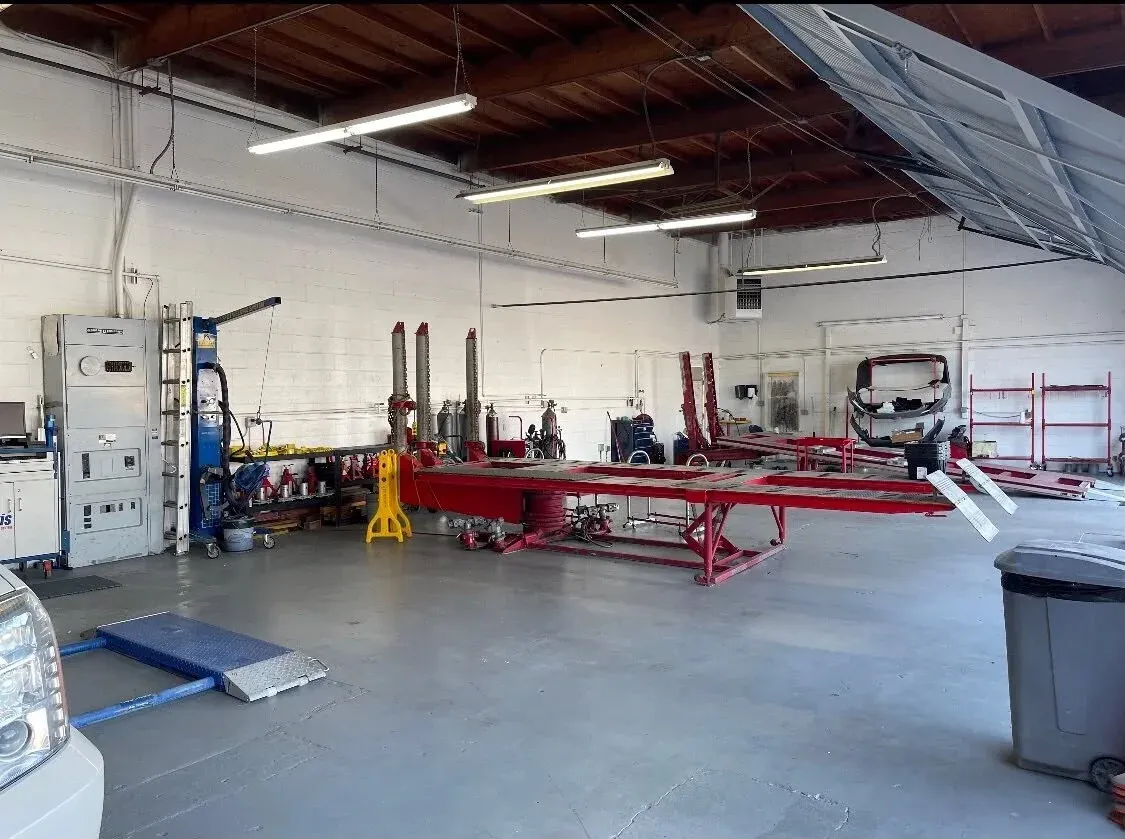
Straightening structure is a measured process or it is guesswork. The car goes on the bench, dozens of reference points are compared against the manufacturer’s specifications, and the printout shows exactly which points sit out of tolerance and by how many millimetres. The pull is then planned — direction, anchor points, sequence — and executed in controlled increments with re-measurement between them, because metal that is dragged past its target is metal that has been worked twice. When the numbers land inside factory tolerance, the after-measurements are documented alongside the before, and both go in the file your insurance company sees.
Modern vehicles complicate the picture in one important way: many structural sections are engineered to crumple once and be replaced, not straightened. High-strength steels lose their designed behaviour when pulled and reheated, so the correct repair is sometimes a sectioned or full rail replacement following the manufacturer’s procedure — and we make that call from the repair data, not from whichever line is easiest to write. Where the distinction matters to safety, we put the OEM procedure in front of your insurance company and argue for it in writing.
- Reference-point measurement against factory data before any pull
- Controlled pulls with re-measurement between increments
- Replacement instead of straightening where the manufacturer requires it
- Before-and-after documentation included in the claim file
From a Stoney Creek tow yard to our bench
A car with bent structure usually cannot make the 62-kilometre trip on its own wheels, and it should not try. Ontario’s towing rules work in your favour here: certified operators, itemized invoices, and the destination chosen by you — at the roadside, and again at any storage yard the car landed in afterward. Call (647) 594-3401 with the yard’s location and we coordinate the flatbed to North York, and we push to move quickly because yard storage bills daily and every stored day is money subtracted from the repair.
Structural files are also where total-loss math gets decided, so we are straight about it from the first photos. Ontario sets no fixed percentage; your insurance company weighs the vehicle’s actual cash value against repair cost plus salvage value, and a measurement report is what turns that from an argument into arithmetic. If the numbers say the car should be repaired, the owner manages the claim, the supplement, and the parts from one desk. If they say it should not, you hear that from us plainly — before the bench time, not after.