Bowmanville’s structural damage comes from speed and ditches
Structural damage needs energy, and Bowmanville’s roads supply two kinds. The first is the 401, where Clarington drivers spend more highway kilometres than almost anyone else in the GTA — a hit at 100 km/h, even a glancing one, drives force through bumper reinforcements into rails and aprons whether or not the skin shows it. The second is the winter geometry of the concession roads: open fields, drifting snow, black ice, and deep ditches on both shoulders. A car that leaves the road near Tyrone or Solina does not stop gently, and the impact loads that come up through a wheel — ditch entries, culvert strikes, frozen-bank hits — bend suspension pickup points and rails in ways a walk-around inspection will never reveal.
Deer season adds the third pattern. From October through December the tree lines along the roads north of Taunton produce dusk and dawn strikes, and a deer hit at rural speed routinely pushes the radiator support and upper rails out of position behind a hood that merely looks crumpled. All three patterns share one truth: the visible damage is the least important part of the file.
Measured against the factory, not against a straight edge
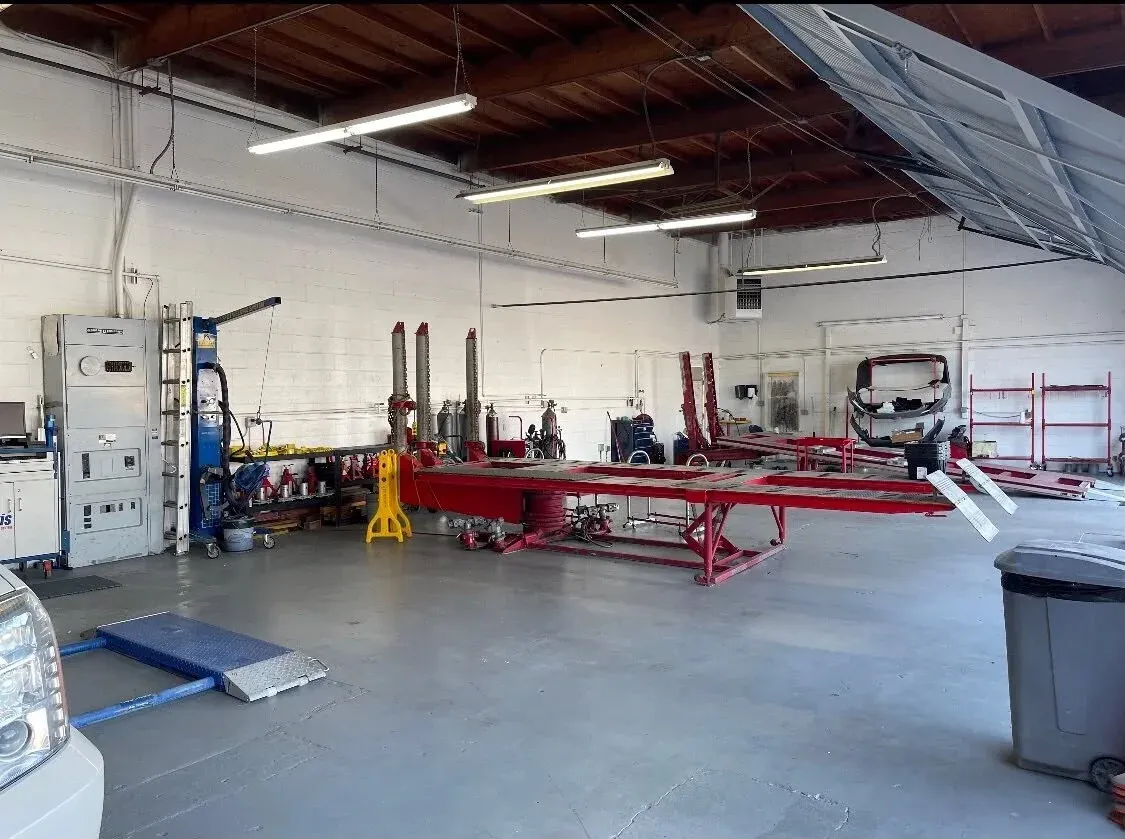
Modern vehicles are unibody structures — the frame is the body, engineered with crumple zones that are supposed to deform and mounting points that are not. Judging that by eye is guesswork, so we do not. The vehicle goes on the bench and its control points are measured electronically against the manufacturer’s specifications. Those numbers, recorded before anything is touched, tell us exactly what moved and by how much — and they become part of the documentation your insurance company sees, which keeps the conversation about facts rather than opinions.
The correction is pulled in controlled stages, re-measured as it goes, and finished only when the structure sits within factory tolerance. That precision is not pedantry. Suspension geometry, panel gaps, crash-sensor positions, and the aim of driver-assistance radar all assume the structure underneath them is where the factory put it. A car straightened “close enough” eats tires, wanders on the highway, and cannot be trusted to protect you in a second collision. The before-and-after measurements go in the file, and you get a copy — useful for your own records and for any future buyer asking about the vehicle’s history.
- Electronic measurement against factory control points before any work
- Staged pulls, re-measured continuously, finished within tolerance
- Documentation shared with you and your insurance company
- Alignment and safety-system checks after the structure is corrected
Getting a bent car here — and being honest about total loss
A car with suspected structural damage should not be driven 75 kilometres, full stop. It comes in on a flatbed, and Ontario’s towing rules put the destination in your hands — from a ditch on a concession road, from a Collision Reporting Centre, or from a yard where it landed after the crash, tell the operator Collision Auto Center in North York and call us with the details. We coordinate the rest and fold the tow into the claim, and the rental through your coverage starts when your keys reach us, not when you find time for paperwork.
We are also honest about the other outcome. Ontario has no fixed total-loss percentage; the insurance company weighs the vehicle’s actual cash value against repair cost plus salvage value, and a serious structural hit on an older car sometimes loses that math. When our measurements point that way, we say so early — before you have burned weeks waiting on a repair that was never going to be approved. Either way, you get real numbers from the person who took them, at (647) 594-3401.