The hits around Maple that reach the structure
Most Maple bodywork is cosmetic. The exceptions cluster in predictable places: the Highway 400 ramps at Major Mackenzie and Rutherford, where a queue collapse turns a 60 km/h closing speed into somebody’s rear rail; the wide, fast stretches of Teston and Kirby where a T-bone at a stop-sign crossing loads the door ring and rocker; and — more often than people expect — the humble windrow. Hitting a frozen snowbank or the curb hiding inside it can shove a front wheel hard enough to bend suspension mounting points without leaving much visible damage at all.
The warning signs are worth knowing. Doors that suddenly need a slam, a hood gap wider on one side than the other, a steering wheel that sits off-centre on a straight run down Keele, tires wearing one shoulder — any of these after an impact says the geometry may have moved. None of them can be diagnosed from the driveway, which is why measurement, not opinion, is where structural work starts.
Measured before, pulled in steps, measured after
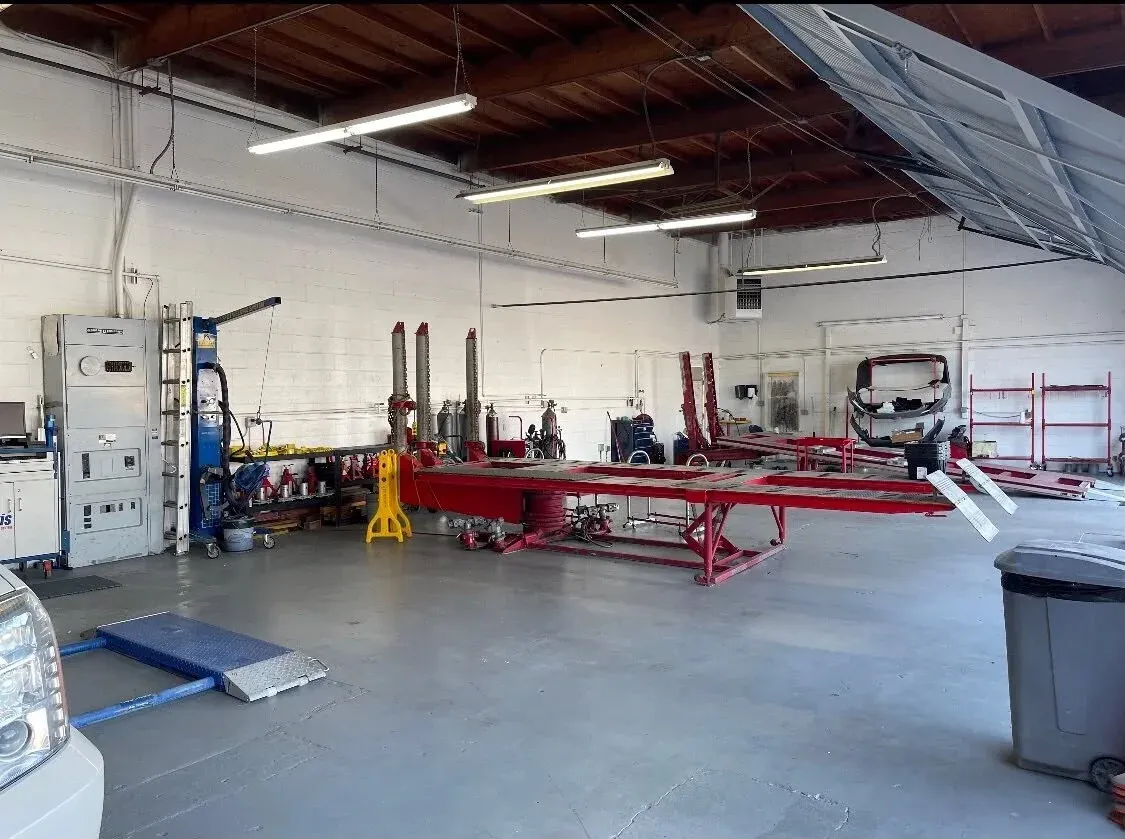
On the frame equipment, the car’s structural reference points are measured against the manufacturer’s data — dimensions in millimetres, not judgement calls. If rails, aprons or the rear body have moved, the pull is planned and executed in controlled increments, re-checking as the metal comes back, because modern unibody structures are engineered to crumple in specific zones and must be returned to specification, not simply made to look straight. Every measurement, before and after, goes into the file.
That documentation is not bureaucracy. It is what proves to your insurance company that the repair was necessary and complete, what protects the car’s value when you sell it with a UVIP down the road, and what confirms that the crash structure will do its job in a second impact. Where the pull reveals metal too damaged to restore, the section gets replaced — with OEM parts wherever safety is on the line, and we push your insurance company on that point when it matters.
Getting a car that should not be driven out of Maple
Structural damage often means the car is done driving until it is fixed. Ontario’s towing rules put the destination in your hands — a tow operator takes the vehicle where you say, with an itemized invoice — so whether the car sits on your driveway off McNaughton, on the Rutherford shoulder, or in a Collision Reporting Centre lot after a reportable crash, one call to (647) 594-3401 has it brought straight here. Remember that collisions with injuries, or with combined damage that looks to exceed $5,000, must be reported — and a structural hit almost always clears that bar.
We will also be straight with you about the other possible ending. There is no fixed percentage in Ontario at which a car becomes a total loss; the insurance company weighs actual cash value against repair cost plus salvage. If our teardown suggests the numbers will not favour repair, the owner tells you before the claim drags on — in plain terms — so you can plan for either outcome instead of waiting on one.