The dent census, from P3 to the Kipling lots
Ask where Islington dents come from and the answer is almost always parking. The tower garages between Islington and Kipling stations pack cars into columns-and-ramps geometry that punishes a moment’s inattention — door edges meet pillars, liftgates meet low beams, and the turn onto the down-ramp catches more quarter panels than anyone admits. Above ground, the commuter lots at Kipling and the angle parking along Dundas in Islington Village run on door-swing physics: the classic ding, half a knuckle deep, dead centre in your door.
Winter adds its own contributions east of the subway, where Kingsway cars live outside. Plows build windrows across driveway mouths that freeze overnight into something firmer than a bumper, and February potholes on Royal York and Dundas hammer wheels hard enough to leave sheet metal rippled around the arches. A dent from any of these sources is cosmetic right up until the paint is broken — after that, salt season turns it into a rust project on a schedule.
Repairing the metal instead of hiding it
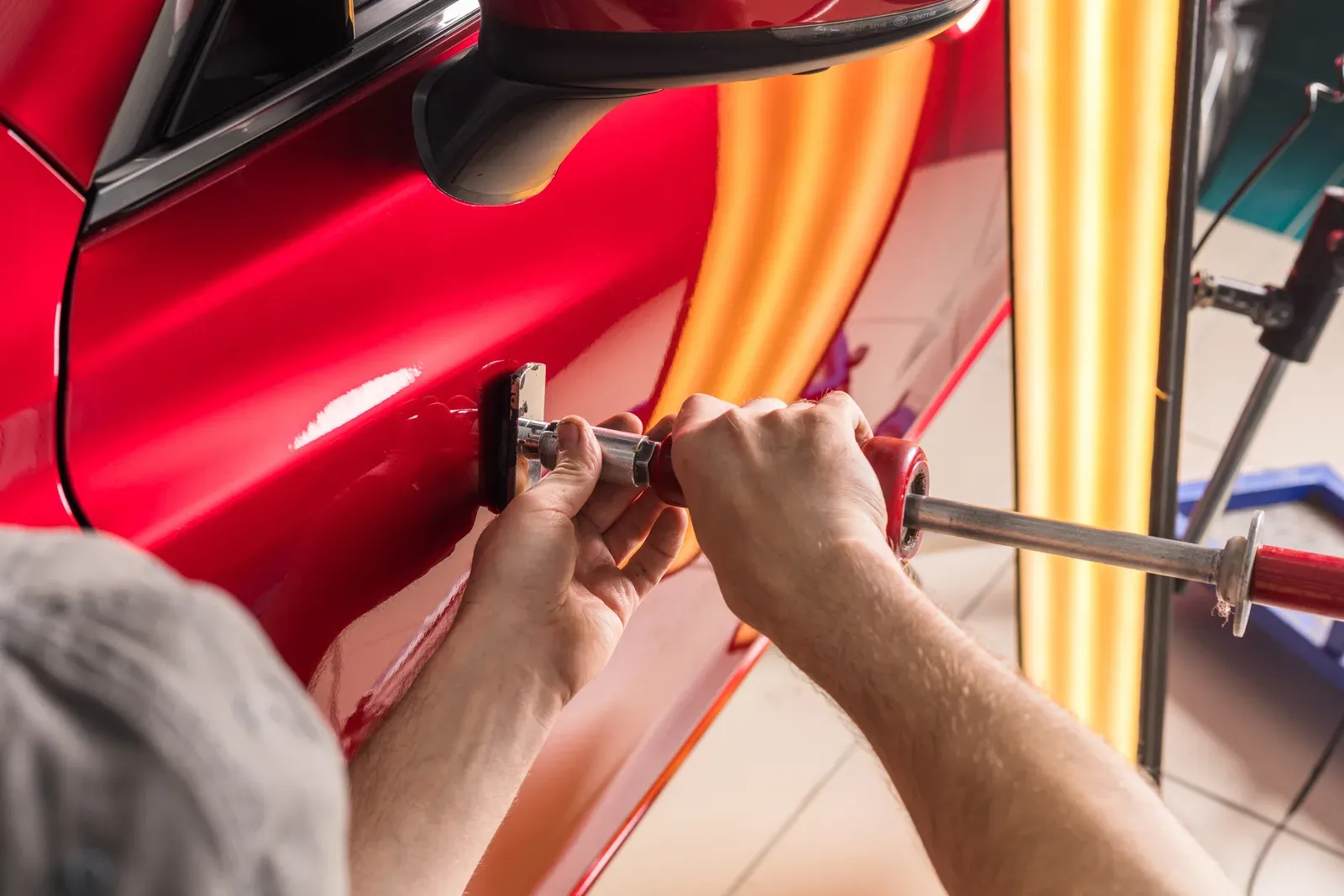
A proper dent repair starts with what the panel is made of and how badly the metal stretched. Shallow dents where the paint held can often be worked back to shape from behind the panel and need no refinishing at all. A crease with a sharp bottom is a different animal — the metal has stretched along the line, and it needs to be shrunk and finished properly, then repainted. What it should never get is the shortcut: a skim of thick filler sanded smooth, which looks fine at pickup and telegraphs through the paint within a couple of winters.
Where refinishing is needed, it gets the full process rather than a spot of touch-up: colour mixed to code, corrected against your panel’s actual aged shade, and blended into the surrounding area so the repair has no visible border. Aluminum panels — common on newer hoods and tailgates in those condo garages — behave differently under a hammer than steel and get treated accordingly. Every repair is checked under angled light before the car goes back, because that is exactly how you will check it in your garage.
- Paint intact and metal unstretched — often repairable with no refinish
- Creases and sharp-bottomed dents — metal finished, then repainted and blended
- Broken paint on any dent — repair before salt season, not after
- Aluminum panels handled with aluminum-specific technique
Claim it or pay for it: the honest math
Most single dents land in awkward territory — real money, but close enough to a deductible that filing a claim deserves a pause. The way through is a firm number. Send three photos and get a written price; hold it against your deductible; and remember that damage someone else caused while your car sat parked works differently from damage with no identified driver. A garage camera that catches a licence plate can move the whole repair into a DCPD claim where your deductible may not apply at all.
Whichever way the math points, the repair is identical — same metal work, same refinish standard, same lifetime warranty on the paint. If it becomes a claim, we open it and deal with your insurance company from our office. If it stays out of pocket, you get the same written estimate and nobody upsells you a bigger repair than the dent deserves. The shop is off Keele just south of Sheppard; call (647) 594-3401 or send the photos and start with the number.