Stalls drawn to the minimum, doors that pay for it
Liberty Village parks more cars per square metre than almost anywhere in Toronto, and the dents follow the density. Underground stalls beneath the East Liberty and Western Battery towers were laid out when the average vehicle was smaller; put two modern SUVs side by side and every entry and exit is a negotiation measured in centimetres. The result is the signature neighbourhood dent — a door edge printed into the panel beside it, at door-handle height, often more than once. Visitor parking is scarce enough that guests improvise, and improvised parking has its own casualty rate.
Above ground the geometry is no kinder. Hanna, Jefferson, and Mowat are narrow streets doing heavy work — couriers, movers, construction traffic — and a street-parked car there collects mirror clips and fender creases from vehicles that never stopped. The Metro lot on East Liberty adds swing-door contact and reversing taps — parking-lot accidents in the eyes of a claims adjuster, even at walking speed. Any one of these dents is a small job; the dangerous ones are those where the paint cracked, because a Toronto winter will push salt into that crack and turn a cosmetic repair into a corrosion repair by spring.
How a dent gets repaired properly
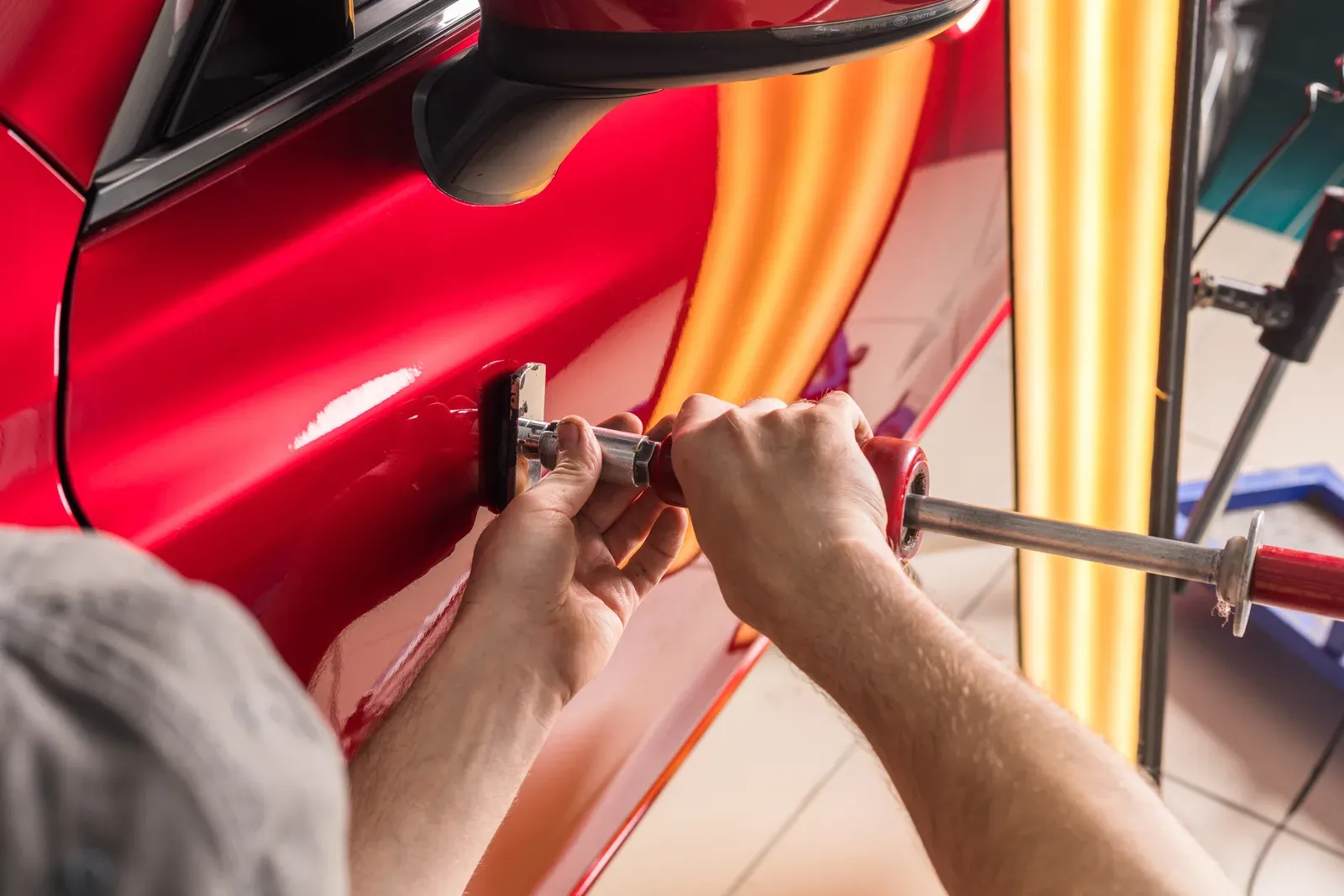
Good dent work is metalwork first and cosmetics second. Wherever access exists behind the panel, the steel is worked back toward its stamped shape — pushed, tapped, checked, and rechecked — so that only the thinnest skim of finishing material is needed before primer. What sets the difficulty is location rather than size: a shallow dish in the flat of a door comes out cleanly, while a crease that crosses a styling line has stretched the stiffest part of the panel, and restoring that line straight takes patience and a steady eye. If a skin is honestly past saving, we say so and price repair against replacement in the same document.
Then the repair has to vanish. The panel is refinished to match the car as it stands now, not the code sticker in the jamb, and the colour is blended into the panels beside it so no boundary exists for daylight to expose. The refinish carries the same lifetime warranty as our collision paint work. The test we hold ourselves to is blunt: standing in your garage a month later, you should not be able to point to where the dent was.
- Metal reshaped from behind the panel wherever access allows
- Body-line creases rebuilt straight, not buried in filler
- Repair versus panel replacement priced side by side when it is close
- Refinish blended and covered by the lifetime paint warranty
Deductible arithmetic before any claim gets opened
A single dent usually prices near a typical deductible, which makes the first step obvious: get the number before you touch your policy. Text photos of the damage — one wide, one close, one at an angle that shows the shadow — and a written price comes back quickly. If the price sits below or near your deductible, claiming gains you nothing and we will tell you so. If the damage is deeper than it looks or spans panels, it becomes an ordinary claim and our office runs it, adjuster and paperwork included.
For a car that spends most of its week underground, the repair barely interrupts anything. Parts and paint are staged before your visit, most single-dent jobs run a few days, and the drop-off folds into a normal morning — leave the car with us from 8 AM, Monday to Saturday, and be back downtown by mid-morning via Line 1 and the GO to Exhibition. Questions go straight to the owner at (647) 594-3401, not to a call centre.