A crash file written along Lake Shore and Browns Line
Because the 501 terminates at the Long Branch loop, there is almost always a streetcar somewhere on the strip — and behind every stopping streetcar, a driver who left half a car length too little. Those taps look minor and often are not: the cover scuffs, the absorber behind it crushes, and the trunk floor can shift a few millimetres that only show up later as a leak or a rattle. Left turns across the tracks at Lake Shore & Kipling add caved front corners to the list, especially in rain, when painted lines and steel rail both stop gripping.
The other half of the file comes off the ramps. Browns Line and Evans feed the 427 and the QEW, and short merges into fast traffic produce the harder rear-ends and lane-change sideswipes. In February and March the freeze–thaw cycle opens potholes along Lake Shore and the side streets, and swerving around one at the wrong moment ends with a curb, a pole, or a parked car. Different causes, same rule at our end: nothing gets priced until we can see everything the impact touched.
What a proper repair includes — and what a photo misses
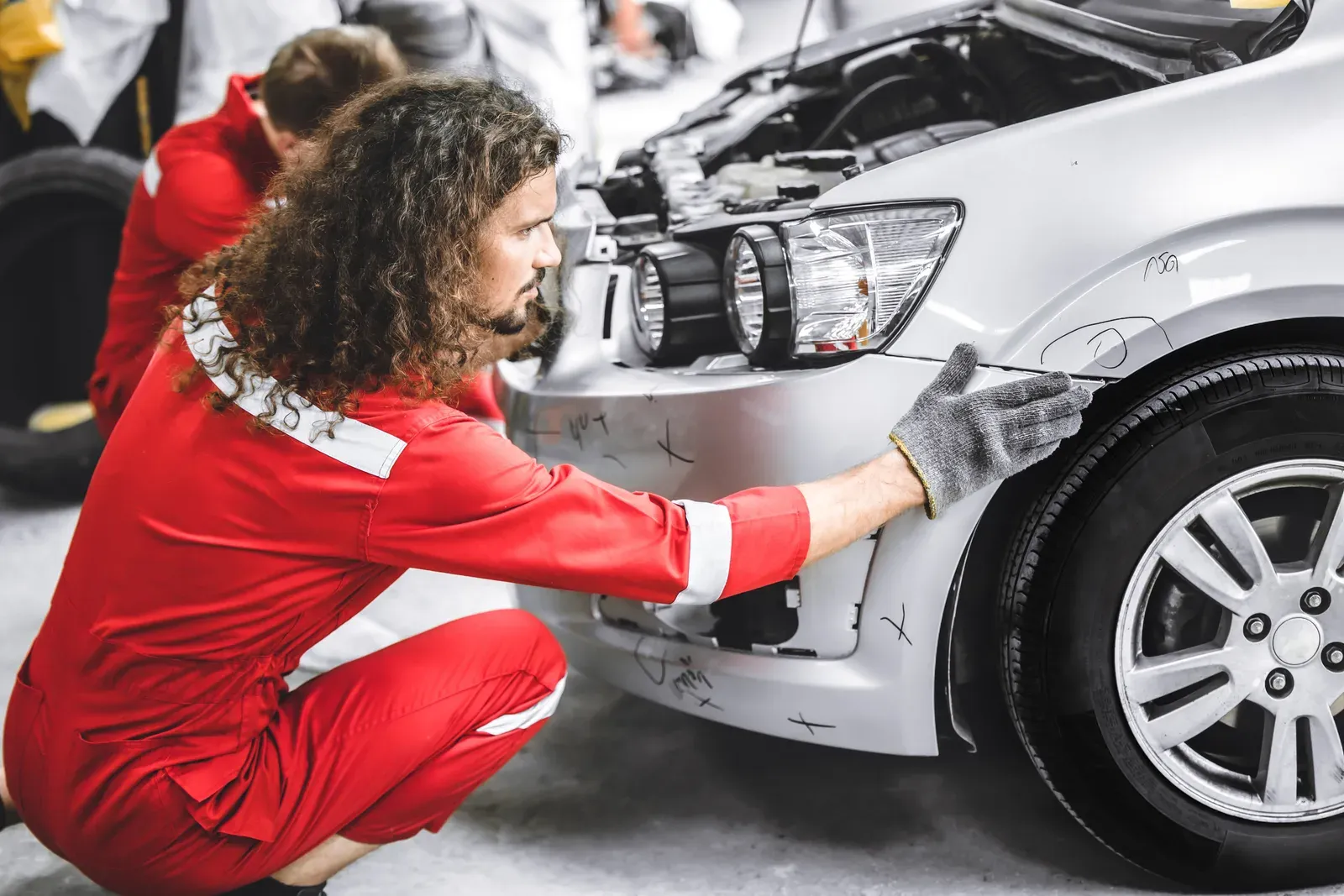
Photos start the process; they never finish it. Once the car is in the shop the bumper cover, liners, and trim come off, and the estimate is finalized against what is actually there — cracked brackets, a bent reinforcement bar, a radiator support nudged out of square. Everything gets photographed as it is found, which is what lets us file a supplement with your insurance company instead of asking you to argue about it. Where the damage touches anything safety-related, we push for OEM parts and explain the difference in writing.
If the hit went deeper than panels, the structure is measured before and after correction so the repair is documented, not assumed. Refinishing is matched to your paint code, adjusted to how your panels have actually aged, and blended into the neighbouring metal so the repair has no edge to find. Paint and refinish work carries a lifetime warranty; replacement parts carry a parts-and-installation warranty. The car leaves after a final inspection and a road test, not before.
- Teardown and photo documentation before the estimate is final
- Supplements filed by us, backed by pictures, not by phone arguments
- OEM parts requested where the repair touches safety systems
- Measured structure, blended refinish, road test before pickup
The claim, from first call to keys
Ontario handles vehicle damage through DCPD: when another driver carries some or all of the fault, your own insurance company pays for your repair, with percentages set by the province’s Fault Determination Rules. Notify your insurance company promptly — the standard policy expects notice within seven days — and report through a Collision Reporting Centre when anyone is injured or the combined damage looks likely to exceed $5,000. If your policy dropped DCPD through the OPCF 49 endorsement, say so early; it changes what is covered.
Whatever shop your adjuster mentions is a suggestion, nothing more — the repair location is your decision. Choose us and the owner opens the claim, deals with the adjuster directly, and keeps you off the phone tree. A rental, when your coverage includes one, is booked to meet your drop-off. If the car cannot make the 427, call (647) 594-3401 from wherever it sits and we will help arrange the flatbed. Monday to Saturday, 8 AM to 7 PM; Sundays by appointment.