Where Mississauga cars get hit
The map of Mississauga collisions draws itself. The 401 across the top of the city carries the heaviest truck traffic in the region, and the express–collector transfers around the 403/410 junction stack up twice a day — every slowdown breeds a chain of rear-end hits, and a tap at truck-lane speeds does more behind the bumper cover than on it. The 403 adds its own share at the Mavis and Erin Mills ramps, and the QEW contributes eastbound crawl over the Credit River every single morning.
Off the highways, the pattern shifts to intersections. Burnhamthorpe and Eglinton cross the whole city with long, fast blocks and left turns across three lanes of opposing traffic, which is where the side impacts come from. Around Cooksville, years of LRT construction on Hurontario narrowed lanes and moved them week to week, and the clipped corners from that era still roll in. None of this is exotic damage — but almost all of it hides its worst part out of sight, behind a cover or under a fender liner.
Teardown first, then a number you can hold us to
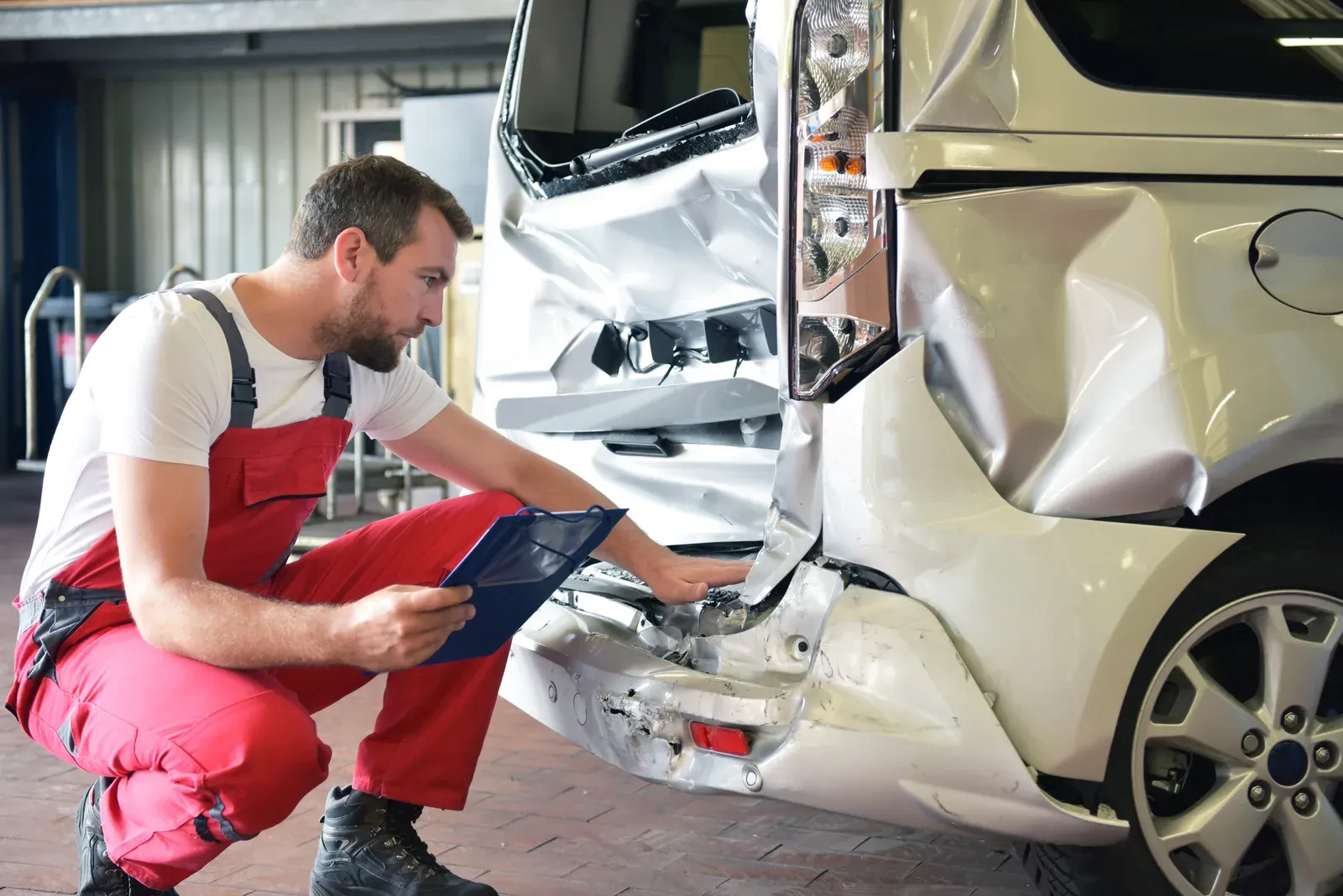
A collision estimate written from the sidewalk is a guess, so we do not finalize ours until the damaged corner is apart. Covers, liners, and trim come off, every hidden find is photographed into your file, and only then does the repair plan get priced. That sequence protects you twice over: the claim is written against documented damage instead of growing mid-repair, and the timeline you are quoted covers the actual job.
Anything structural is measured with laser equipment against the factory dimensions, corrected in controlled pulls, and measured again, with the before-and-after readings kept on record. Where replacement parts touch crash structure or sensor mounts, we press your insurance company for OEM — Ontario law does not require them, so someone has to make the argument, and that someone is us. The refinish is matched to your paint code, tuned to how your panels have weathered, blended past the repair edge, and covered by a lifetime warranty. The car is inspected and road-tested before you see the keys.
- Estimate finalized after teardown, never from across a parking lot
- Laser measuring on structural damage, documented before and after
- OEM parts argued for wherever safety, sensors, or fit are involved
- Inspection and road test before handover
The claim runs from Keele and Sheppard, not your kitchen table
Ontario handles not-at-fault damage through DCPD: your own insurance company pays for your vehicle, with fault split under the provincial Fault Determination Rules. One caution worth knowing — since January 1, 2024, drivers can strip DCPD out of a policy with the OPCF 49 endorsement, and anyone who did has no coverage for not-at-fault damage. Check that before assuming. Report to a Collision Reporting Centre when anyone is hurt or the combined damage looks to exceed $5,000, and give your insurance company notice promptly — the standard policy expects it within seven days.
The rest is ours. We open the claim, meet the adjuster, and file supplements directly, keeping you updated by an actual phone call from the person doing the work. Drivable cars come in on your normal commute, Monday to Saturday, 8 AM to 7 PM, Sundays by appointment; non-drivable ones get towed here on our coordination, and the rental through your coverage is waiting when you arrive.