Burlington’s collisions cluster where its traffic does
Draw a line along the QEW and you have drawn most of Burlington’s collision map. The Toronto-bound crawl between Burloak and the Freeman interchange manufactures rear-end hits every weekday — a glance down near the Appleby ramp, and a bumper meets a trailer hitch at 20 km/h. The split itself is worse: QEW, 403, and 407 traffic weaving across each other in a few hundred metres, which is where the creased doors and torn quarter panels come from. Add the Skyway, where a gust near the crest shoves a car half a lane sideways, and you have the three files we open from Burlington most often.
Surface streets contribute the slower version. Fairview Street around Mapleview Centre and the Burlington Centre stretch of Guelph Line — the mall most locals still call Burlington Mall — produce left-turn corner strikes and backing collisions in the lot rows. Up in Alton and Millcroft, winter narrows the crescents until two SUVs cannot pass without one of them finding a parked car. And on the rural lines above Dundas Street, deer step onto Guelph Line and Cedar Springs Road at dusk in the fall, folding hoods and front clips at country speed. Different roads, same requirement: nobody should quote any of it from the outside.
The estimate is written after the damage comes apart
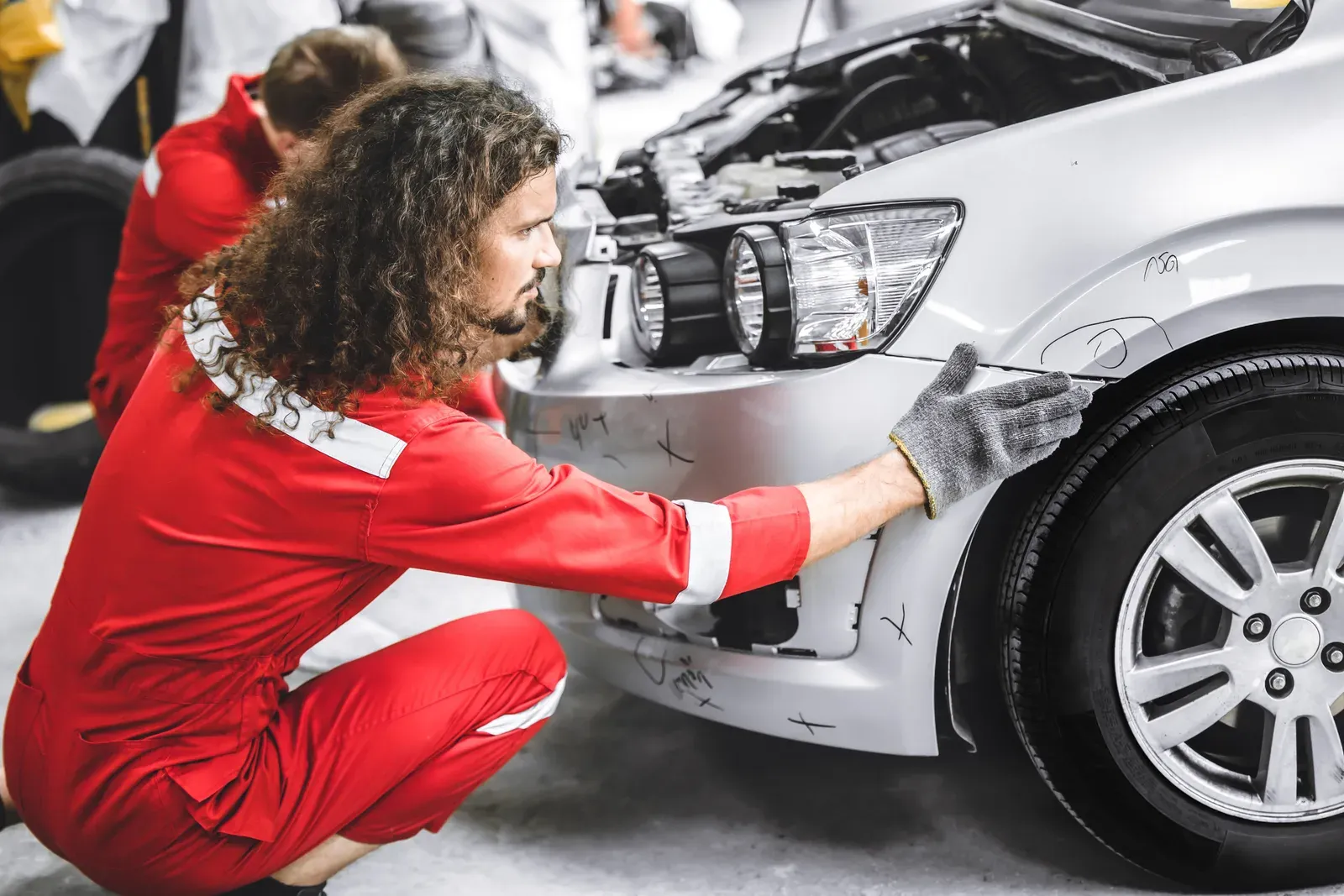
A photo shows the skin of a collision, not the collision. So the damaged corner is disassembled first — cover, liner, lamps, trim — and the absorber, reinforcement, brackets, and sensor mounts behind it are photographed and documented before the estimate is finalized. On anything that happened at highway speed, we measure the structure, because a rail that moved four millimetres decides whether this is a cosmetic repair or a structural one. Doing this on day one means the supplement goes to your insurance company once, early, with evidence attached — not in week three while your rental clock runs.
The repair follows the manufacturer’s data from there. Structure is pulled in measured, recorded steps; panels are repaired where the metal allows and replaced where it does not, with OEM parts requested wherever a safety system is involved. Colour is mixed to your code, sprayed out, checked against the adjacent panels, and blended so the repair has no edge in direct sun. Before the car faces the 407 again it gets a final inspection and a road test — the drive back to Burlington should prove nothing except that the repair is finished.
- Teardown and photo documentation before the estimate is final
- Structural measurements recorded before and after any pull
- OEM parts requested where safety systems are touched
- Lifetime warranty on paint and refinish
The claim moves while the car is still in Burlington
Ontario runs collision damage through DCPD: when you are not at fault, in whole or in part, your own insurance company pays for your vehicle, with percentages set by the Fault Determination Rules. Notify your insurance company promptly — the standard policy expects notice within about seven days — and report through a Collision Reporting Centre when anyone is hurt or combined damage looks likely to pass $5,000, which two modern bumpers can manage on their own. If the adjuster suggests a preferred shop on the North Service Road, that is a suggestion; Ontario law leaves the choice with you.
Send the claim number with your photos and the owner opens the file before the car leaves your driveway or the tow yard. He talks to the adjuster, argues the supplement when teardown turns up more than the first estimate covered, and books the rental through your coverage so it starts when you hand over the keys — which matters when home is 55 kilometres away. Updates come from the person planning the repair. Hours are Monday to Saturday, 8 AM to 7 PM, Sundays by appointment; the number is (647) 594-3401.