The first ten minutes
Rear-end crashes in the GTA happen where traffic compresses — the 401 collectors, the DVP ramps, the left-turn queue on Sheppard. If both cars drive, pull onto the shoulder or into the nearest plaza before anyone starts taking pictures. Standing between two damaged bumpers in a live lane of the 401 is far more dangerous than the crash was.
Exchange names, addresses, licence and insurance details with the other driver. If anyone is hurt, or the combined damage looks like it could pass $5,000, the collision has to be reported — call police, and if officers do not attend the scene, both drivers report to a Collision Reporting Centre, usually within 24 hours.
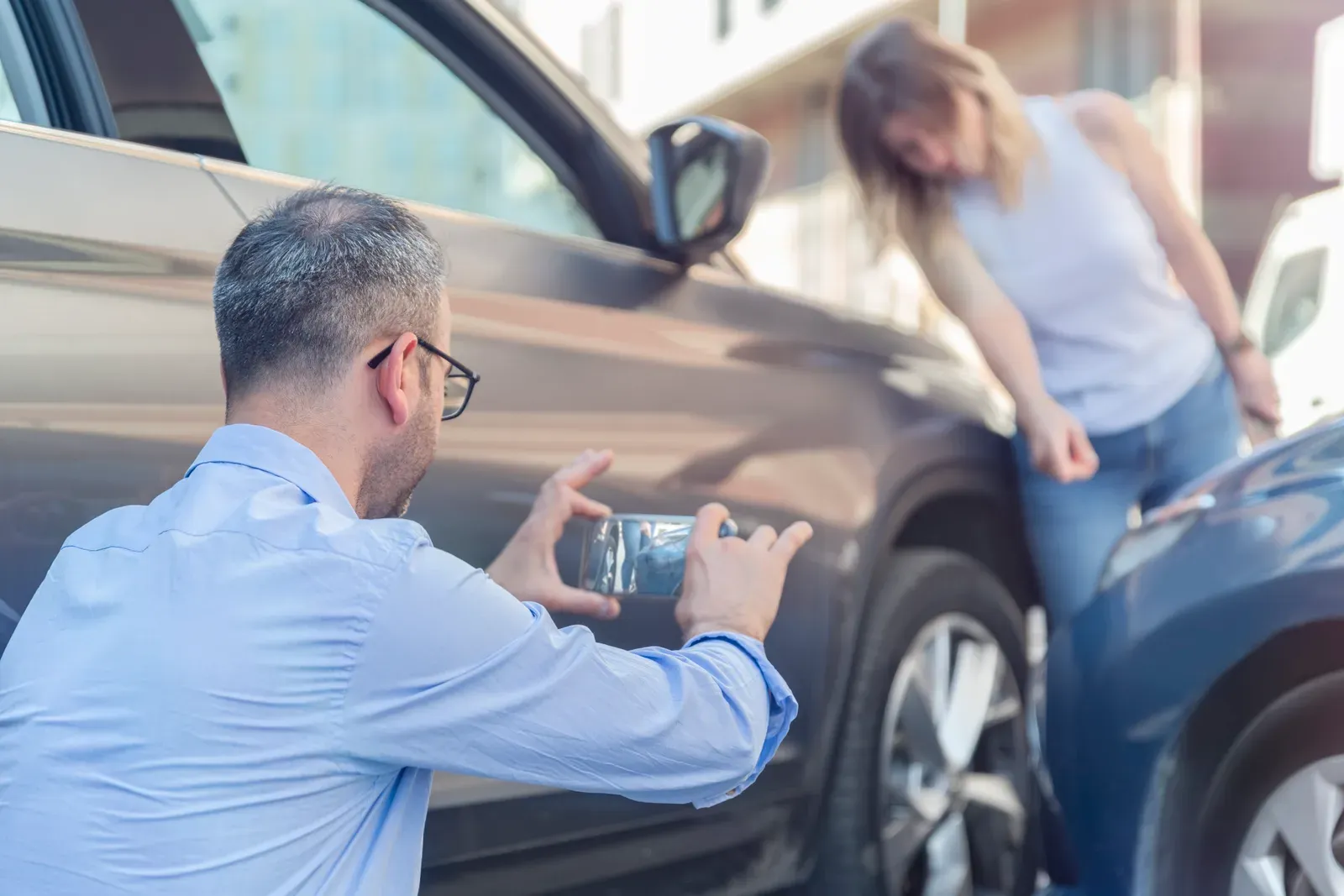
- Photograph both bumpers together, before either car moves again
- Photograph the other car’s plate, insurance slip, and driver’s licence
- Note the lane, the signal or stop sign, and the road conditions
- Ask any witness for a name and number before they pull away
- Describe what happened without arguing about who caused it
Who pays for a rear-end crash in Ontario
Ontario handles vehicle damage through DCPD — Direct Compensation, Property Damage. Because the Fault Determination Rules put a following driver who hits the car ahead at 100% fault in nearly every version of this crash, you claim through your own insurance company for the not-at-fault damage, and there is normally no deductible on that portion unless your policy carries one.
One caveat exists since January 1, 2024: a driver who removed DCPD with the OPCF 49 endorsement gave up coverage for not-at-fault damage, which is worth knowing before you assume every policy responds the same way. Notify your insurance company promptly either way — the standard Ontario policy expects notice within seven days — and remember that in Ontario the choice of repair shop is yours, not theirs.
What a rear-end repair actually involves
The bumper cover is the smallest part of the story. Behind the plastic sit an energy absorber, a reinforcement bar, and the rear rails, and an impact strong enough to crack the cover has usually moved something behind it. No estimate is final here until the cover is off and the parts behind it are photographed.
Newer vehicles carry park sensors, blind-spot radar, and often a camera in that rear cover. Each of those comes off, gets inspected, and gets verified after reassembly, because a radar module sitting a few degrees off its intended angle is a safety system reporting the wrong picture of the road.
- Cover removed; absorber and reinforcement bar inspected and photographed
- Trunk floor, rear rails, and body mounts measured after a firm hit
- Sensor and radar mounts verified before the cover goes back on
- Colour matched to your car’s actual shade and blended into the quarters
Getting a real number without driving anywhere
Photograph the whole car, the damaged corner, and a close-up of the bumper from wherever you are, and send them over — a free written estimate comes back fast, and it gives you a number to hold against whatever the claim produces. The owner writes these estimates personally, so you are dealing with the same person from the first photo to the finished car.
If the car is not safe to drive, call (647) 594-3401 and we help arrange the tow to the shop, off Keele just south of Sheppard in North York. We work with every insurance company, meet the adjuster here, and file the supplement ourselves when teardown finds more than the photos showed.