One mirror, three separate repairs
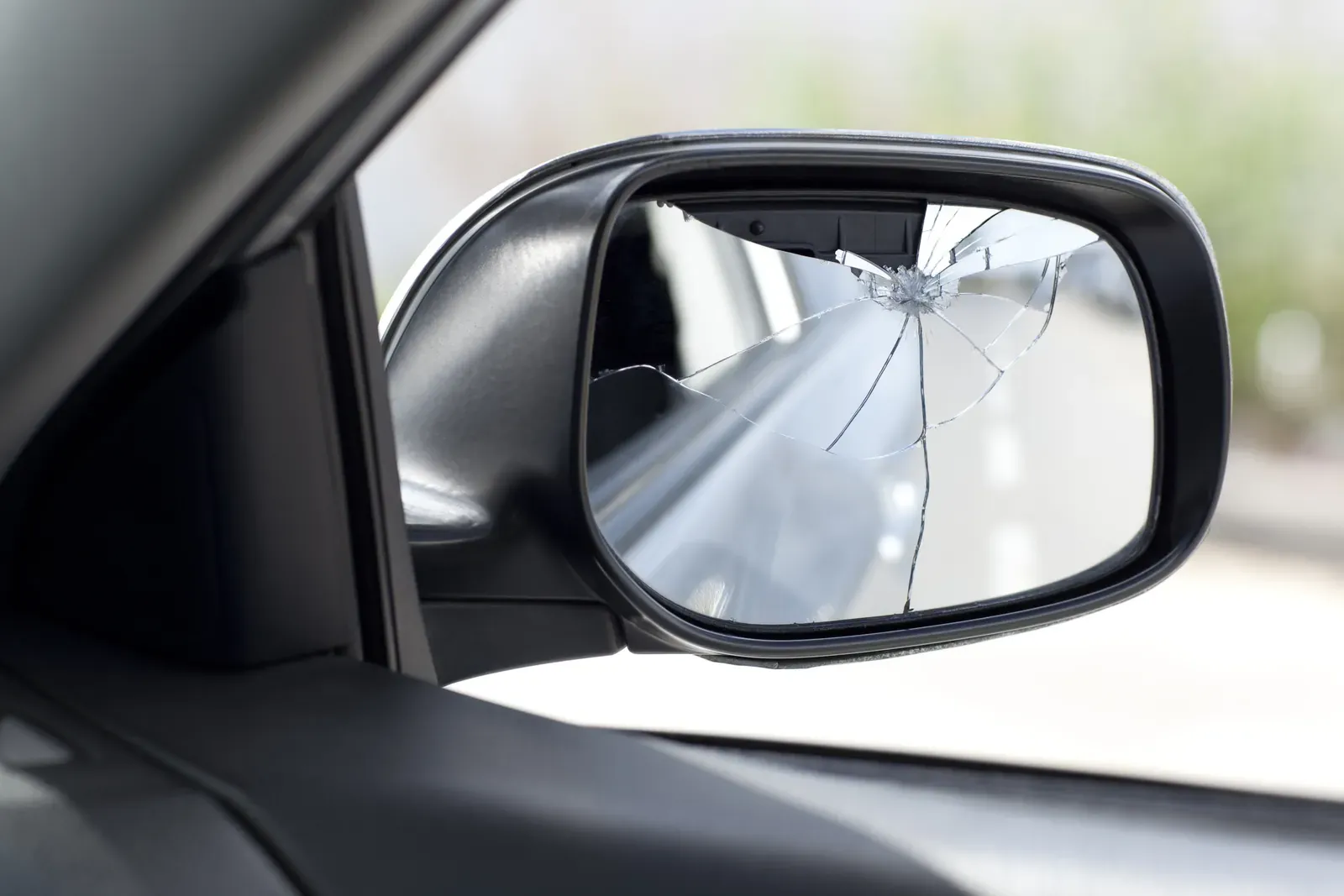
Mirrors look like a single part and are engineered as three. The glass clips or bonds onto a motorized backing plate. The cap is the painted shell the world sees. The assembly is everything beneath — housing, fold mechanism, wiring, heater, turn signal repeater, and on newer cars a blind-spot sensor or camera. Which of the three broke determines whether this is an errand or a genuine repair, so diagnose before you order anything.
The common scenarios sort themselves neatly — and most of them are somebody else's doing. A passing car that squeezed too close usually cracks only the cap. A vandal or flying debris can take just the glass. A hard strike — another mirror clipped at speed on a snow-narrowed street, or a hit-and-run against your parked car — typically claims the whole assembly, and you will find it drooping or swinging from its wiring harness. Each cause maps to a coverage type, which is why the first question at the estimate desk is what happened, not just what broke.
Glass only: the easy outcome
When the housing sits square and only the reflective glass cracked, replacement glass snaps or bonds onto the backing plate, heater and auto-dim connections included. It is one of the fastest jobs any shop performs, and an honest shop treats it that way instead of steering you toward a full assembly. Aftermarket glass exists and functions; on cars with auto-dimming or blind-spot warning icons, ordering the correct glass variant matters far more than the brand on the box.
A caution for the resourceful: stick-on mirror panes taped over broken glass are a get-home measure, not a repair. They warp the view exactly when a merge on the 401 demands accuracy, and they have a habit of departing in the car wash.
Match the features, not merely the outline. Heated glass earns its keep every Toronto January, auto-dimming glass carries wiring the plain version lacks, and blind-spot icons must sit precisely where the system expects to illuminate them. The VIN settles all of it at ordering, because one model year can hide several glass variants — and the wrong one fits perfectly while doing nothing at all.
Caps and colour: paint the part before it meets the car
Mirror caps arrive from the parts counter in black primer, not your colour. A proper repair sprays the cap to match the vehicle — the same colour reading and blend standards as any panel — before it ever touches the door. A cap installed raw, or rattle-canned to roughly your shade, introduces itself every time you walk up to the driver's side.
Because the cap is small and detaches, this is a job we build around your schedule: the paint happens while you keep driving, and the swap itself is one short visit off Keele just south of Sheppard.
Cost honesty belongs here as well. A cap is a modest part, but painting it correctly still involves the colour reading, the test card, and the booth session a fender would get — which is why a finished cap costs more than the bare plastic suggests, and why rattle-can shortcuts exist. An off-shade cap sits at eye level on an otherwise clean car, so choose the version you can stand to see every day.
Assemblies, sensors, and recalibration
When the assembly itself breaks, modern mirrors get complicated fast. Power-fold motors, memory positioning, puddle lamps, surround-view cameras, and blind-spot radar or indicators may all live in or behind the housing. The replacement must match your option package exactly — two trims of one model can take entirely different mirrors — which is why the VIN gets decoded before the order goes in, never guessed from the curb.
If the mirror hosts a camera or participates in blind-spot monitoring, replacement can require calibration so the system reads its angles truthfully again. We keep a dedicated answer on when recalibration applies; the short form is that any repair touching a sensor's mount or aim deserves verification, because skipping it silently disables a safety feature you paid for.
Winter is mirror season in this city
Mirrors suffer through a GTA winter. Windrows and parked snowbanks narrow every residential street to a single cautious lane, and two cars easing past each other is exactly how mirrors meet their end. Mirror work climbs steadily through the cold months, and much of it arrives as a claim: a driver who clipped you and stopped runs through DCPD with your own insurance company, while one who kept driving is a hit-and-run worth reporting even when nobody saw it happen.
Two habits protect them. Fold the mirrors in before a heavy snowfall if you park on a plowed street, so plow spray and the odd sideswipe find less to grab. And keep the ice scraper off the glass itself — heated mirrors clear faster than a scraper corner can gouge them, and scratched mirror glass scatters headlight glare behind you at night.
If the worst happens and the mirror ends up hanging by its harness, do not cut the wires. Tape the unit snug against the door for the drive and let the shop disconnect it properly. A severed harness converts a straightforward assembly swap into a wiring repair, and on sensor-equipped mirrors it can leave fault codes on an otherwise clean job.
How the job runs here
Send photos of the mirror from two or three angles and we can usually name which of the three repairs you need, with a written estimate to match. Parts get ordered before you drop off, caps get painted ahead of installation, and most mirror jobs are in and out in a single visit once the part is on the shelf.
Mirrors are exactly the kind of small work high-volume production shops schedule grudgingly. The owner runs this shop personally, and the schedule keeps room for jobs like these Monday to Saturday, 8 AM to 7 PM — call (647) 594-3401 and we will find a slot that fits around your week.