First, make sure it really shouldn’t be driven
Some cars that look destroyed drive fine, and some that look mild are hazards. Treat the car as undrivable if any airbag deployed, if fluid is trailing underneath, if a wheel sits at an odd angle or rubs when it rolls, if the hood will not latch, or if a headlight is smashed with a dark commute ahead. Steering that pulls hard or feels loose belongs on a flatbed too — especially before you merge onto the 401 with it.
When in doubt, choose the tow. Limping a wounded car even a few kilometres can turn a body repair into a mechanical one — an overheated engine from a nicked radiator, a shredded tire from a bent fender edge, a pothole on a February street finishing what the collision started. The tow bill is minor next to any of that, and on most claims it is covered anyway.
Before the car leaves your possession, empty it of what your week requires: the insurance slip, the garage remote or condo fob, medications, work gear, the stroller in the trunk. Cars in repair are secure but not convenient, and every forgotten item becomes an errand. Note the fuel level and the odometer while you are there — a ten-second habit that closes off a whole category of later questions.
The whole repair, run from your phone
Once the car is off the road, nothing that follows requires you to stand in a lobby. Here is the sequence our out-of-commission customers actually follow, start to finish.
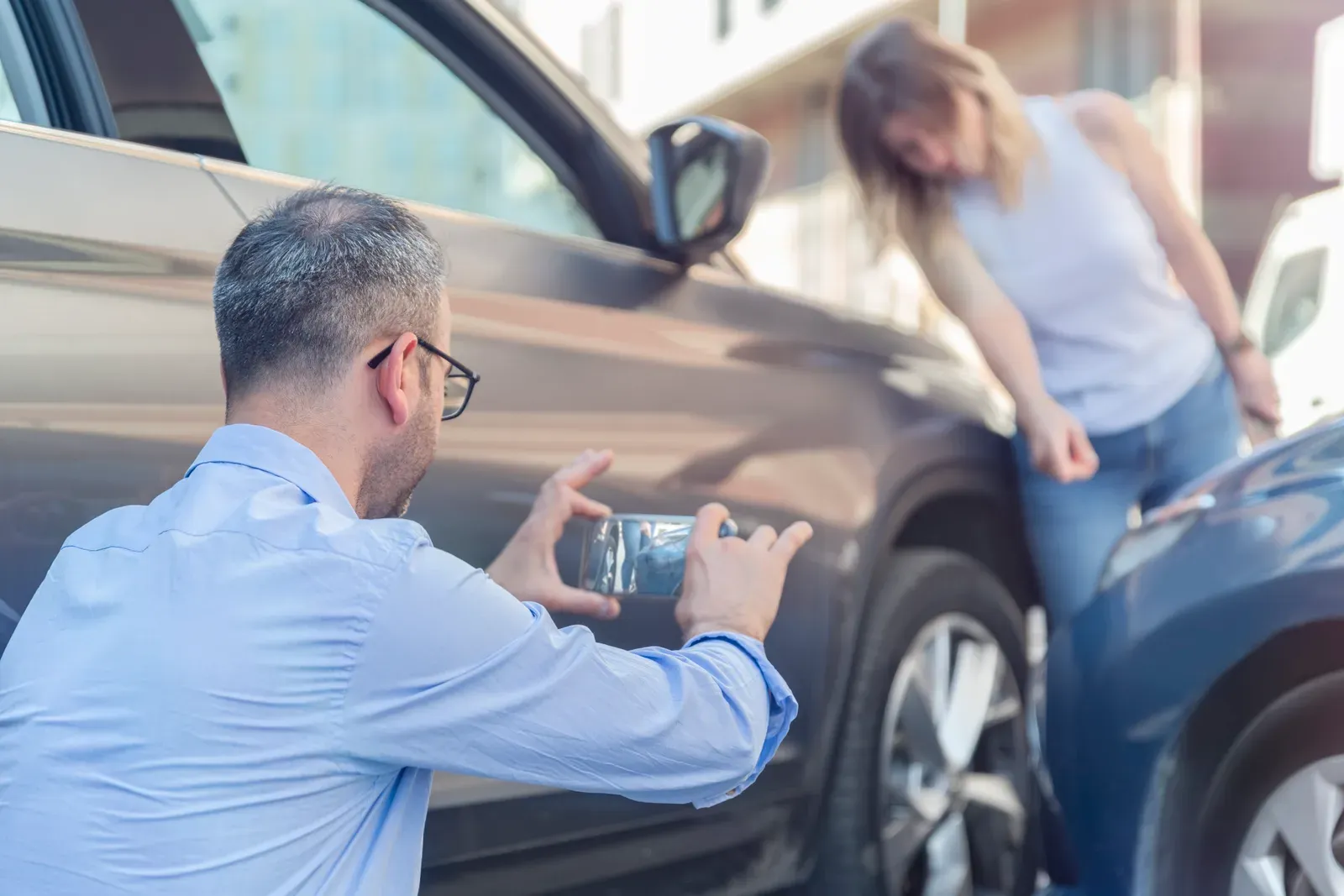
- Photograph the car where it sits — every angle, every damaged area, plus a wide shot for context
- Send the photos to us and a free written estimate comes back fast
- Approve the tow; we coordinate pickup from your driveway, the roadside, or a storage yard
- Give us your claim number and we handle the back-and-forth with your insurance company
- Need wheels? We coordinate the rental through your coverage so it lines up with the repair
- Follow the work through text updates with photos as it progresses
- Make your one trip: pick up the finished car and the warranty paperwork
Photos first: what to shoot before the car moves
Good photos do two jobs at once — they let us write a real estimate, and they preserve the car’s condition before a tow strap or a yard transfer adds a scratch somebody later argues about. Shoot in decent light if you can, and do not clean anything first; scuffs and paint transfer read better dirty.
Capture the whole car from each corner, then each damaged area from a few steps back, then close-ups of every crack, gap, and crease. Include the ground under the car if anything leaked, the interior if an airbag fired, and the odometer. Thirty seconds of extra photos beats a week of claim questions.
If the light is bad or you are standing on the shoulder of the DVP, take what you can and get somewhere safe — a shaky night photo of the whole scene is worth more than a perfect one that required standing in traffic. We re-photograph everything under shop lighting the moment the car arrives; your pictures establish the starting condition, ours establish the detail.
Getting it towed without riding along
You do not need to be present for the pickup. If the car sits in your driveway or on your street, leave the key where we agree and we handle the rest — we can even work around a condo garage with a height limit, which usually means meeting the flatbed at street level. If the car went to a storage yard after the collision, you authorize the release in writing, we settle the logistics with the yard, and the car comes straight to our shop off Keele just south of Sheppard. One move, no second tow later.
Ontario law backs you up on the destination: where a towed vehicle goes is the owner’s decision, not the tow operator’s and not the insurance company’s. Tell us where the car is and we take it from there — that is the whole arrangement.
Staying mobile while the car is down
Rental coverage depends on your policy. When another driver caused the collision, loss-of-use for the not-at-fault side is normally provided for; when you carry OPCF 20 on your own policy, a rental is covered regardless of fault. We coordinate the pickup and return so the paperwork matches the repair dates — no rental days burned before parts arrive, no scramble at the end.
Tell us how you actually live — kids and car seats, a work van you cannot lose, a daily run down the Allen to downtown — and we flag it for the rental arrangements. The goal is that the collision disrupts your week, not your month.
While the repair runs, the updates come to you. Teardown findings arrive as photos with plain explanations, supplements go to your insurance company without you playing messenger, and if a part is holding things up, you hear it from us before you have to ask. Silence is the thing people hate most about this industry; we simply do not practise it.
The one trip you actually make
Pickup is the single in-person step, and it is worth doing in daylight. Walk the car with the owner, sight down the repaired panels, check the gaps, and take the written warranty with you — lifetime on the paint and refinish work, parts-and-installation on the replacements. If anything reads wrong to your eye, that is the moment to say so. You will not be rushed out the door.
Everything before that moment — estimate, tow, teardown, claim, supplement, rental — happened while you were at home. That is not a premium tier of service; it is just how we run repairs for anyone whose car cannot reach us under its own power.