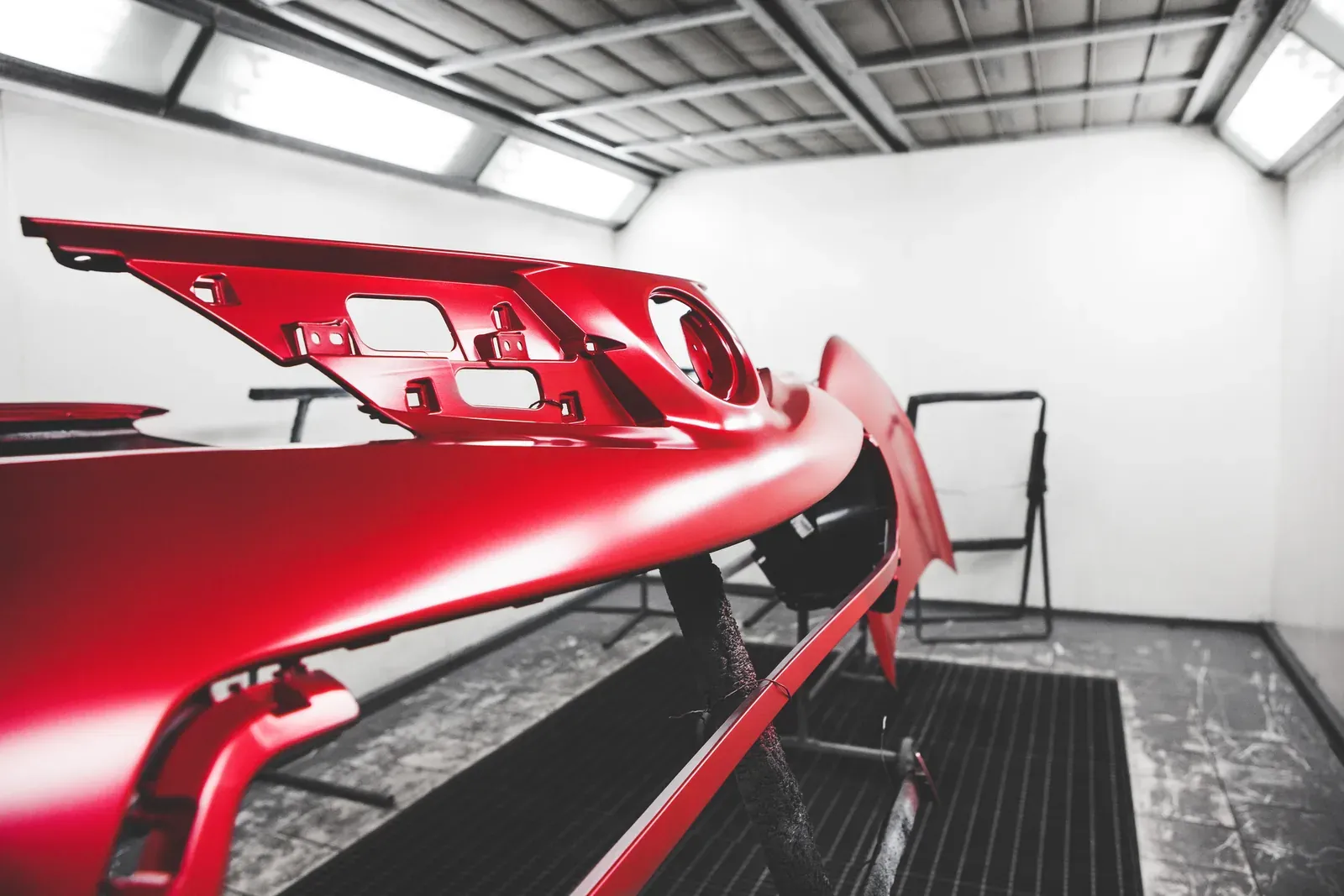
A bumper is not a fender in a different shape
Bumpers lead every collision estimate — they take the hit first — and they lead the complaint list afterward too: the refinished cover doesn’t quite agree with the body, sometimes courtesy of a rushed earlier repair, sometimes straight off the dealer lot on Dufferin. The reason is material. Bumper covers are flexible plastic; the panels around them are steel or aluminum. Paint on plastic has to bend without cracking, grip a surface it has no natural love for, and present colour over a completely different foundation than metal provides.
Handled correctly, none of that ever shows — which is the whole point of this guide. Handled generically, with the bumper treated like just another panel, the differences surface one at a time: paint that spiderwebs the first cold morning the cover flexes, peels back from a corner, or reads a shade off from the fender it touches. Each failure has a specific cause, and each one is preventable.
The good news running through this page: every one of those failures is a process failure, not a physics problem. The materials for handling plastic correctly are standard equipment in any professional refinish system. What varies is whether a shop treats bumpers as their own small discipline or as an afterthought hanging off the front of the job — and asking how a shop preps plastic sorts the two in about a minute.
Flex additive: paint that can absorb a nudge
Bumper covers are engineered to soak up small impacts and spring back — the parking nudge that flexes a cover a few centimetres is the part doing precisely what it was designed for. Standard paint film is too rigid for that life. Flexed hard, it cracks and spiderwebs even though the plastic underneath pops back unharmed. The fix is a flex additive mixed through the paint system, keeping the cured film elastic enough to travel with the part.
A Toronto winter raises the stakes, because cold stiffens everything. The light contact that happens squeezing into a January parking spot — or easing past a concrete pillar in a condo garage — flexes the cover while both the plastic and the paint are at their most brittle, somewhere around −15 °C. Paint sprayed with proper flex handling shrugs it off; paint sprayed as if the bumper were a steel door wears a web of fine cracks around the contact point by morning.
Adhesion promoter: why paint peels off some bumpers
Raw bumper plastic is a slick, low-energy surface, and paint applied directly to it holds on badly no matter how good the paint is. The cure is a dedicated adhesion promoter — a preparatory layer that gives the system something to bond to — plus correct scuffing and cleaning of the plastic itself. Skip any of it and the failure has a distinctive look: paint releasing in sheets from a corner or an edge, often peeling cleanly enough that you can see shiny plastic underneath.
This applies to brand-new bumpers too. Replacement covers arrive primed, but that transport primer still needs proper preparation before colour, and any repaired area where the plastic was sanded through needs the promoter locally. When you spot a late-model car with paint lifting off one bumper corner, you’re almost always looking at this step done wrong — not at bad paint.
Why bumpers can read a shade off — even brand new
Here’s the part that surprises people: plenty of new vehicles leave the assembly plant with bumpers that don’t perfectly match the body, because the covers are frequently painted separately — often by a supplier, off the car, to the standard formula. Plastic and steel then present that formula slightly differently: different substrate, different primer beneath, different film behaviour. The gap is usually tiny, but on silvers, whites, and pearls it can show at the seam where bumper meets fender.
The same physics applies in refinishing, with one crucial difference: a shop gets to aim at your actual car instead of at a corporate standard. Paint a bumper to the code and bolt it on, and you’ve reproduced the factory’s compromise. Paint it against the panels it will live between, and you can beat it.
That context is worth packing along when you shop for a used car, too. A bumper a breath off from the fenders is not automatic evidence of a collision; it may just be the factory’s own seam showing. Overspray on the trim, tape ridges in the jambs, or texture that disagrees with the rest of the cover — those are the tells that separate supplier paint from a hurried repair. The bumper alone convicts nobody. When in doubt, the jambs tell the story.
How a careful shop closes the gap
The method is aim-then-verify. The colour is measured from the fenders and panels adjacent to the bumper — the exact surfaces your eye will compare it against — and the formula is tinted toward what those panels are today, fade and all. The mix gets proven on a sprayed test card held at the seam, checked in both bumper position and fender position under more than one light, before the cover is ever sprayed. On difficult colours, blending into the adjacent panels spreads any last whisper of difference until the seam has nothing left to say.
That’s the standard your estimate should reflect whether the bumper is being repaired or replaced. Paint matching as a discipline has its own explainer on our site, and the hardest colours have their own guide — but the bumper-specific summary fits in one line: flex for the plastic, promoter for the grip, and tinting against your car rather than the code. Get those three right and the most-complained-about panel on the vehicle goes quiet.
We also keep a record of what worked. Front bumpers live the hardest life of any panel in this city — gravel on the 401, salt spray, parallel-parking guesswork — and if yours ever needs paint again, the file documenting what was mixed, tinted, and proven the first time makes the second match faster and better. That record follows the vehicle, right alongside the written warranty on the work itself.