The math, in one paragraph
Your deductible is the share of a repair you pay before your coverage pays anything. If the repair costs less than that share, a claim returns nothing: you would pay for the whole repair yourself while the claim still lands in your history. If the repair costs slightly more, a claim returns only the sliver above the deductible — often too little to justify the file it creates. Only when the repair cost climbs well past your deductible does claiming become clearly worthwhile. Every recommendation on this page follows from that one structure.
Notice what the reasoning requires: the actual repair number. Guessing is where people go wrong in both directions — filing claims that return nothing, or quietly paying cash for damage that turned out far bigger than the crumpled corner suggested. The order of operations matters more than the decision itself: number first, decision second.
First, check whose deductible this even is
Ontario adds a wrinkle worth checking before any arithmetic. When another driver was fully or partly at fault, your vehicle damage runs through your own insurance company under DCPD — and the deductible on the DCPD side of a claim is often zero unless you chose one to lower your premium. In that case the under-the-deductible question may not exist at all, and leaving the claim unfiled walks away from money your policy already owes you. Fault percentages come from the Fault Determination Rules, so even a partly-your-fault collision can put some of the repair on the DCPD side.
The math on this page applies with full force when the damage was your own doing — the garage pillar, the Costco lot, the snowbank at the end of the driveway — or when no other vehicle was involved and the claim would run through collision or comprehensive coverage with the deductible your declarations page shows. Sort out which lane your damage is in first; everything downstream depends on it.
Step one: get the real number, free
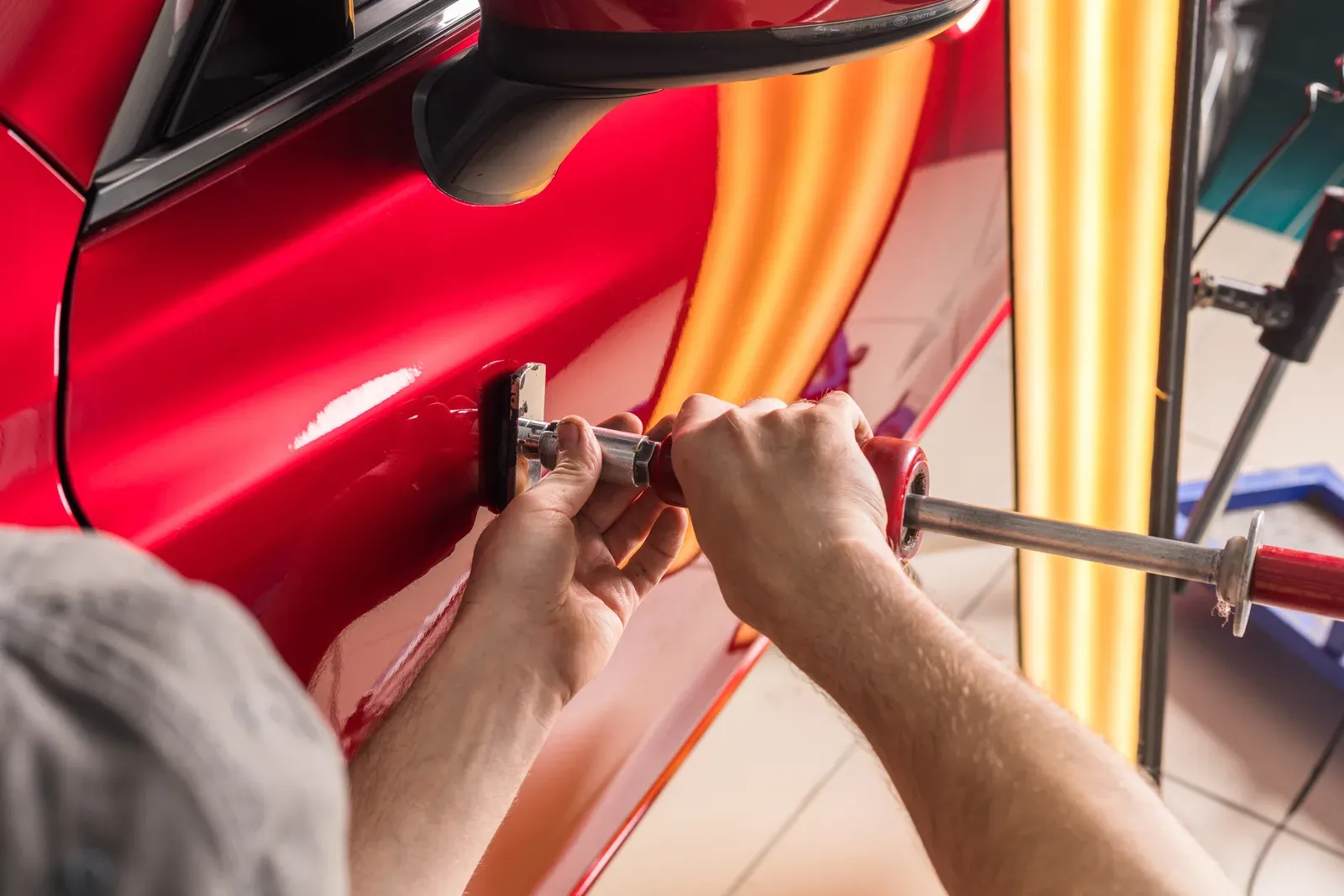
Before touching the claim, get a written estimate. Ours cost nothing and require no appointment: photograph the damage and a written number comes back fast. With the figure in hand, the deductible question mostly answers itself — clearly under, pay cash and move on; clearly far over, the claim conversation is worth having; close to the line, keep reading, because the close call has its own section below.
One caveat travels with any photo-based figure: it prices what is visible. A shallow dent in a door skin is exactly what it appears to be; a bumper hit may not be, because the brackets, absorbers, and sensors behind the cover do not photograph. When the visible estimate lands anywhere near your deductible, say so when you send the photos — we will flag whether your damage is the kind that hides more, and whether a quick teardown look is worth doing before you decide anything at all.
What filing anyway can mean
A claim below or near the deductible costs you twice. You still pay for essentially the whole repair, and the claim enters your claims history, where it is visible to insurance companies at renewal and when you shop for coverage. Whether and how much any single claim affects your rates depends on your insurance company, your policy, and your record — nobody can honestly promise you an outcome in either direction, and we will not. Our answer on whether a claim raises rates walks through the moving parts.
One distinction worth carrying into the decision: claims are not all rated alike. Comprehensive claims — hail from a summer thunderstorm, a deer strike on a King or Caledon road, falling ice — are treated differently from at-fault collision claims, and not-at-fault DCPD claims are different again. That difference belongs in your reasoning, and it is another reason a blanket never-file rule is as wrong as a reflexive always-file one. When in doubt, ask your broker or agent how your specific policy treats the claim type in front of you — the categories matter more than the folklore.
The close call, handled honestly
The genuinely hard case is the estimate that lands near the deductible, and this is where the hidden-damage caveat does real work. If teardown could plausibly move the number well past your share, the smart sequence is to find out first. You can authorize a teardown-based estimate without filing anything; if the full picture stays small, pay cash with confidence, and if it grows, file the claim knowing the documentation is already complete from the start. Teardown at this stage is not a commitment to repair — it is the purchase of certainty before any paperwork becomes permanent.
What you want to avoid is the worst-of-both middle path: filing, then discovering the total barely clears the deductible, and ending up with a claims file in exchange for pocket change. The estimate-first habit exists to make that outcome rare — and it costs you nothing but the photos.
If someone offers to “waive” your deductible
Sooner or later — often after a hailstorm sweeps through — you may meet a shop or a travelling crew advertising that they will eat, waive, or hide your deductible. Understand what is actually being said. The deductible is set by your policy, not by any shop, and no shop has the power to erase it. The money does not vanish; an offer like that is funded either by billing the insurance company for more than the repair justifies or by quietly taking the difference out of the repair itself. Either way, you have just learned something important about how that operation writes paperwork.
The honest version of deductible help is smaller and real: knowing the number before you file, sequencing the work so a claim is only opened when it earns its place, and writing estimates that are exactly what they say. That is the help we offer, and the only kind we consider legitimate.