February is structural-damage season in the east end
Scarborough’s freeze–thaw opens craters in the same places every late winter — Ellesmere, Lawrence East, the battered stretches of Kingston Rd — and a pothole taken at arterial speed does more than bend a rim. It can shove a control arm hard enough to shift the subframe it bolts to, which is structural damage wearing a suspension costume. Windrow-narrowed side streets add kerb strikes at the front corners, and the Brimley hill down to Bluffers Park contributes its winter share of cars that slid into the rail on the grade. The tell is always the same: the car tracks slightly wrong, the wheel sits off-centre, or new tires wear on one shoulder.
The harder cases come off the 401. A transfer-lane hit or a multi-car chain stop at highway speed loads the body in ways a parking-lot tap never does, and a modern unibody is designed to fold in specific zones to protect the people inside. Once those zones have done their job, the question is not whether the car looks straight — it is whether every measured point sits where the factory put it.
Measured, pulled, measured again — with the numbers on paper
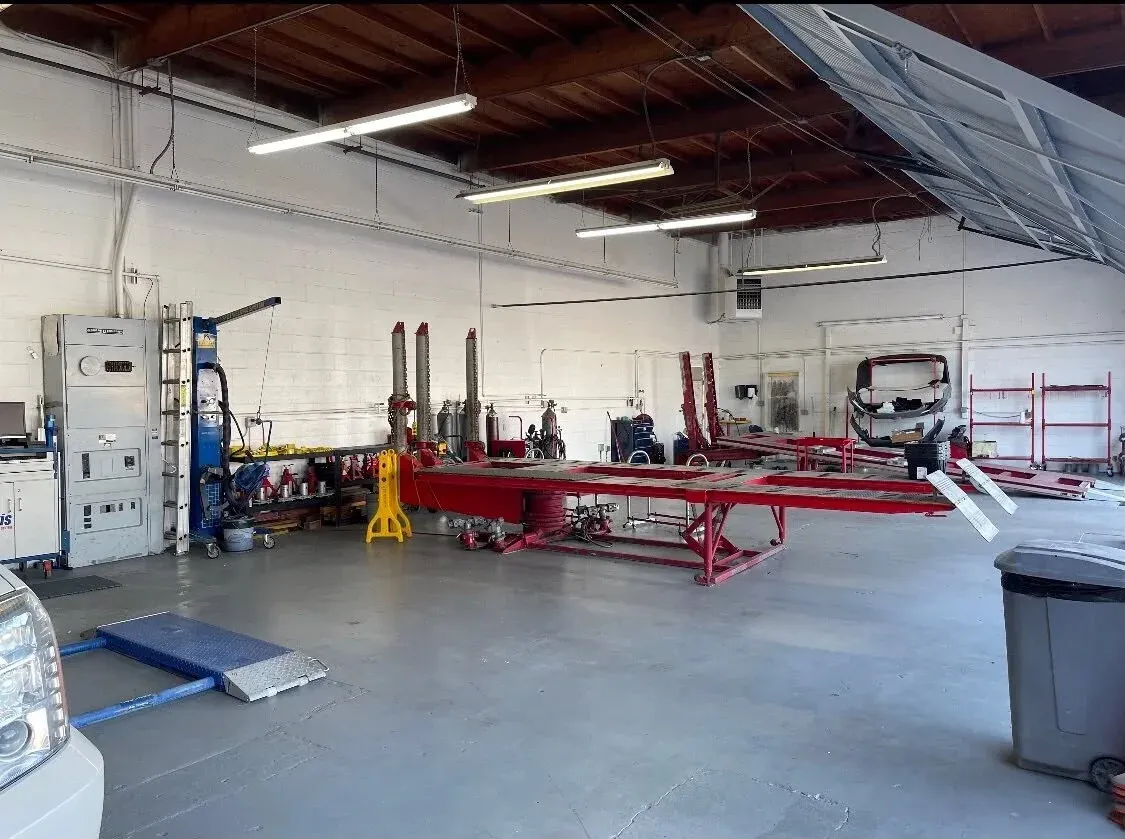
Structural work here starts with measurement, because eyes are not instruments. The vehicle is fixed to the bench and its control points are compared against the manufacturer’s specification; that map decides what gets pulled, what gets sectioned, and what gets replaced outright. Pulls happen in controlled increments — steel that is dragged back in one violent yank is weakened steel — and the measurements are recorded again afterward, so the repair is demonstrated, not asserted.
Two honest limits shape every structural job. First, some components are replace-only: a crumple zone that has absorbed its collision has spent its strength, and the right repair is a new section or part, with OEM requested where safety is on the line. Second, some cars should not be repaired at all. If the structural bill plus salvage value approaches what the vehicle is worth, the insurance company will weigh a total loss — Ontario sets no fixed percentage — and we will tell you which way the file is leaning before anyone burns weeks pretending otherwise.
- Measurement against factory specification before any repair plan is written
- Controlled, incremental pulls — never one dramatic yank
- Replace-only components replaced, with OEM parts requested for safety items
- Printed before-and-after measurements in your file
Getting a bent car here from Scarborough, and what the claim looks like
A car with suspected structural damage that still drives should make the trip gently — 401 west to Keele, no heroics — but a car that pulls hard, sits crooked, or clunks over bumps should not make it at all. Call (647) 594-3401 from wherever it sits; we help arrange the flatbed, and Ontario’s rules make the destination your call, so it comes here rather than to the nearest storage yard accumulating daily fees.
Structural claims are where an owner-run shop earns its keep, because the first estimate almost never captures hidden rail or apron movement. The owner documents the measurements, files the supplement with your insurance company, and keeps the rental — through your coverage — aligned with a realistic timeline instead of an optimistic one. Under DCPD, not-at-fault damage runs through your own insurance company; either way, you deal with one person from teardown to the final measured printout.