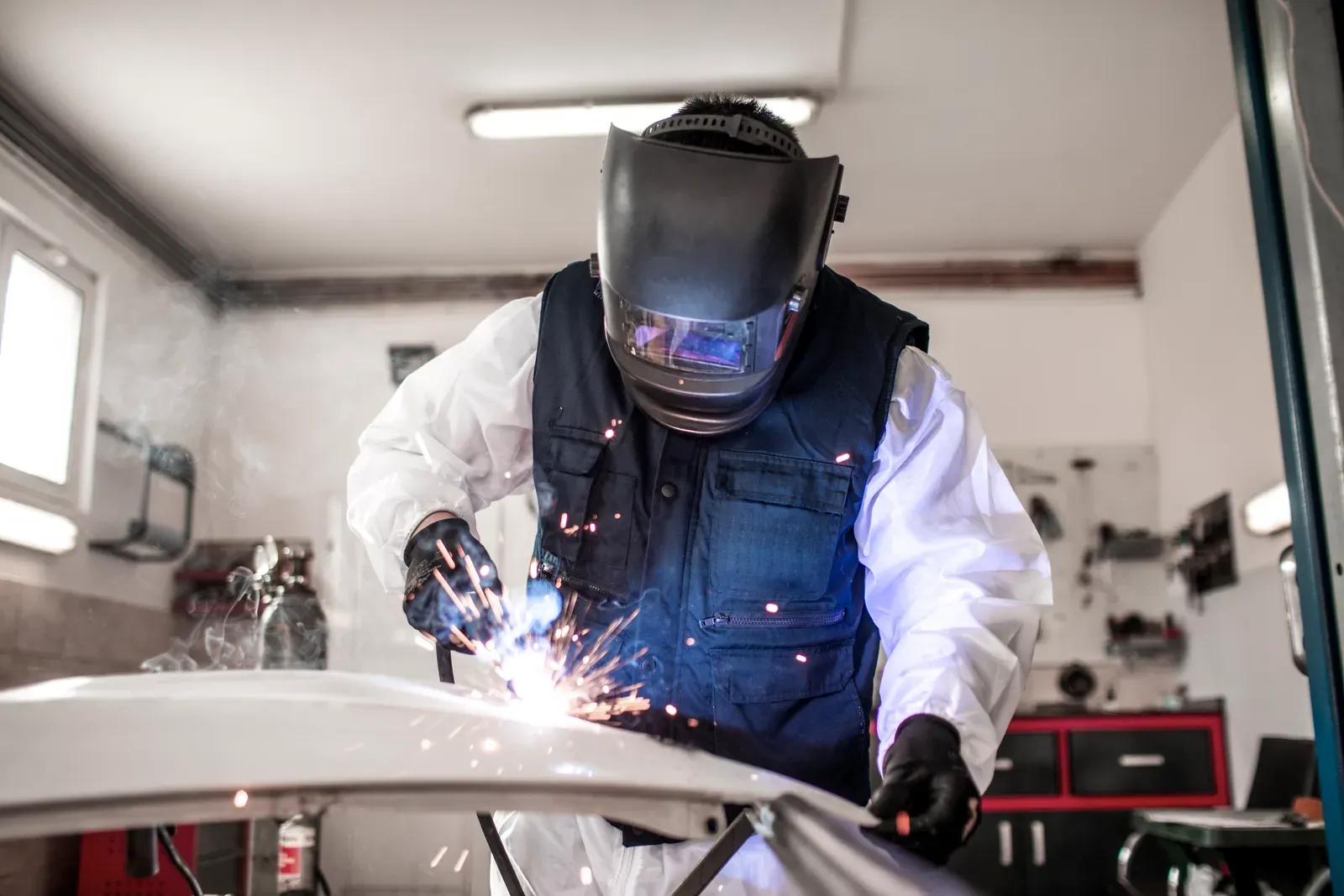
The hits that go deeper than the panels
Structural damage in Long Branch mostly arrives at highway speed or at an intersection. Browns Line and Evans put local traffic onto the 427 and the QEW within a couple of kilometres, and a rear-end or lane-change hit at 100 km/h drives energy past the bumper system into the rails it bolts to. At Lake Shore & Kipling, the left-turn-across-traffic collision does the same from the side, loading the door structure and pillars. And every winter, cars sliding on the icy numbered streets find poles and curbs — a curb strike hard enough to bend a wheel can also move the suspension mounting points it connects to.
The tells are rarely dramatic. Panel gaps that changed width, a hood that no longer sits flush, doors that need a shove to latch, a steering wheel held off-centre to drive straight, or tires wearing on one shoulder — each of those is the body telling you something underneath moved. Modern cars are unibody: the frame is not a separate ladder underneath but the welded structure the whole car is built around, so a few millimetres of displacement spreads consequences everywhere.
Measured against factory data, not eyeballed
Straightening starts with numbers. The vehicle is anchored and its structural reference points are measured against the manufacturer’s specifications, so the damage is described in millimetres rather than impressions. The pull back to position happens in controlled stages — metal that was forced out of place must be persuaded back, not yanked — and the measurements are repeated after correction and recorded. You get the before-and-after documentation, and so does your insurance company.
The reason for the rigour is everything bolted to that structure. Crumple zones only manage the next collision if they hold their engineered shape. Suspension geometry, and therefore how the car tracks and wears tires, hangs off those mounting points. Driver-assistance sensors — cameras and radar aimed from the body — assume the body is where the factory left it. An alignment rack can compensate for a bent structure just enough to hide it; it cannot fix it, which is why a proper repair measures the structure first and aligns the wheels last.
- Structural reference points measured against factory specification
- Controlled, staged pulls — never one violent correction
- Post-repair measurements recorded and shared with your insurance company
- Wheel alignment and sensor checks after the structure is verified
Tow-ins, the claim, and the total-loss question
A car with structural damage usually reaches us on a flatbed, and in Ontario that flatbed goes where you say — the tow operator must follow your instruction and hand you an itemized invoice. If your car has already been dragged to a storage yard after a QEW crash, it can still be transferred to us; move quickly, because storage fees accumulate daily and come out of the claim. Call (647) 594-3401, tell us where the car sits, and we will coordinate the transfer and open the claim with your insurance company the same day.
We will also be straight about the other possible ending. Ontario has no fixed percentage that makes a car a write-off; the insurance company weighs the vehicle’s actual cash value against repair cost plus salvage value, case by case. Our teardown and measurements give that decision honest inputs either way — and if the answer is repair, the structure is corrected to specification, the refinish carries our lifetime paint warranty, and the car is road-tested before you see it.