Between Davenport and Bloor, the hits are slow and expensive
Yorkville’s collisions rarely involve speed. Avenue Rd pours downhill into the Davenport intersection, and the fork there catches somebody every week — two lanes deciding late, one sideswipe, two claims. Bloor runs its own experiment in shared space: through traffic, bikes along the curb, rideshares stopping mid-block outside the hotels, and left turns across all of it at Bay and Avenue. The taps that result happen at 15 or 20 km/h, which sounds trivial until the bumper cover comes off a car that carries radar, park sensors, and a camera in the very corner that took the hit.
The other half of the file comes from underground. Ramp walls and columns in the garages beneath the shopping blocks catch bumpers and doors at angles a road collision never produces, and the damage runs deeper than it photographs — a cracked bracket here, a kinked reinforcement there. On the luxury makes that dominate these blocks, those hidden pieces are exactly the parts that cost real money, which is why nothing from Yorkville gets priced off a phone screen alone.
The estimate is finished when the disassembly is
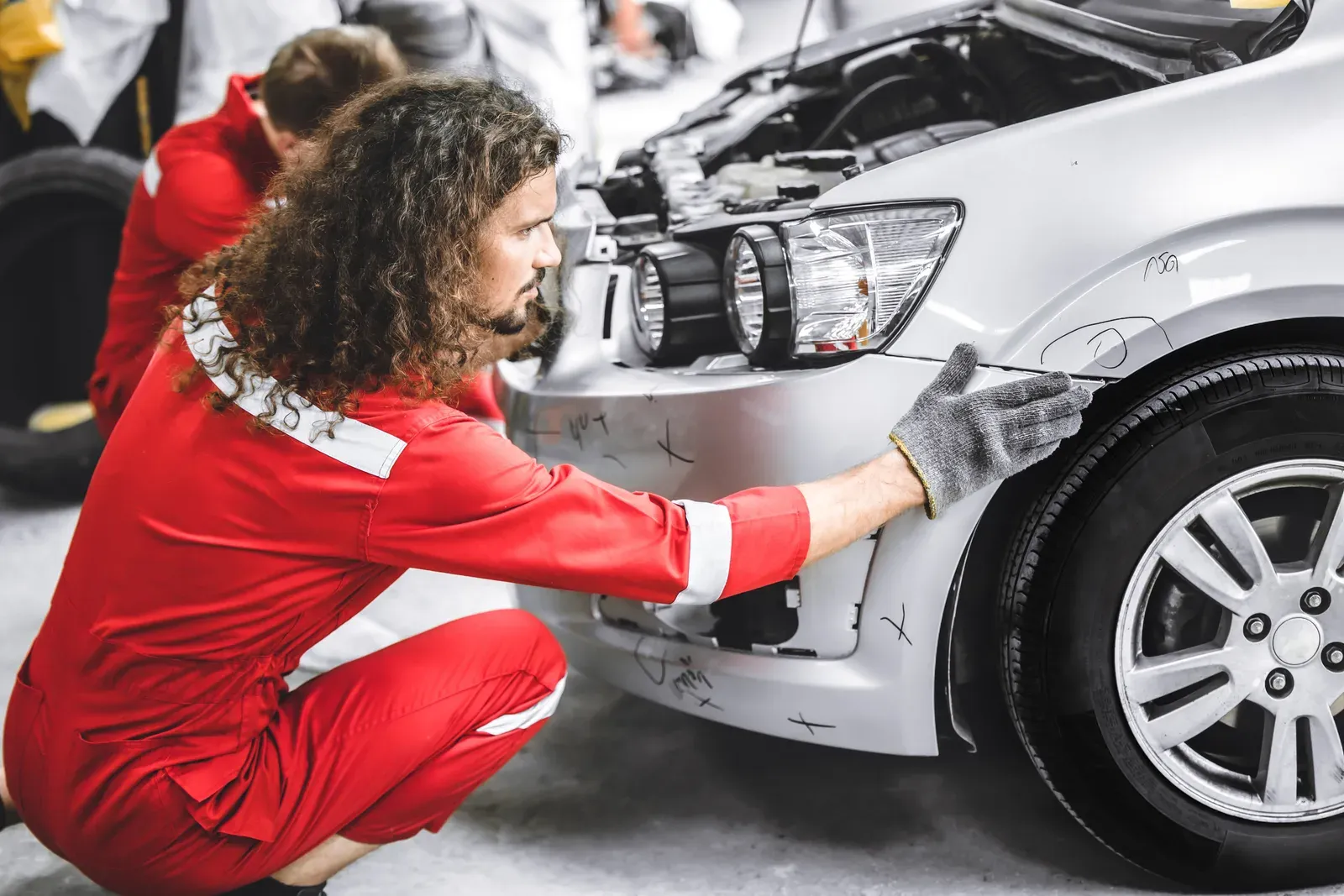
Photos start your file — send three and a written number comes back quickly — but that number is a starting position, not a settlement. The figure that matters is written after the cover, liners, and trim are off and everything behind them is photographed: compressed absorbers, cracked tabs, a rail that moved a few millimetres, a sensor bracket knocked off its aim. Documenting all of it on day one means the parts order is complete before the repair starts, and the supplement we file with your insurance company is supported by evidence rather than argued from memory.
Where an impact reaches structure, the car is measured against factory dimensions before and after the correction, and the record goes into the file. Colour is matched to your paint code, adjusted to the panel as it has actually aged, and blended into the neighbouring panels so the repair has no edge to find in sunlight. Where safety systems are involved, we push your insurance company for OEM parts and put the reasoning in writing. The car is road-tested before you are called to collect it.
- Written photo estimate to start; final number after teardown
- Hidden damage photographed and filed as a documented supplement
- Structural measurement recorded before and after any pull
- Blended refinish, lifetime paint warranty, road test before pickup
Getting the car out of Yorkville and into a bay
If the car drives straight, the lamps work, and nothing rubs or leaks, the run up Avenue Rd to the 401 is short enough to make with a taped-up corner. If any of that is in doubt — a wheel pushed back, a panel touching a tire — leave it where it sits and call (647) 594-3401. We coordinate the tow, and under Ontario’s towing rules the destination is your call: name our shop, not a storage yard, because yards bill daily and add nothing to the repair.
On the claim itself, remember how Ontario works. DCPD means your own insurance company pays for your vehicle’s damage to the extent you were not at fault, with percentages set by the Fault Determination Rules — and no adjuster’s preferred list overrides your right to choose the shop. One person, the owner, writes the estimate, runs the file, and hands you both warranties in writing at pickup. A rental, where your coverage includes one, is arranged to meet you at drop-off.