Highway 400 writes most of Barrie’s collision files
Between Barrie and Toronto the 400 changes character with the calendar. In winter, lake-effect streamers cross the open farmland around Cookstown and Innisfil and take visibility from clear to nothing inside a kilometre — the multi-vehicle chain reactions that close the highway happen on that stretch more than almost anywhere else in the province. In summer, the same lanes fill with cottage traffic, and the Friday crawl through the Essa Road and Dunlop Street interchanges turns 100 km/h traffic into a wall of brake lights that not everyone notices in time.
The city’s own streets contribute the slower hits. The Bayfield Street retail strip north of the highway runs left turns across through traffic all day, Duckworth and Grove carry the hospital and college volume, and downtown Dunlop Street mixes angled parking with distracted circling. Different speeds, same rule: the true cost of any of it stays hidden until the damaged corner is apart on a bench, which is why nothing here gets a final number from the curb.
Teardown first, then a number that holds
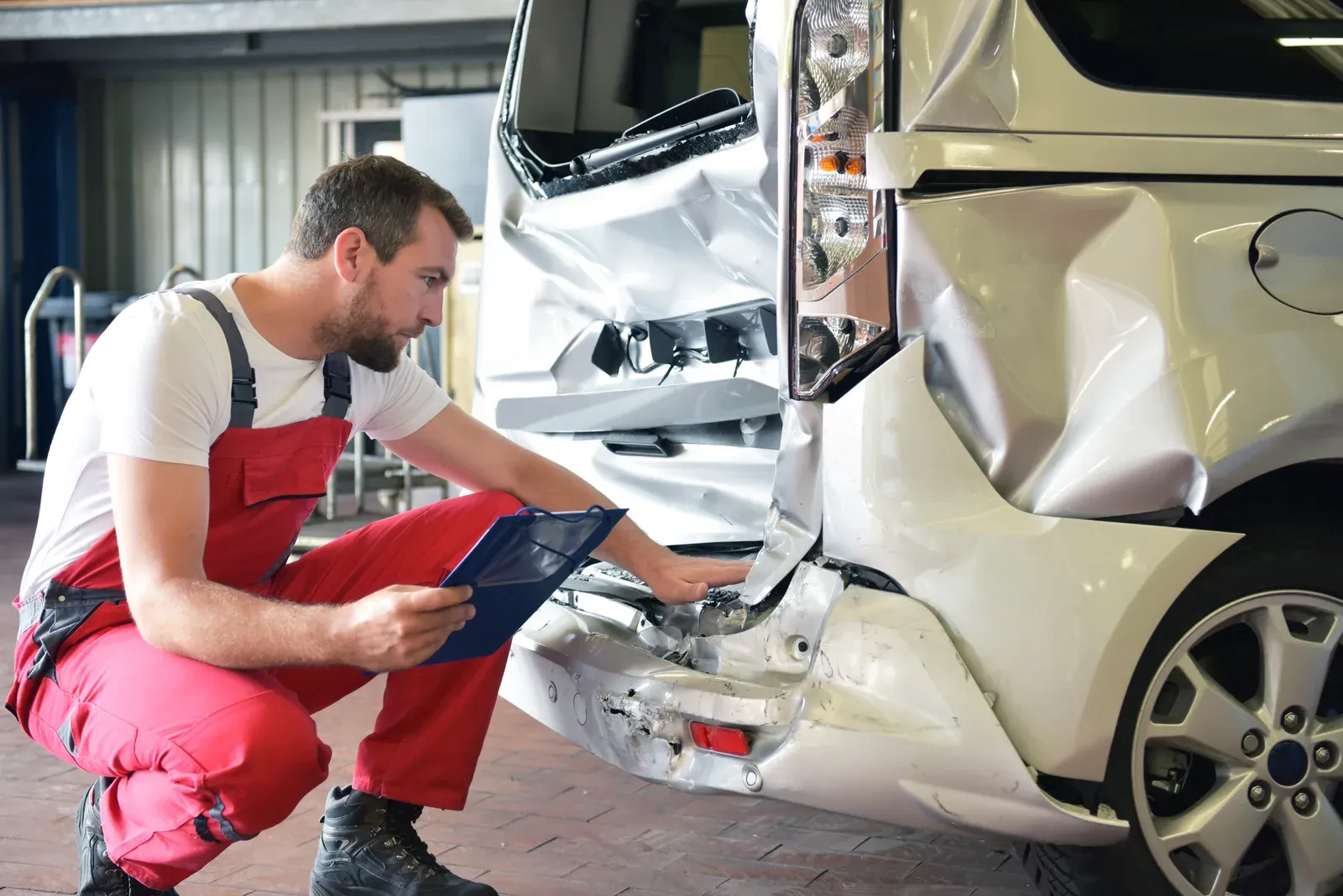
A photo shows a folded bumper cover; it cannot show the crushed absorber behind it, the cracked bracket under it, or the rail that moved a few millimetres in a hit at highway speed. So the damaged area comes apart before the estimate is finalized — cover, liner, lamps, trim — and everything exposed is photographed into the file. On anything that happened at 400 speeds, the structure gets measured against the manufacturer’s data, because the line between a cosmetic repair and a structural one is precisely what a first photo-based insurance estimate tends to miss.
The repair itself follows the manufacturer’s procedures: metal straightened where it can be, replaced where it cannot, with OEM parts requested wherever a safety system is involved and our parts-and-installation warranty on the replacements. Colour is mixed to your code, test-sprayed, adjusted to the panels around the repair, and blended so nothing shows in low sun off Kempenfelt Bay. Every car is inspected and road-tested before the drive home — that last hour north should be the least eventful part of the whole story.
- Disassembly and photographed documentation before the estimate is final
- Structural measurement on any highway-speed impact
- OEM parts requested where safety systems are touched
- Lifetime warranty on paint and refinish
The claim starts while the car is still in Simcoe County
Ontario handles vehicle damage through DCPD: when you are not at fault, in whole or in part, your own insurance company pays, with the percentages set by the Fault Determination Rules. Report to a Collision Reporting Centre when anyone is hurt or the combined damage looks likely to pass $5,000 — two modern front ends manage that easily — and notify your insurance company promptly, since the standard policy expects notice within about seven days. If the adjuster suggests a preferred shop in Barrie, that suggestion is yours to decline.
Send your claim number with the damage photos and the file opens the same day, before the car moves a metre. If it cannot drive, we arrange the flatbed from wherever it sits — the 400 shoulder, a yard off Mapleview, your own driveway — and you never chase it down the highway. The owner books the rental through your coverage to meet your arrival, argues the supplement himself, and phones you with progress instead of leaving you to guess. Call (647) 594-3401; hours are Monday to Saturday, 8 AM to 7 PM, Sundays by appointment.