A commuter town’s bumpers earn their keep
Follow a Stouffville car through its week and the bumper risks line up. The morning queue where Stouffville Rd meets the 404 is natural territory for the 10-to-20 km/h tap — the kind that scuffs plastic in front and quietly crushes hardware behind it. The rail crossing on Main St stops traffic cold several times an hour, catching drivers who were watching the gates instead of the car ahead. The GO park-and-ride adds backing contact between tight rows in the pre-dawn dark.
Home turf contributes the rest. The plaza lots off Hoover Park Drive and along Highway 48 use concrete curb stops that sit below the sightline of every SUV in town, grabbing front covers on the way in. And each winter, the plow windrow across subdivision driveways east of Ninth Line collects rear corners at walking speed — hits that feel harmless from the driver’s seat and leave a genuine crease in the corner of the cover. All of it looks minor from three steps back, which is precisely the problem.
The plastic you can see is the least of it
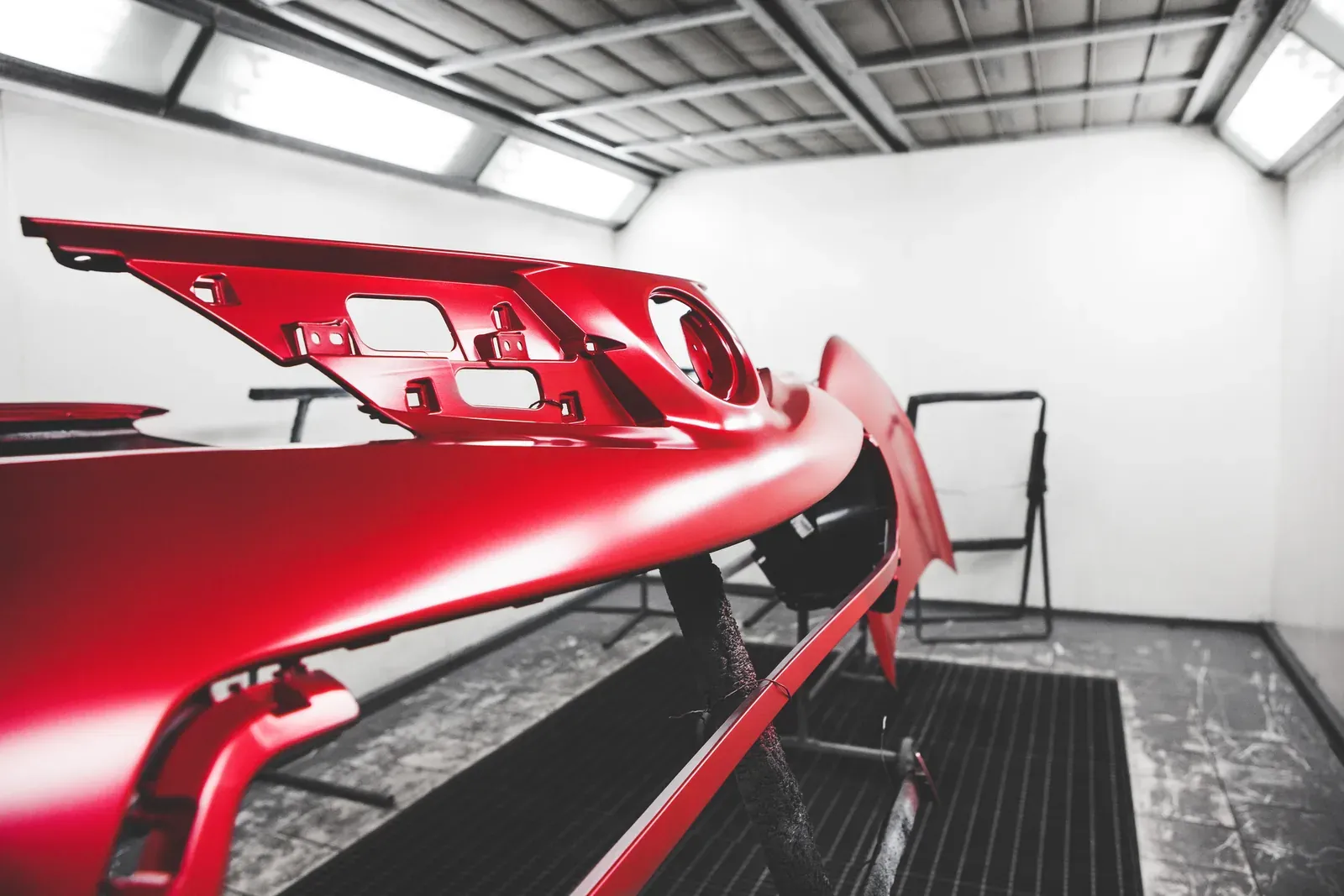
A modern bumper is an assembly: a flexible cover over an energy absorber, a reinforcement bar, mounting brackets, and — on most vehicles of the last decade — parking sensors or a radar module aligned to tight tolerances. Bumper plastic is engineered to spring back, so a cover that looks presentable after a ramp-queue tap can be hiding a flattened absorber that has already given up its protection, or a cracked bracket that will let the corner sag by spring. That is why our number is never final until the cover is off and the layers are photographed.
What follows is a simple, honest fork. Sound plastic with scuffs or a small crack is repaired, refinished to a blended match, and covered by the lifetime paint warranty. Torn plastic, crushed absorbers, and broken brackets are replaced — OEM preferred, and we make that argument to your insurance company in writing wherever sensor mounting or crash protection rides on the part. After reassembly, sensors and radar are verified for position and function, with manufacturer-specified recalibration in the plan whenever the vehicle requires it.
- Cover removed and each layer photographed before the final quote
- Repair for sound plastic; replacement for tears, crushed absorbers, broken brackets
- OEM parts argued for where sensors or protection depend on them
- Sensor and radar checks after reassembly, recalibration where specified
Staged before you arrive, settled before you pay
Bumper work is the quickest bodywork on the schedule, and from 34 km out that speed is worth protecting. Your photos produce the written starting number and let us pre-order the likely parts against your VIN, so the drive down the 404 delivers the car to a staged job rather than a cold start. With parts on the shelf, most bumper repairs run only a few days — drop off Monday to Saturday between 8 AM and 7 PM, or by appointment on a Sunday.
On the money side, bumpers sit closer to the claim-or-deductible line than anything else we repair, so the comparison is part of every quote. A scuff refinish often prices below a deductible and belongs out of pocket; a replacement with sensor work rarely does — and when an identified driver caused it, the DCPD side of your own policy may carry the cost, subject to Ontario’s fault rules, your policy terms, and the insurance company’s decision. The owner opens the claim, handles the adjuster, and keeps you updated while your part stays at two short drives.