South Caledon grew faster than its roads, and bumpers pay for it
The subdivisions filling in along Mayfield have given Caledon something it never used to have: stop-and-go. School-run queues in Southfields, left-turn stacks at Mayfield’s big intersections, and the morning crawl toward the 410 all manufacture the low-speed rear-end tap — the single most common bumper job in the shop. The insult of these hits is that the cover often shrugs while everything behind it gives: crushed foam absorbers, cracked mounting tabs, a bent reinforcement bar. A bumper that took a hit and “looks okay” has simply not been looked at yet.
The rural half of the town contributes its own signatures. Trailer hitches punch neat, deep dents into the bumpers of whoever parks behind them — in Caledon, that is a lot of people. Long gravel laneways with a culvert hump at the road grind the paint and plastic off lower lips, front and rear. And January windrows at the laneway mouth act like slow-motion curbs, flexing covers until clips let go and corners sag. Different causes, same rule: the cover comes off before anyone writes a final number.
Repair, replace, and the electronics in between
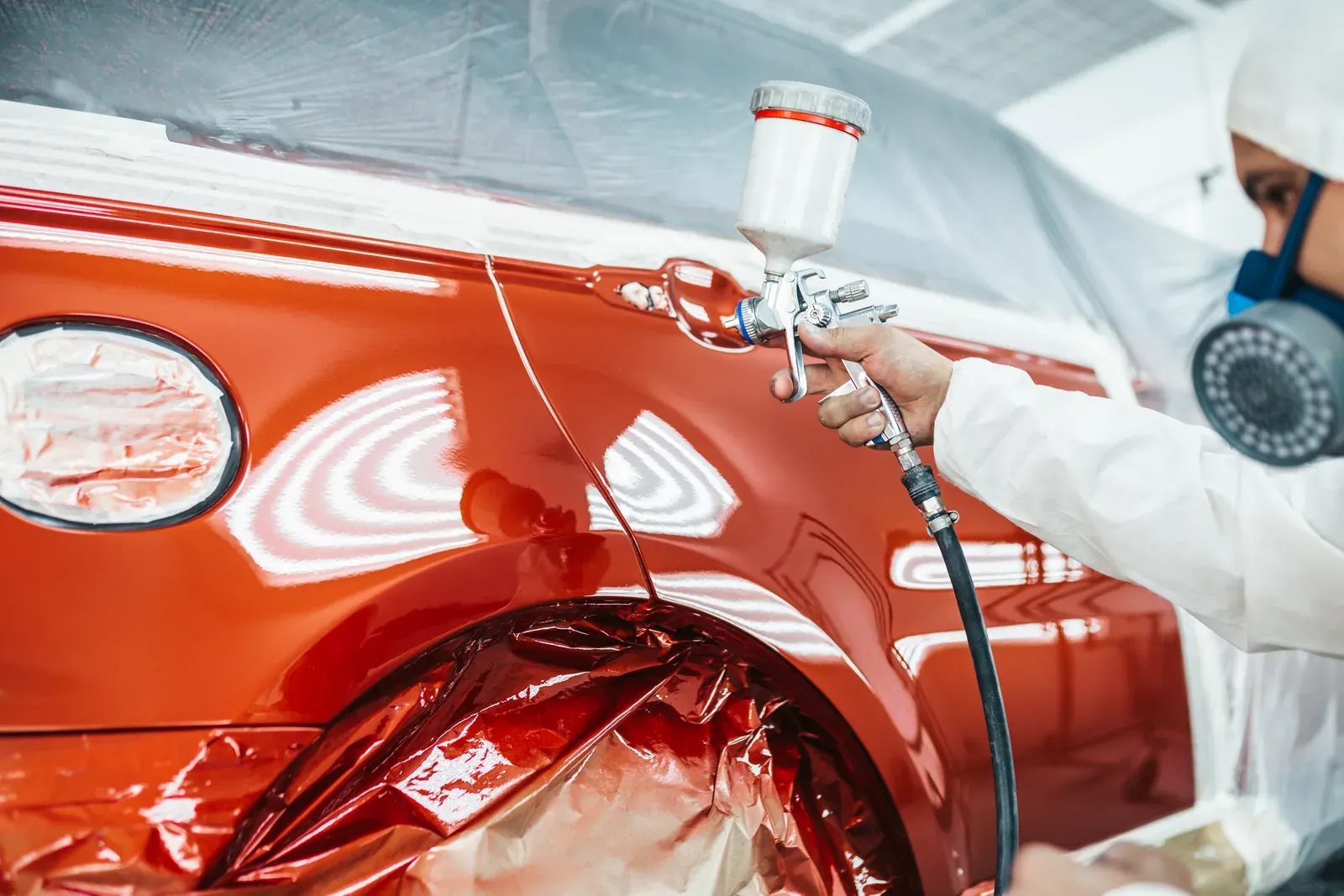
A scuffed or lightly cracked cover can often be plastic-welded, refinished, and blended — genuinely repaired, not hidden — and when that is the right call it is the lighter one on the claim, so we make it. Deep punctures, torn mounting edges, or a cover that has been sprayed twice already tip the decision to replacement, and we say so with the reasoning attached. Behind the cover, absorbers and reinforcements that did their sacrificial job get replaced, not straightened; they exist to crush once.
Modern bumpers are also instrument housings. Parking sensors, blind-spot radar, and on many vehicles the forward camera’s calibration all live in or behind the cover, and a repair that ignores them returns a car that beeps wrongly — or does not warn at all — on an 80 km/h Caledon road where the warning matters. We verify sensor operation after reassembly and arrange recalibration where the manufacturer’s procedure requires it. Refinishing is matched to your colour and blended, with the lifetime paint warranty behind it, and replacement parts carry our parts-and-installation warranty; we request OEM where the bumper carries safety hardware.
- Cover off first — absorber, reinforcement, and brackets inspected every time
- Plastic repair where honest, replacement where necessary, reasons given
- Sensors and driver-assist hardware checked and recalibrated as required
- OEM requested where safety systems live in the bumper
From a Caledon driveway to our booth and back, efficiently
Bumper jobs are the easiest work to run at distance because the decisions happen early. Photos of the damage — straight on, from the corner, and one from below if the lip is involved — go to (647) 594-3401, and the written estimate comes back with the repair-versus-replace call already made where the pictures allow it. If a hidden-damage inspection changes the number, the supplement goes to your insurance company from our office with photographs attached; you are not relaying messages up and down the 410.
Under DCPD, a rear-end tap you did not cause is paid by your own insurance company, with fault set by Ontario’s Fault Determination Rules — and where the car gets repaired stays your choice, whatever shop the adjuster mentions first. Small jobs below the deductible get a plain written price instead, with no pressure to file. We book the car in when the parts are on the shelf, so a straightforward bumper stays a short visit; a rental through your coverage bridges anything longer. Monday to Saturday, 8 AM to 7 PM, Sundays by appointment.