What eats paint in a neighbourhood built on garages
Liberty Village paint damage rarely comes from the road. It comes from concrete — the tight spiral ramps and close-set pillars under the East Liberty towers, which leave grey transfer down doors and grind the clear coat off bumper corners a few millimetres at a time. It comes from strangers: keys and belt buckles along Fraser and Liberty on a crowded BMO Field night, a courier’s bag buckle dragged across a fender on Hanna. And it comes from the air itself — the Gardiner runs close enough that winter spray carries a salt film onto anything parked outside, and salt is patient with every chip and scratch it finds.
The first question about any mark is depth, because depth decides the repair. Transfer and light scuffing that sit on top of the clear coat can often be polished away for a fraction of a refinish. A scratch that catches your fingernail has cut into colour, and polishing cannot rebuild what is gone — that panel needs paint before the next salt season reaches the bare edge. Send close-up photos taken in good light and we will tell you which side of that line your damage is on, with a price for each answer.
Matching colour on a fleet that hardly sees the sun
The paint code on your door jamb describes your car the day it left the factory, not the day it arrives here. Liberty Village complicates this in its own way: a car that lives on P2 six days a week keeps its colour young, while the same model street-parked on Liberty Street fades on schedule — so the identical code can describe two visibly different whites by year four. Our process assumes that. The code is the starting point; a sprayed test card held against your actual panel under corrected light is the decision, adjusted until the match holds at every angle.
The neighbourhood’s fleet leans to leased and financed vehicles in whites, pearls, greys, and blacks — and pearls are three-layer finishes where the mid-coat has to be rebuilt in exactly the right number of passes, or the repair flashes at you in low sun on Lake Shore. We build the layers properly, blend the colour into the adjacent panels so no hard edge exists for light to find, and put the lifetime refinish warranty in writing. On the leased and financed vehicles this neighbourhood runs on, that standard matters twice: a claim repair finished properly reads as original whenever the car is eventually inspected or appraised, while a shortcut respray is exactly what a trained eye is paid to spot.
One trip north, and the booth does the rest
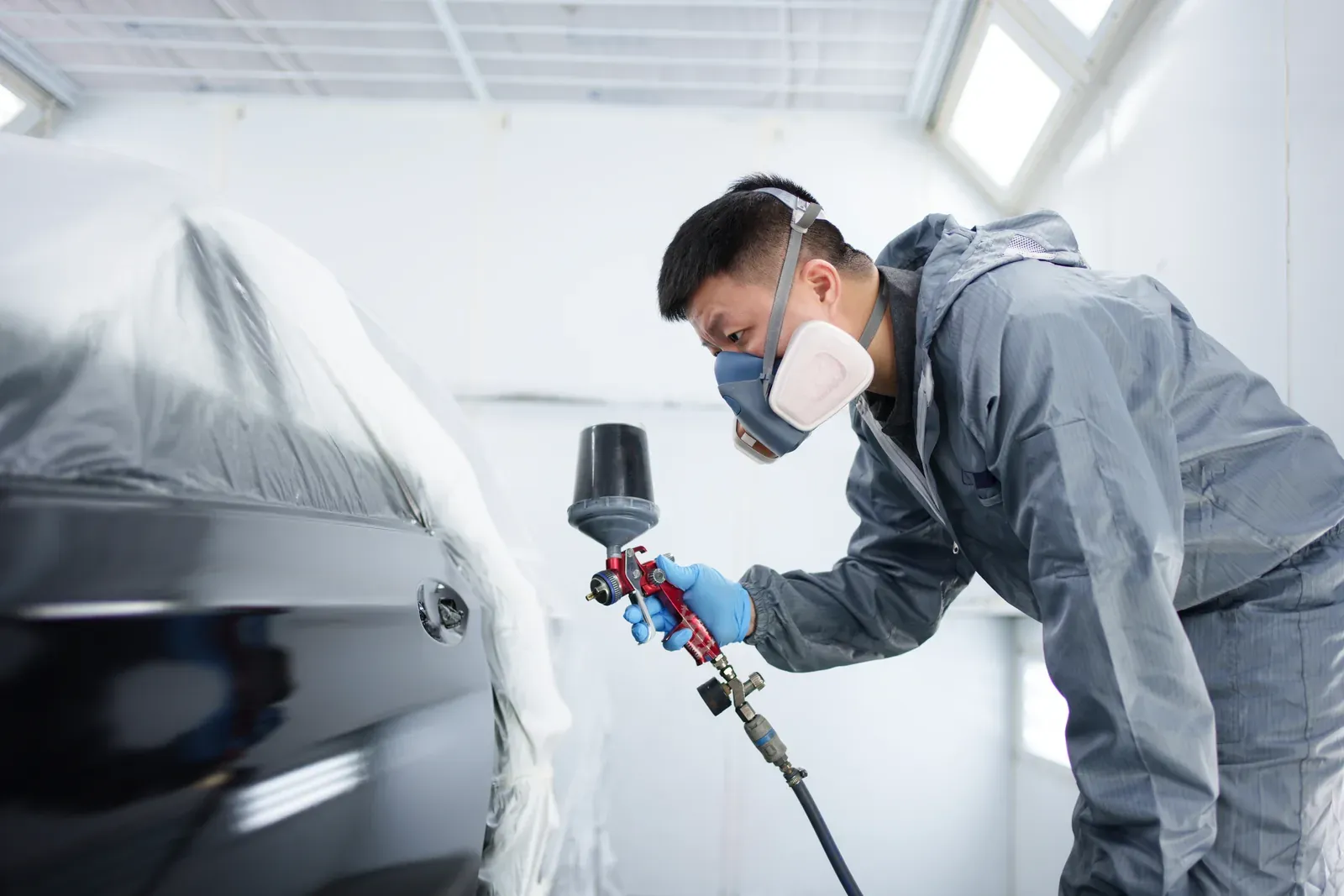
A refinish has stages that will not be hurried — repair, primer, sealer, base, clear, cure, polish — and the honest way to shorten the calendar is to compress everything around them. The estimate happens from your photos. Colour is mixed and any parts are on the shelf before your car arrives, so booth time begins the day you drop off rather than after a holding-lot week. Most single-panel jobs are a matter of days, and the span for your specific job goes in writing with the estimate.
Drop-off fits a downtown schedule: any morning from 8 AM, Monday to Saturday, then the subway from Sheppard West to Union and the GO one stop back to Exhibition — you can be at a desk on Atlantic Avenue before the first coat of primer is dry. If the paint work is part of a collision claim, it rides the same file with the same adjuster conversation, handled by the owner, and you get one person answering for the finished colour.
- Depth assessed from photos — polish versus repaint, priced honestly
- Test card sprayed and corrected against your actual panel
- Blend into neighbouring panels so the repair has no visible edge
- Lifetime warranty on the refinish, written into the paperwork