What mobile services do well
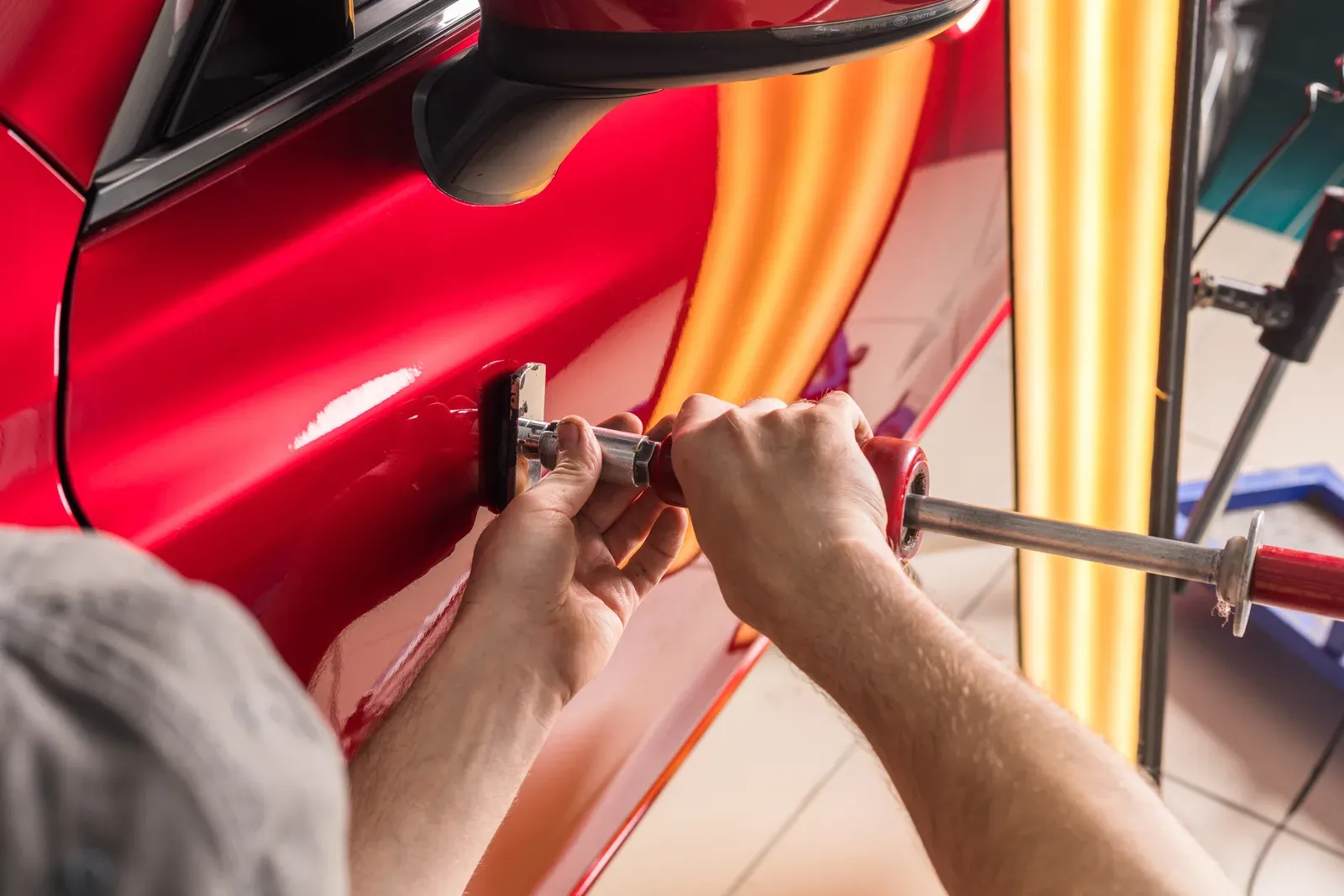
When a dent is shallow, reachable from behind, and the paint over it is intact, a skilled technician can often work it back out with glue-pull and metal-finishing techniques — no repainting involved. That work travels well: the tools fit in a van, and a good mobile operator can deliver a genuinely tidy result in your driveway or office parking lot.
The format fits a narrow band of damage — the shallow, paint-intact dent a hit-and-run driver left in a parking lot, worked out without refinishing. For fleets and busy households, the convenience is the product, and there is nothing second-rate about buying convenience for damage that truly fits the format.
The category has grown across the GTA for honest reasons: parking-lot hits are endlessly common, and nobody enjoys arranging a ride home from a shop across the city. Where the format genuinely fits, we have no quarrel with it — some very capable dent technicians in this region work out of vans. The trick is knowing the boundary before you book, not after — and knowing that once a claim is involved, the boundary has already been crossed.
What a driveway can’t hold
Refinishing is where the format runs out. Spraying automotive paint properly requires filtered, moving air so dust does not settle into the wet finish, stable temperature for flash and cure, and lighting that shows the work honestly — which is to say, it requires a booth. Outdoors, the weather votes on your paint job, and in a shared condo garage the building manager votes too.
Colour is the other wall. Matching aged paint takes a measured reading, mixed variants, sprayed test cards, and blending into neighbouring panels so no edge shows — a process that physically cannot ride in a van. Driveway paint work means brushed or aerosol colour: close enough at a glance, visible up close, and more visible every year.
Temperature alone decides much of the calendar here. Refinish materials specify the conditions they cure in, and a Toronto driveway spends a large share of the year well outside them — nobody is curing clearcoat properly at −15 °C in a February windrow. A booth does not just keep dust out; it makes the chemistry repeatable in January and July alike. That repeatability is what a warranty on paint actually rests on.
The warranty and accountability gap
A building answers for its work differently than a schedule does. If something about a shop repair bothers you next year, you know exactly where the shop is, and a written warranty tells you what happens next — ours covers paint and refinish work for as long as you own the vehicle. A mobile operator may honour problems just as readily, or may be booked across the GTA that week, or may no longer exist.
That is not a slight on mobile technicians, many of whom are skilled and stand by their work. It is a structural note: before you book anyone, mobile or fixed, ask what the guarantee is, get it in writing, and ask where you would take the car if the repair disappoints.
The paper matters as much as the promise. A written guarantee names what is covered and who covers it; a friendly assurance evaporates with the phone number. We put our paint warranty in writing because we expect to be held to it — apply that same standard to anyone who works on your car, van or building.
A quick sorting test for your damage
You can route most damage correctly from your own parking spot. Damage on this list needs refinishing or teardown, which means a shop. If none of these apply and the panel is easy to reach, a mobile visit is a legitimate first option.
- The paint over a dent is cracked, chipped, or showing white stress lines.
- A scratch catches your fingernail or shows primer or bare metal at the bottom.
- A plastic bumper is scuffed through the colour or torn, not just marked.
- The damaged panel carries a camera or sensor that may need recalibration.
- The dent sits on a body line or panel edge, where metal stretches and access is poor.
When mobile costs you twice
The expensive mistake is buying a driveway fix for booth-grade damage. Touch-up brushed into a deep scratch or filler smoothed over a creased dent does not restore the panel — it postpones it, and often complicates it, because a proper repair later starts by removing the earlier attempt.
You end up paying two bills for one fix. So the sequencing rule is simple: decide what the damage needs first, then pick the format. A mobile visit for mobile-sized damage is money well spent; for anything that needs paint, it is an installment plan for the repair you will buy anyway.
Bumpers deserve a special warning, because they are where driveway fixes fail most visibly. Modern covers are textured, flexible plastic; scuffs that pierce the colour need refinishing with flex additives, and they often hide cracked mounting tabs behind the cover — the classic souvenir of a tight condo-garage pillar. A rubbed-in “bumper repair” that looks passable in the shade tends to announce itself in full sunlight on the Gardiner.
Not sure which yours is? Send photos
This is exactly the call our photo estimates exist for. Send clear pictures of the damage and you will have a free written number back fast — and an honest sorting with it: if a dent will come out cleanly without repainting, we will say so. If the damage traces to a collision, a hit-and-run, or vandalism, we will also tell you what a claim involves and carry the insurance paperwork if you file. There is no charge and no obligation either way. We would rather be the shop that told you the truth than the one that sold you booth time you did not need.