Highway speed is what bends structure
St. Catharines’ position at the end of the QEW means its worst collisions happen at real speed. A rear-end hit in the 100 km/h flow before the brake lights near the Skyway, a sideswipe in the weave at the 406 interchange, a spin on black ice climbing out of the Niagara microclimate into open highway — these are the impacts that push energy past the bumper system and into the rails, aprons, and pillars that hold the car square. On the modern unibody there is no separate frame to point at; the body is the structure, engineered to crumple in programmed zones so the cabin does not.
That engineering is why bent structure cannot be judged by eye. A car can sit apparently level with a rail that has shortened fifteen millimetres, and the evidence surfaces as symptoms: doors that need a shoulder to close, a steering wheel held off-centre to track straight on Ontario Street, tires wearing one edge bald by autumn, panel gaps that pinch at one end. Any of those after a hard hit is a reason to measure before anyone talks about paint.
Measured, pulled, measured again
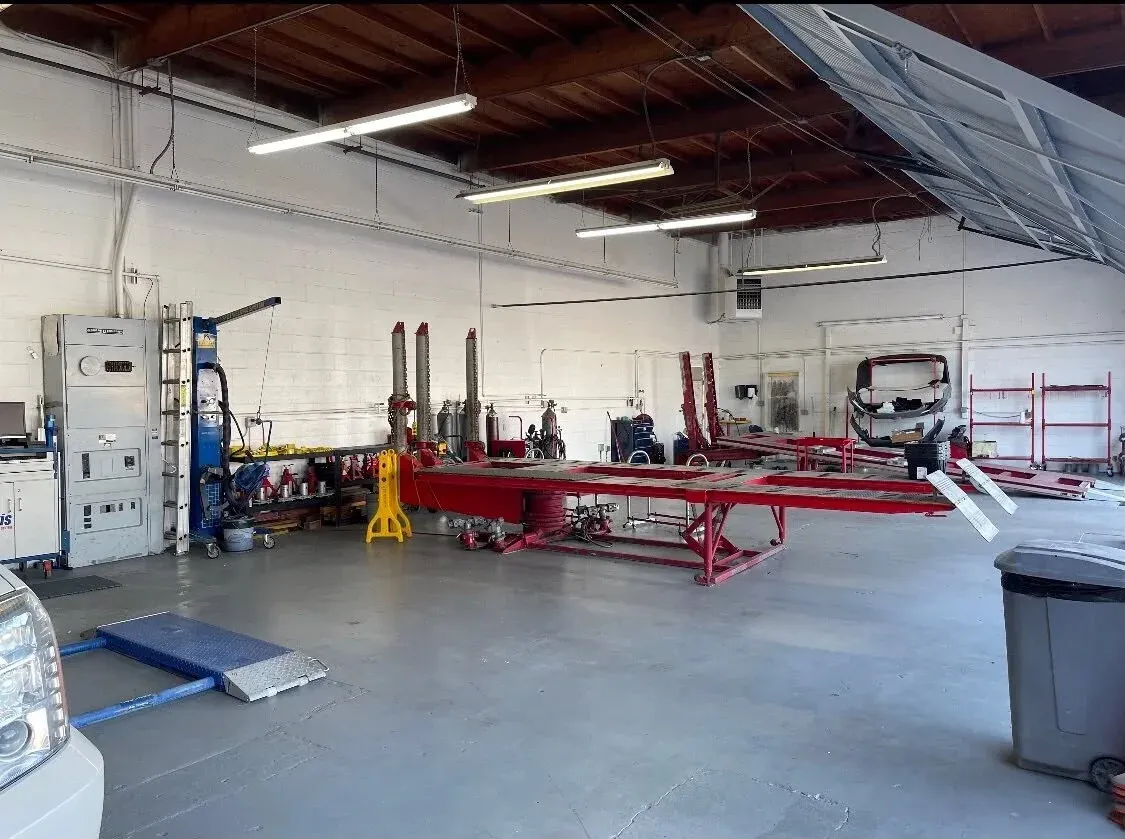
Structural repair here is arithmetic before it is force. The vehicle is fixtured and measured in three dimensions against the manufacturer’s reference points, and the printout of where every control point sits versus where the factory says it belongs becomes the repair plan. Pulls happen in increments — tension applied, released, re-measured — because metal that is dragged to position in one heave carries stress it will spend the next year releasing. Zones the manufacturer designates non-repairable are sectioned and replaced with new metal to the published procedure rather than persuaded back into shape.
When the geometry is confirmed, the rest of the repair is built on top of it: suspension components renewed where the impact loaded them, alignment set, and safety-system sensors checked against their mounting geometry, since a radar bracket that rides on a corrected rail must end up aimed where the factory intended. The final measurements are printed and kept with the file — proof for you, for your insurance company, and for any future buyer doing their diligence on the car’s history.
- Three-dimensional measurement against factory reference data
- Controlled incremental pulls with re-measurement between steps
- Sectioning and replacement where the manufacturer requires it
- Before-and-after documentation kept with the claim file
Distance, documentation, and the total-loss conversation
A structurally damaged car does not drive 100 kilometres, so these files start with a flatbed. Ontario’s towing rules leave the destination with you — from a QEW shoulder, a Collision Reporting Centre lot, or a Niagara tow yard, name Collision Auto Center in North York and the car comes to us while you stay home. The owner opens the DCPD claim with your insurance company, sends the measurement documentation with the estimate, and argues the supplement himself when disassembly reveals what the first inspection could not.
We are also straight about the other outcome. Ontario sets no fixed total-loss percentage; the insurance company weighs repair cost against actual cash value and salvage, and structural work on an older vehicle can tip that scale. When the measurements say the car is fighting the math, we tell you before the claim drags — an early, honest answer beats a month of hoping. When the numbers favour repair, you get a car returned to factory geometry with the paperwork to prove it, road-tested before it faces the Skyway again.