Aluminum F-150s rewrote the rules for body shops
Every F-150 since 2015 — and the Super Duty and Expedition after it — pairs an aluminum-alloy cab, box and closures with a high-strength steel frame. On the bench, aluminum is a different animal: it work-hardens as it moves, tears where steel would stretch, refuses heat as a shortcut, and is held together with self-piercing rivets and structural adhesive rather than spot welds. A tradesperson’s truck that earns its living on the 400-series deserves better than steel habits applied to aluminum panels.
Aluminum also cannot share air with steel work. Steel dust settling on bare aluminum starts a galvanic reaction that surfaces months later as bubbling under fresh paint — usually right after a winter of salt spray has had its say. So aluminum panels get their own tooling, abrasives and dust extraction here, well clear of steel repairs, and the rivet types, adhesive specs and replacement points come straight from Ford’s published procedure for that body and year.
Escape, Explorer, Edge: the unibody side of the lineup
Ford’s crossovers are unibody structures with hot-stamped boron steel wrapped around the cabin and progressively softer, sacrificial grades ahead of it. That is why the classic 401 stop-and-go rear-ender — the one that looks like a bumper and a headlight — so often turns out to have shortened a rail or nudged the radiator support. None of it shows until the fascia and liners come off, which is why our estimates are written after teardown, not from the parking lot.
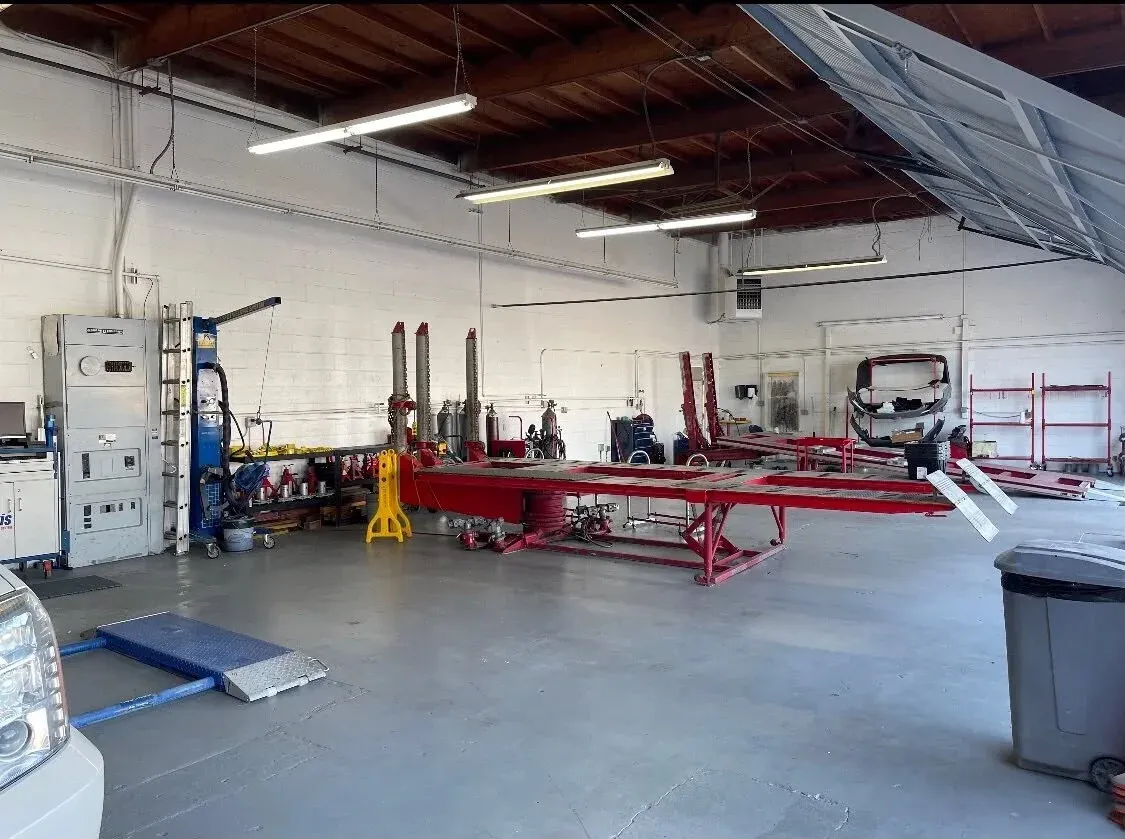
Once apart, the vehicle is measured against factory dimensions on the laser system. Pulls happen on the frame machine, the structure is re-measured, then suspension geometry and alignment are verified — because a crossover that measures perfectly and still tugs right on the Allen is not finished. Older Fords in this city also hide salt corrosion nobody mentioned on the phone; we photograph what we find underneath so a supplement never lands on you as a surprise.
Co-Pilot360 hardware and Ford’s tri-coat reds
Ford Co-Pilot360 puts a camera at the windshield, a radar in the front fascia, and corner radars in the rear bumper for blind spot coverage — and on the trucks that rear coverage extends to a trailer, which raises the stakes on getting those sensors back exactly where they were. Everything is scanned on the way in and on the way out, and any calibration Ford publishes for the work performed is completed before delivery.
On the paint side, Rapid Red and Ruby Red are tri-coat finishes: a translucent tinted layer over a metallic base, where the pass count sets the depth. Those colours are spray-out-card colours, every single time. We mix to your code, test on a card, tune the mid-coat, then blend into the adjacent panels so the repair leaves no edge for sunlight to catch on Lake Shore in the evening.
- Aluminum panel work isolated from steel dust and steel tooling
- Self-piercing rivets and structural adhesive per Ford’s published joint specs
- Forward camera, front radar and rear corner radars scanned before and after
- Tri-coat reds matched from a sprayed test card, never from the code alone