Why structural damage needs numbers, not opinions
A modern unibody is designed to sacrifice itself in specific zones, which means the energy of a hit travels far beyond the panel that took it. The stop-and-go rear-ender on the 401, the pothole strike on Keele in March that folded a wheel, the pillar clipped on an icy condo-garage ramp — any of them can shorten a rail, tip a strut tower, or shift a suspension mounting point by an amount no tape measure will reliably catch. The car can look straight, shut its doors, and still be sitting millimetres out of position.
Those millimetres matter because everything downstream assumes the structure is where the engineers put it: alignment angles, the aim of radar and cameras, headlight throw, panel gaps, and how the body folds in the next collision. Measuring converts "it looks fine" into a set of numbers checked against the published specification for your exact model. Numbers can be re-verified by another shop, and they can be sent to an adjuster as evidence. An opinion travels nowhere and proves nothing.
How a structural repair runs here
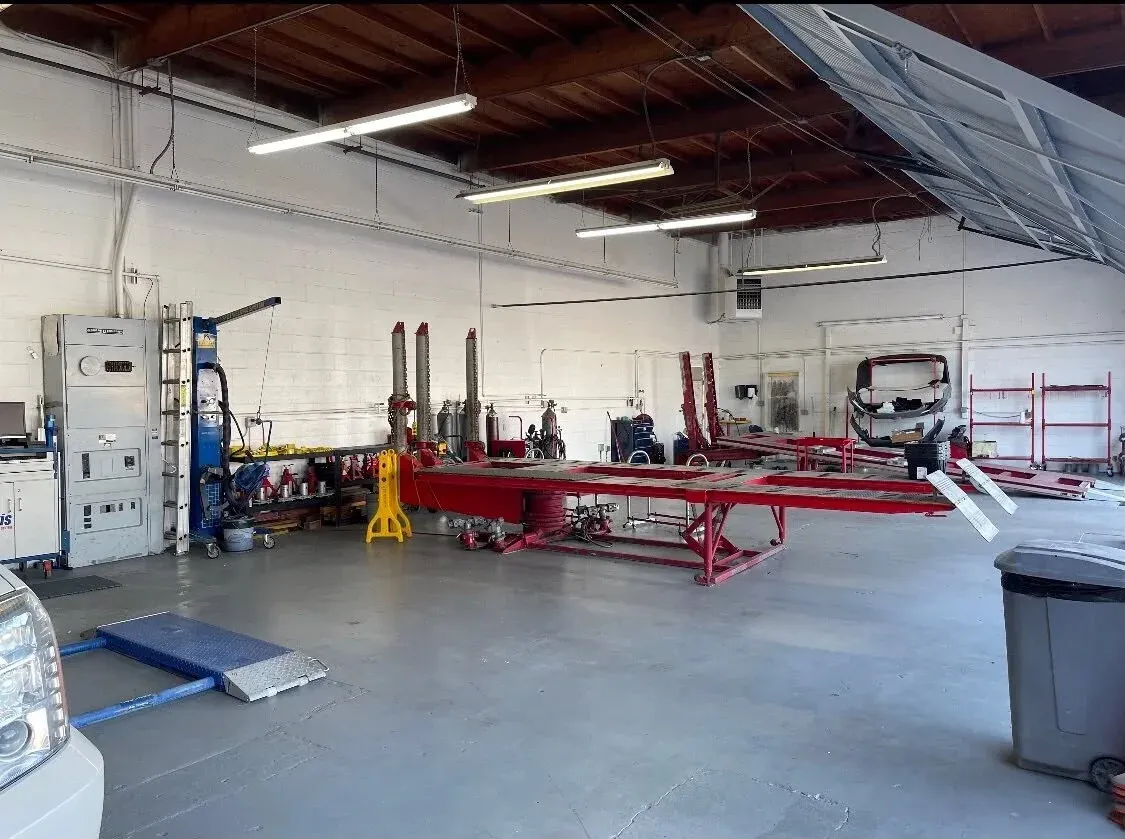
First the vehicle is locked to the frame machine at its factory hold-down points so it cannot creep, and the reference points underneath are measured against the manufacturer’s data. The readout shows which points moved, in which direction, and by how much. No pull happens before that picture exists — a pull made blind in the wrong direction manufactures new damage instead of undoing old. The anchoring is as important as the lasers: a car that shifts under load returns readings that describe the tie-down, not the crash.
Pulls are applied gradually with the measuring system running, so the structure is watched coming home rather than checked after the fact. Metal that stretched past its limit is not straightened — it is replaced at factory seams following the manufacturer’s repair procedure for that section. When the structure is back in position it is measured a final time and both sets of readings are filed with your repair record. Ask for a copy; if an insurance company, an inspection, or a future claim ever asks what happened to this car, that document earns its place in the glove box.
- Vehicle anchored to the frame machine at factory hold-down points
- Reference points measured against the manufacturer’s specification
- Direction and distance of movement recorded before any pull
- Controlled pulls with the measuring system live throughout
- Final readings saved to your file; suspension and alignment checked
What we will tell you straight
Some structural repairs are not worth making, and we say so early. When the cost of bringing a vehicle back to specification climbs toward what the vehicle is worth, that becomes a total-loss conversation with your insurance company — in Ontario there is no fixed percentage that triggers it; the insurance company weighs actual cash value against repair cost and salvage. You get our measurements and our honest read of them, and the decision is made with real information on the table. What we refuse to do is start a repair we already doubt and deliver the bad news halfway in.
The reverse happens more often. An estimate written from photos calls a hit cosmetic because all the camera saw was a bumper cover and a fender — then teardown and measurement find the rail behind them moved. We document it with the readings, file the supplement with your insurance company, and the repair gets written the way it should have been from the start. That paperwork is the difference between a car that tracks straight afterward and one that quietly eats a set of tires by spring.