Malvern’s dents have three main authors
The first is the garage. A lot of Malvern housing was built when a family car was five and a half metres of sedan and mirrors folded by hand — and today’s SUVs enter those same single-car garages with almost no margin. The same door meets the same frame edge twice a year, and eventually the crease stops buffing out. The second author is the parking lot: Malvern Town Centre and the plazas along Finch and Sheppard concentrate door swings and blind reversing into a few hectares, and the shallow ding at bumper or door height is their signature.
The third is winter. Plows working the crescents leave windrows that freeze overnight into something closer to concrete than snow, and a bumper or lower door that argues with one loses. Add the odd basketball from a driveway hoop and a snowbank that hid a curb, and you have the full Malvern dent census — none of it dramatic, all of it worth fixing before the paint cracks and salt reaches the steel underneath.
Repair the metal or replace the panel — how we decide
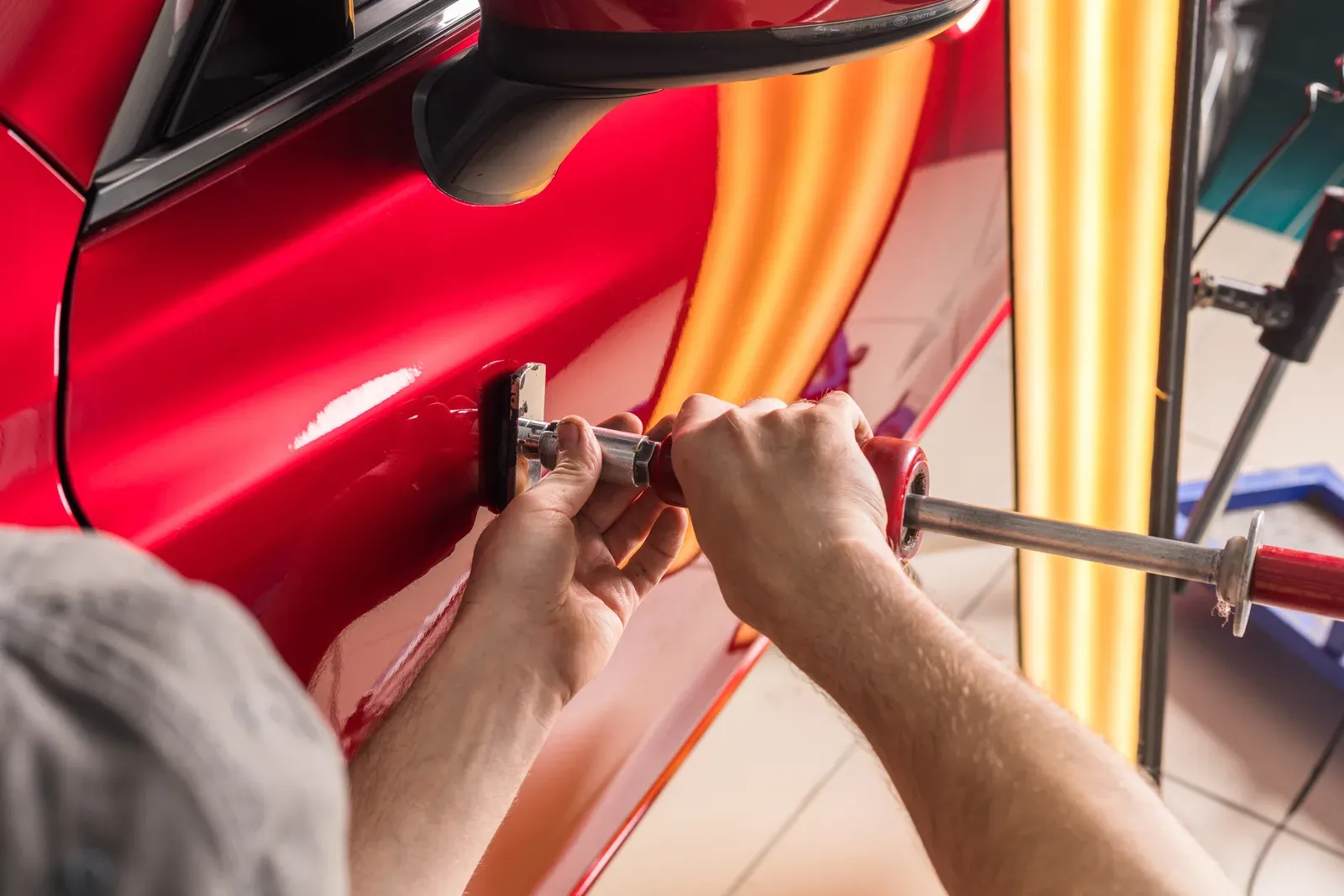
A dent is a question about metal memory. Shallow damage in the middle of a panel usually works back toward shape cleanly and finishes with skim filler and refinish. Damage that crosses a body line, stretches the steel, or lands on a bonded aluminium panel often costs more to work than a replacement panel does — and pretending otherwise pads an invoice, not a repair. We tell you which side of that line your dent sits on in the written estimate, with the price of both routes when it is genuinely close.
Behind every dent we also check what the eye misses: a door ding rarely hides anything, but a windrow hit at bumper height can crack the absorber behind the cover, and a garage-frame crease can knock a door out of adjustment so it wears its seal. The estimate covers what is actually there, which is why it holds instead of growing.
Small job, small footprint on your week
Dent work is where the photo-first system earns its keep for a neighbourhood 25 kilometres away. Two pictures — one straight on, one raking along the panel so the shadow shows the depth — get you a written number, usually the same day. If the job is small enough, we will tell you honestly that it is small, book a short bay slot, and turn it around in a day or two so the household is not down a car for a week over a door ding.
On the money side, most single dents land near or below a typical collision deductible, so they usually stay out of pocket — and we will say so rather than push a claim that raises your file for no benefit. When a dent is part of a larger claim, it rides along with the rest of the repair and your insurance company hears about it from us, not from you. Drop-offs run Monday to Saturday, 8 AM to 7 PM, Sundays by appointment.