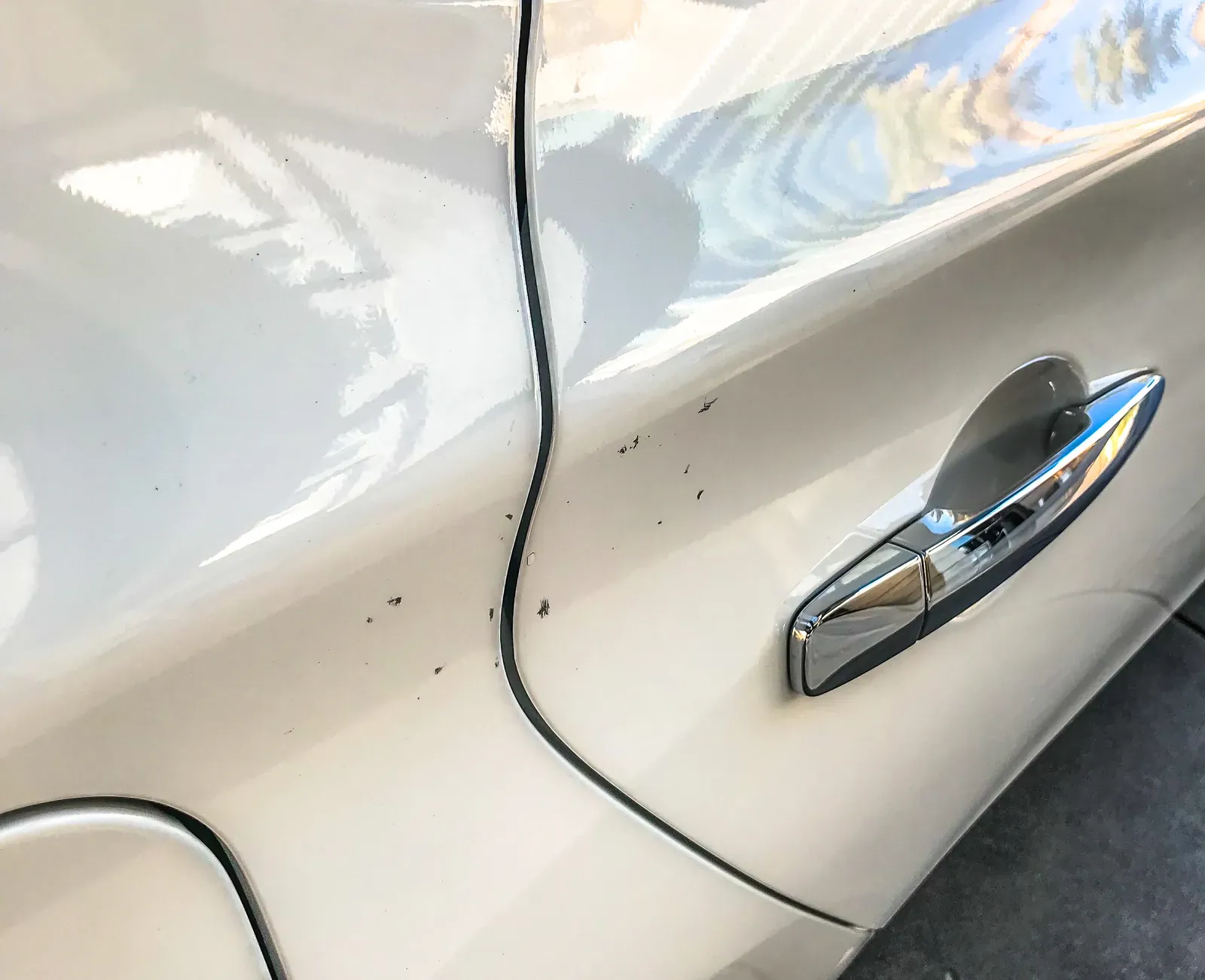
A town of tight parking and patient dents
Georgetown collects dents the way any commuter town does — in the places cars stand still. The GO lot fills shoulder-to-shoulder before eight, and the doors that open in those rows leave the crescent-shaped dings we see week after week. Georgetown Marketplace contributes the reversing taps and the door swings; Main Street’s on-street spots, generous in 1950 and tight for a modern pickup, produce the bumper-corner scuffs and the creased door skins from drivers threading out of an angled spot on fall-fair weekend. Glen Williams adds its own specialty: mirror and door-edge contact on the narrow valley streets.
The common thread is that none of these dents stops the car, so they wait — through a winter, sometimes three. Waiting has a cost only when the paint is broken: a chip at the bottom of a crease is a salt entry point, and by the time the ding annoys you enough to fix, there can be rust blooming underneath it. Our advice is simple and free: send photos now, and we will tell you whether your dent is cosmetic patience or a slow leak.
What separates a repair from a cover-up
A dent is metal that moved, and the repair is moving it back — not burying it. We work the panel from the right side with the right access, in stages, checking the surface with a straightedge and by hand until the contour reads true. Filler’s job is skim-thickness final smoothing, never sculpture; a repair that relies on a thick fill will shrink, crack, or print through the paint within a couple of Ontario winters. Where a skin is stretched or torn past saving, we say so and price the replacement panel instead of selling you a repair that will not last.
Refinishing is the half of dent repair people underrate. The repaired area is primed and painted to your colour code, adjusted against the surrounding weathered finish, and blended so the panel does not carry a visible patch. On a door or fender that is one small crease, we keep the refinish area tight and honest — you pay for the repair the dent needs, not for the largest job the panel could theoretically support.
- Photo estimate first — a written number before you drive anywhere
- Metal worked back to contour; filler kept to skim thickness
- Refinish blended into the surrounding panel, lifetime paint warranty
- Straight advice when replacement beats repair
Claim it or absorb it? The honest arithmetic
Small dents sit right at the line where insurance stops making sense, and we will help you find which side yours is on. A single door ding priced below or near your deductible is usually not worth filing — no claim, no history, no conversation with anyone. A keyed panel, a hit-and-run in the GO lot, or a dent with broken paint and hidden damage behind it can be worth claiming, and in Ontario an unidentified-driver or vandalism file runs through your own policy. Either way the choice of shop is yours, not your insurance company’s.
For a Georgetown driver the logistics matter as much as the price, so we compress them. The estimate happens by text. Parts and paint are ready before you arrive, so a one-panel dent is typically a short stay rather than a week — and because the car is drivable, you pick the days that suit your commute down Trafalgar and the 401. Hours are Monday to Saturday, 8 AM to 7 PM, with Sunday drop-offs by appointment.