A hard climate for clearcoat
Stoney Creek paint lives between two abrasives. The QEW supplies the first: a winter’s worth of salt spray and sand kicked up between the Skyway and Fifty Road peppers hoods, mirrors, and bumper faces with chips, and every chip is a hole in the clearcoat that moisture works on until spring. The lake supplies the second — humidity, freeze–thaw cycling, and the wet squalls that blow in off the water keep lower-city cars damp for weeks at a time, which is why the older bungalow streets around King and Battlefield Park show so much paint that has gone tired before its time. None of that is what brings a car to us — but it is the surface an accident repair has to disappear into, and a panel resprayed to the factory code alone will read as a patch against eight years of lake weather.
The mountain and the fruit belt add their own wear. Summit Park driveways are short and shared, so brushed hedges, garage jambs, and bicycle handlebars scuff the same door corners repeatedly. Out along Highway 8 and Fruitland Road, cars parked at orchards and roadside stands sit in full summer sun, and a decade of that fades a red or softens a metallic in ways a paint code alone cannot describe. Matching a new panel to that history is the actual craft of refinishing, and it is the part a rushed shop skips.
Matching the car you have, not the car that left the factory
Every refinish here starts from the paint code and refuses to end there. The code produces the colour the car wore on day one; your car has since spent years in Stoney Creek weather, so the mix is sprayed out on a test card, held against the actual panel under corrected light, and adjusted until the difference disappears. Then the colour is blended into the adjacent panels rather than stopped at a hard edge — a blend spreads the transition across a distance the eye cannot resolve, which is what makes a repaired quarter panel read as original in July sun on Lakeshore or under the lights of the Eastgate parking lot.
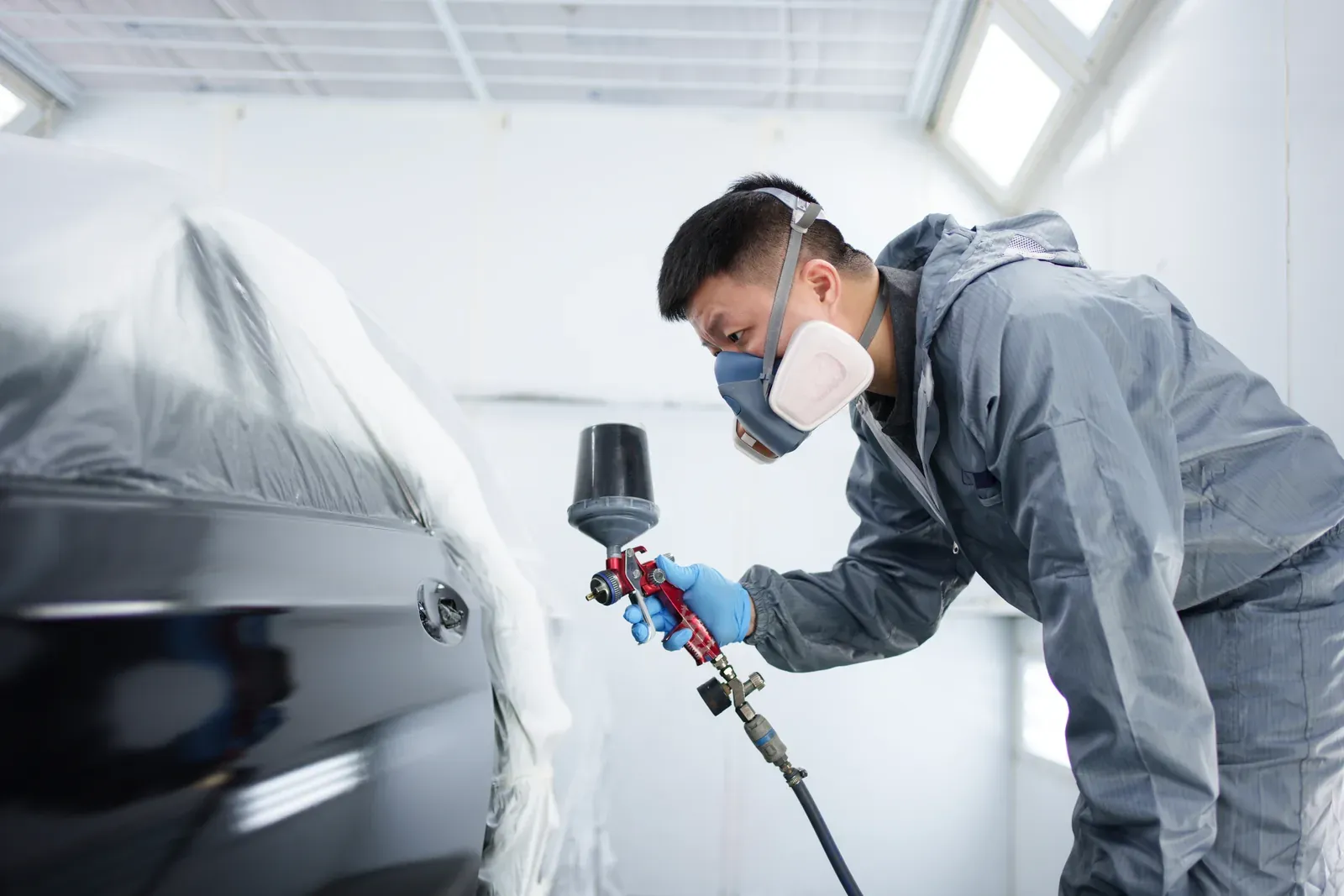
Preparation gets the same discipline, because paint fails from underneath. Old finish is feathered back, bare metal is primed and sealed, and any corrosion in the repair area is cut out rather than buried — burying it buys eighteen months, and we would rather not meet the panel twice. The finish cures in a downdraft booth, gets colour-sanded and polished, and leaves with a lifetime warranty on the refinish. That warranty is the same whether the car returns to a Winona driveway or a street in the old village.
- Colour mixed to code, then corrected against the weathered panel
- Blended into neighbouring panels — no hard paint edges
- Corrosion cut out of the repair area, never sealed over
- Lifetime warranty on every refinish, regardless of distance
Planning paint work around the Skyway
Refinishing is the most schedulable work a body shop does, which suits a 62-kilometre customer. Start with photos to (647) 594-3401 — the damaged panel straight on, an angle showing reflection, and one of the whole car — and a written number comes back before you commit to anything. Because paint needs cure time regardless of where it is sprayed, the trip math rarely changes the calendar: you drop the car once, we do the prep, spray, cure, and polish in sequence, and you collect it once. Monday to Saturday, 8 AM to 7 PM; Sunday drop-offs by appointment when the QEW trip only fits a weekend.
When the paint work is part of an insurance repair — a keyed door on Queenston Road, vandalism in a plaza lot, a scrape somebody left without a note — the owner handles the claim conversation with your insurance company himself and tells you honestly whether the damage clears your deductible by enough to be worth filing. Small jobs priced out of pocket get the same booth and the same warranty. The only thing that changes is who pays.