Is it worth fixing paint damage before spring?
Quick answer
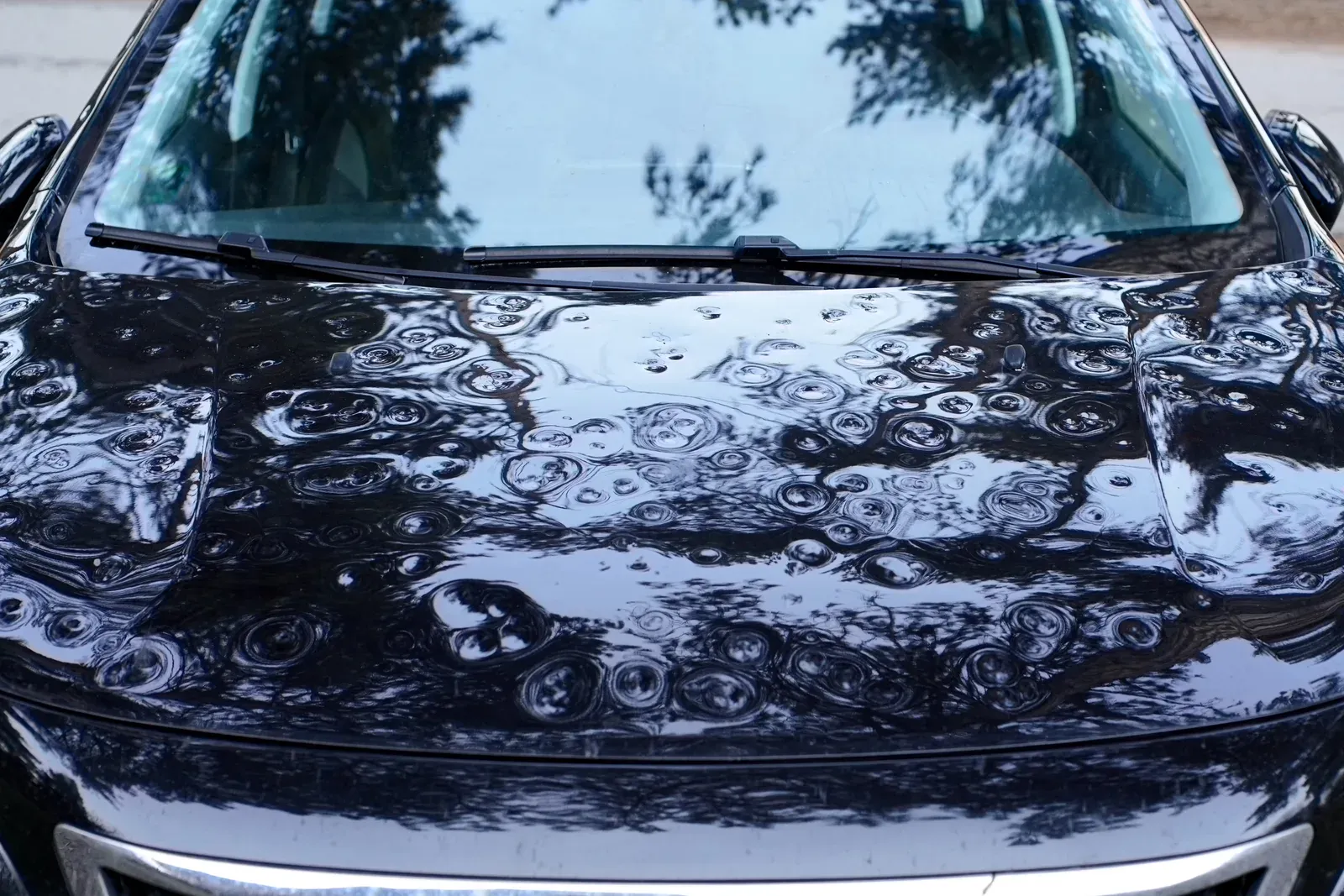
If the paint film is broken, fix it now: exposed primer or steel is where corrosion begins, and every extra week in road salt grows the eventual repair. If the damage came from a crash, hail, or vandalism, open the claim now too — insurance companies can deduct unrepaired damage from a future claim. Waiting is only sensible for marks that never breached the clear coat.
- Drivable or not
- At fault or not
- Free written estimates
One test decides it: is the film breached
Paint is not decoration — it is the sole membrane between steel and a chloride bath, and it either seals or it does not. Everything else about the decision follows from that binary.
Damage showing grey or white primer, or bright metal, belongs in the shop now. Primer is porous and surrenders to moisture within weeks; bare steel in a GTA winter is corroding while you read this sentence.
Damage confined to the clear — a scuff with full colour beneath it, a scratch your fingernail glides over — is genuinely cosmetic. The membrane is holding; it just looks bad while it does.
A dent with unbroken paint sits in the same safe category: the metal moved, the seal did not, so no corrosion clock is running.
Two quick field tests: drag a fingernail across the mark — if it catches, the film has likely opened. And examine it in strong light from a shallow angle, where a chip that found primer shows a distinctly different colour at its floor.
- Bare metal or rust visible — urgent, book it now
- Grey or white primer showing — this season, not next
- Cracked or lifting paint at a dent edge — this season
- Colour intact, clear coat only — cosmetic, waiting is fine
- Dent with fully sealed paint — cosmetic, waiting is fine
The price of waiting, itemized
Corrosion does not observe your calendar. Once chloride touches steel it spreads laterally beneath healthy paint, while nightly freeze–thaw levers the film edge higher — and neither process pauses for you to get around to booking.
The consequence is a category change, not a price drift. Sealing and refinishing a chipped area is a small job; cutting out perforated steel, welding fresh metal, rebuilding corrosion protection, and blending a refinish is an entirely different invoice.
There is a quieter cost as well. Insurance companies document unrepaired damage, and prior unrepaired damage can be deducted from a future claim on the same area of the car — the repair you postponed becomes money subtracted from the next settlement.
Which coverage responds depends on the cause. Damage from a single covered event — a collision, vandalism, hail, a falling limb — belongs on a claim, subject to your policy, your deductible, repair approval, and the insurance company’s decision; wear that accrued gradually usually does not. Sorting one from the other is part of the estimate, and far easier before a winter has blurred the evidence.
April is the worst month to need a body shop
Three waves crest together when the GTA thaws. Pothole damage peaks as freeze–thaw shreds the 401, the DVP, and every side street in between. Thunderstorm season opens, and one hail cell can book out every shop from Mississauga to Markham within days. And everyone who deferred winter damage finally picks up the phone — in the same two weeks.
That convergence means longer waits for a bay, longer waits for parts, and more days in a rental. A late-winter booking steps in front of all three queues, and your car gets worked on instead of parked behind a lot full of storm claims.
If the damage traces to a crash or another covered incident, the claim clock argues for now as well — the OAP 1 expects prompt notice, and evidence of how the damage happened is far easier to document before a winter has worked on it.
Booking early has one more quiet advantage — parts lead time. With the estimate written and parts ordered ahead, your car enters the shop on a day when everything it needs is already on the shelf, which is the single biggest lever on how long you are without it.
The priority order, if you are choosing
Working down a list with a budget? This is the order that actually protects the vehicle:
- Anything showing bare steel or active rust — the only truly urgent tier
- Chips and scratches into primer, hood leading edge and lower panels first
- Cracked or lifting paint surrounding any dent or crease
- Bumper-cover cracks, before the cold runs them
- Failing clear on roof, hood, or trunk, before it delaminates outward
- Loose trim and lifted mouldings that are letting water behind them
- Cosmetic scuffs and sealed-paint dents — these genuinely keep
Winter itself is not a reason to postpone
The work is indoors. Refinishing happens in a heated downdraft booth where the panel is brought to temperature and the finish bakes to full cure — the weather outside the wall has no vote on the result or the warranty.
The only genuine seasonal difference is schedule padding: a deeply cold car needs to warm through before prep, and we build that into the plan.
One honest reason to defer does exist. If the car will keep collecting damage all winter — a tight condo ramp, a brutal commute, a parking spot where other cars keep finding yours — it can make sense to seal the urgent breaks now and batch the cosmetic work into one visit when the season ends. That is scheduling strategy, not an excuse to leave steel exposed.
Send photos and you will get a written number back fast, free — with a straight note on which items need doing now and which can politely wait for your budget.
That honesty cuts both ways, and it is the point of the exercise. Half the photos we receive in late winter get an answer of “this can wait” — and the other half get sealed in time to stop a small job from becoming a spring project. Either answer is worth more than guessing at it from the driveway.