What is the difference between a dealership body shop and an independent shop?
Quick answer
A dealership collision centre works on one or two brands, defaults to factory parts, and usually has direct access to manufacturer procedures. An independent shop works on all makes, offers more flexibility on parts and scheduling, and generally costs less. Both can deliver excellent work — the equipment, training, and estimating honesty at the specific location matter more than the sign.
- Drivable or not
- At fault or not
- Free written estimates
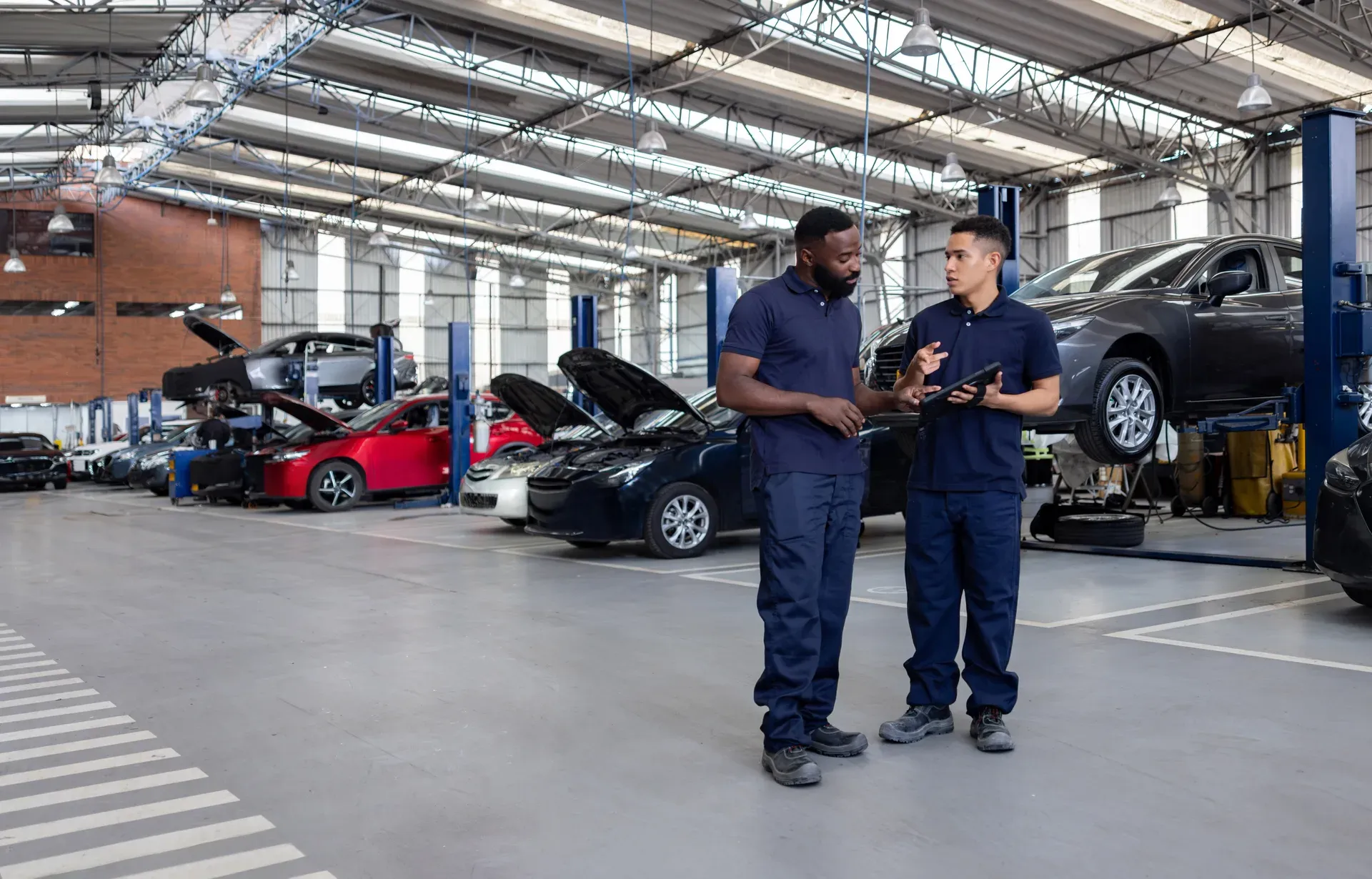
What a dealership collision centre gives you
The genuine advantages deserve a fair hearing:
- Factory parts as the default, sourced quickly through the dealer’s own parts department
- Direct access to manufacturer repair procedures, technical bulletins, and software updates
- Brand-specific training, and on some brands, required equipment for structural or aluminum work
- On-site diagnostic and calibration equipment for that make
- Continuity when the vehicle is new and the repair brushes against something warranty-related
What an independent shop gives you
The trade-offs run the other way:
- Lower labour rates and a lower overall bill on comparable work
- All makes and models — which matters when your household runs three different badges
- Direct access to the person responsible for the work — here, the owner writes your estimate and hands back your keys
- More flexibility on parts, timing, and how a repair is scoped for an older vehicle
- Usually shorter queues, since a dealer body shop competes with its own service department for space
One thing many people do not know
A meaningful share of dealership “body shops” are not run by the dealership at all. Plenty of dealers contract collision work to an independent shop or a chain, and your vehicle leaves the lot to be repaired somewhere you never chose.
That is not automatically bad — the subcontractor may be excellent — but you deserve to know where your car is going. Ask straight: is the collision work done here, on this property, by your employees? A straight answer takes ten seconds.
The reverse happens too: an independent shop may sublet calibration, glass, or alignment to a specialist, which is normal and often better than doing that work occasionally in-house. What matters is being told, and having the sublet work documented.
Where the real difference shows up
The variables that decide repair quality are not dealership-versus-independent. They are whether the shop pulls and follows the manufacturer procedure for your vehicle, whether it owns the right equipment for your vehicle’s materials, whether driver-assist systems get calibrated correctly, and whether the estimate covers the whole repair.
A dealer holds a structural advantage on procedure access for its own brand. A good independent closes the gap by subscribing to the same information and refusing to guess. A weak shop of either kind guesses.
Parts access is the other practical difference. A dealer collision centre orders through its own counter, which can be quicker on brand-specific pieces. An independent orders from dealers and distributors around the GTA — typically just as fast on common parts, occasionally slower on rare ones.
Price is where the dealer disadvantage is most consistent: the same repair usually costs more under a dealership roof, because the overhead is heavier.
Warranty deserves thought too. A dealership warranty is backed by a franchise business; an independent’s warranty is backed by the owner and the shop’s local name. Neither is inherently stronger — what counts is the written terms and how long the business has stood in one place.
And one myth to retire: taking collision work to an independent shop does not void your factory warranty. Collision repair was never covered by the manufacturer warranty in the first place. The one nuance worth checking is a corrosion or paint warranty on a newer vehicle, where the manufacturer may attach conditions — ask your dealer before a large repaint.
How to decide for your car
Lean toward a dealer collision centre when the vehicle is new and under warranty, when it is a low-volume or exotic model, when the damage is structural on a brand with strict equipment requirements, or when proprietary tooling that few shops own is genuinely needed.
Lean that way as well if you lease and the leasing company dictates how a repair must be documented at turn-in. One phone call to the leasing company before choosing beats an argument at the end of the lease.
Lean toward a good independent for most everyday work — cosmetic damage, bumpers, panels, paint, and typical collision repair on mainstream vehicles — where the cost gap is real and the quality gap depends on the building, not the category.
Scheduling is an underrated tiebreaker. A dealership collision centre often shares space with its own service operation, and any shop’s queue swells after a bad storm or the first icy week on the 400-series. Ask both when they could genuinely start, and whether parts can be ordered before the car comes in.
Either way, ask both the same questions: which parts, what warranty, which procedures, who does the work, and what the estimate includes. In Ontario, the choice is entirely yours.
Where we fit
We are the independent side of this comparison: an owner-operated shop in North York, off Keele just south of Sheppard, working on all makes and models. Paint and refinish work carries a lifetime warranty, and the replacement parts we install are covered along with our installation, in writing.
If your vehicle genuinely belongs at a brand-specific facility for the repair it needs, we will say so. That answer costs us the occasional job and remains the right answer.
Weighing a dealer quote against ours? Send it with photos. Our estimate is free, comes back fast, and we will go through the differences line by line — including anywhere the dealer has specified something your vehicle truly needs.